dailynewsnblog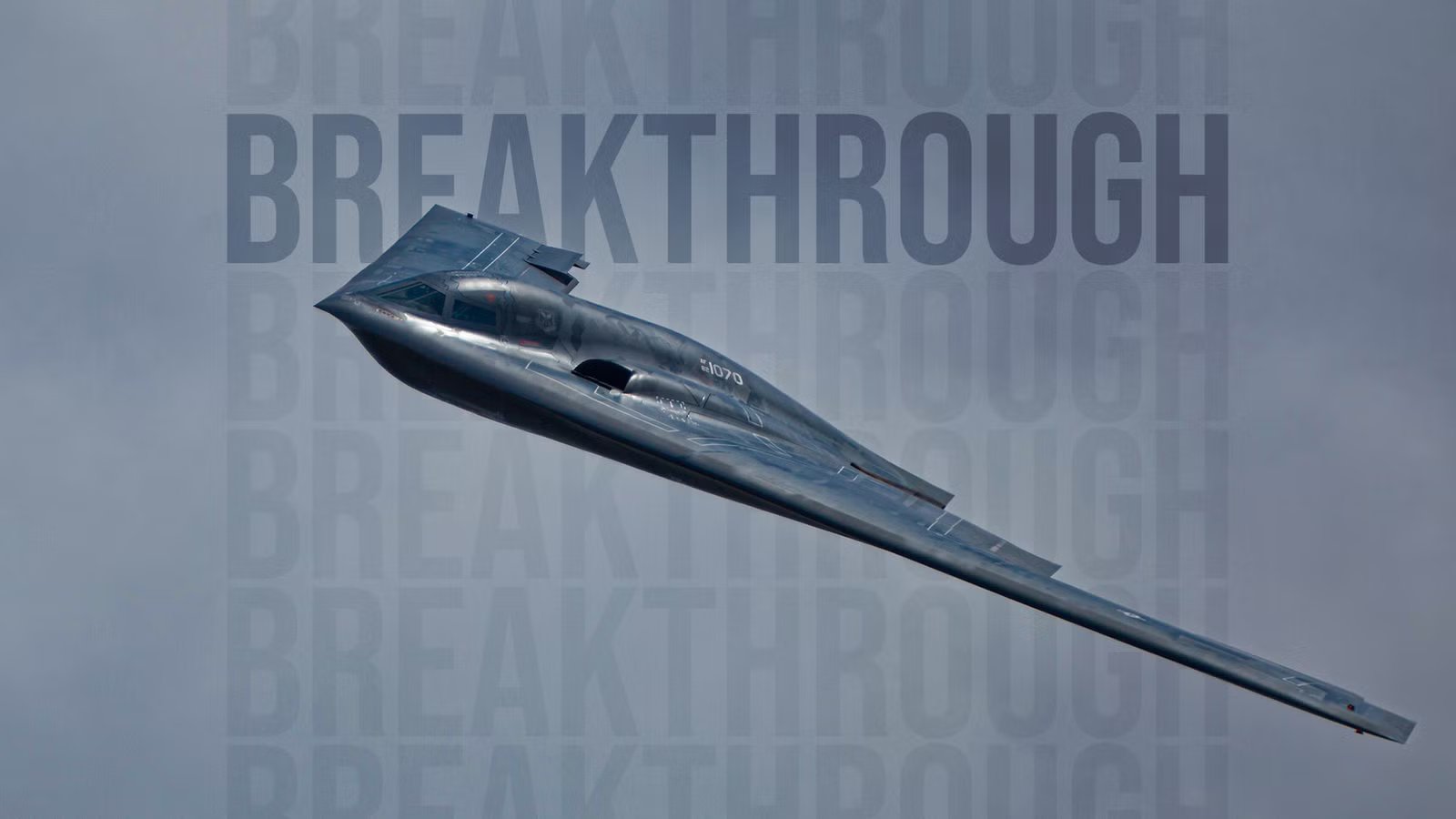
The Northrop B-2 Spirits are a unique symbol of America’s power and boast the ability to reach out and touch almost anyone, anywhere, anytime. They are seen as the pinnacle of US airpower and the height of engineering. That said, their development started in the 1980s, and the aircraft has been in service for two decades now. Despite being in service, there is still no other comparable flying wing stealth bomber in service anywhere in the world.
This is not to last as the United States Air Force is already training on its next-generation B-21s and China is developing its H-20. Still, the B-2 is poised to remain relevant and fly into the 2030s, with extensive upgrades and maintenance programs being carried out on them. Here is why the B-2 Spirit represents such an important breakthrough in military aviation, even if it is of little relevance to commercial aviation.
The Road That Led To The B-2

The Boeing B-52 can be understood as the last WWII-style bomber with jet engines. It was the final mature version of Boeing’s B-17, B-29, B-36, and then B-52 series. The idea was to fly in massed formations, fight a war of annihilation, and accept and sustain losses. The aircraft were slow and designed to take a beating. But as Soviet air defenses improved and bombers became structured around delivering nuclear bombs, this became no longer tenable.
Instead, the US Air Force looked to speed, and this is where the B-58 Hustler came in with its Mach 2. But this was insufficient, and so the Air Force turned to develop the XB-70 Valkyrie, which would be something of a Hustler on steroids. It was to fly above the threats (70,000 feet) and outrun threats (Mach 3). But the development of air defenses, the downing of the Lockheed U-2 in 1960, and the development of ICBMs rendered them obsolete and less necessary.
Next, the Air Force turned to the Rockwell B-1A Lancer that was to have a dash speed of Mach 2.0 and fly under the radar. It was to follow the map of the earth and hide in the clutter. But the development of look-down radars and short-range air defenses also saw it canceled. Later, the Air Force revived the B-1 as the B-1B with a reduced speed of Mach 1.25 but a dramatically reduced radar cross-section to delay detection and more onboard systems to boost survivability.
Enter The B-2 Spirit

The B-1B Lancer was intended to be a bridge until the Air Force’s next-generation project, which would give rise to the B-2 Spirit. As fate would have it, the B-1B remains in service because the Air Force only procured 21 (19 remaining) of the originally planned 132 Spirits. It’s also worth noting that another predecessor to the B-2 was the stealthy F-117 Nighthawk.
While the B-1B had a reduced radar cross-section and the F-117 was a stealthy-faceted aircraft, the B-2 matured this with curved surfaces. It represented a generational leap over all bomber aircraft that came before it. It was intended to “hide in plain sight”. The aircraft is designed to be a penetrator, able to penetrate the most contested airspace and make it back out.
Northrop B-2 Spirit (per US Air Force) | |
|---|---|
Number built | 21 |
Number in service | 19 |
Entered service | 1997 |
Max speed | Max 0.95 |
Payload | 40,000 lbs (60,000 lbs with reduced on-board fuel) |
Role | Stealth strategic heavy bomber |
The B-2 Spirit abandons the doctrine of the aircraft that went before it. It abandons the B-52’s mass, formations, and brute-forcing its way through. It rejects the B-58’s and XB-70’s doctrine of outrunning threats or flying above them. It rejects the B-1 Lancer’s role of flying below threats or gaining time by flying low. It flies at medium altitude subsonically.

The Striking Differences Between The B-1 & B-2 Bombers
The B-1B and B-2 bombers’ designs are strikingly different because they are designed with fundamentally different mission sets and philosophies.
The World’s Only Penetrator Bomber

As a bold claim, all the world’s strategic bombers are currently obsolete as air defense penetration bombers, except for the B-2 Spirit. All of the world’s other bombers: the B-52 Stratofortress, the B-1B Lancer, the Tu-95MS Bear, the Tu-22M3 Backfire, the Tu-160 Blackjack, and the Xi’an H-6 are functionally missile trucks. None are able to operate and survive in contested airspace, although in all fairness, not all were designed to. Naturally, this changes if the airspace is not contested, but that’s a pipedream in a high-end contest.
This is why the B-2 Spirit is uniquely able to carry the GBU-57 Massive Ordnance Penetrator (MOP). It’s not that the B-52 and B-1B can’t carry the 30,000-lb bomb, it’s that they can’t operate over the airspace they would need to drop it. This means that the world’s other bombers are largely limited to carrying missiles to achieve stand-off ranges; ironically, this means the world’s strategic bombers can’t actually carry bombs in practice. It was reported by The War Zone in 2025 that B-2s dropped these bombs on Iran’s nuclear facilities.
The fact that the B-1B, Tu-22M3, and Tu-160 are capable of supersonic flight is largely irrelevant, apart from very specific circumstances. There is no evidence that any have been flying supersonic in their current conflicts (e.g., Ukraine). Flying supersonic just means they are a faster target for SAMs like Patriots, but an easy target nonetheless.
The Design Philosophy That Worked

Saying the B-2 was successful because it got subsonic mid-altitude stealth to work is not the same as saying nothing else works. The Lockheed SR-71 Blackbird is credited as being able to fly higher and faster than threats could intercept it. Meanwhile, Lockheed Martin is believed to be working on the SR-72 hypersonic Son of Blackbird, which is intended to fly at Mach 6 or above, outrunning threats. It was likely featured in the movie Top Gun: Maverick as an Easter egg.
So, while stealth was not the only solution that works for the United States Air Force, it is the primary pillar. The US has developed the stealthy F-22, F-35, and is working on the all-aspect stealth F-47. Additionally, it has significantly reduced the radar cross-section and electronic emissions of its F-15EX and Super Hornets.
Besides the B-21 Raider (discussed below), the most obvious impact of the B-2 Spirit is on the United States’ most advanced spy drones. These are similarly-shaped flying wing designs intended to penetrate enemy air defense and reconnoiter. The largest proven example is the secretive RQ-170 Sentinel. According to The War Zone, only one official image of it exists in public. It is known to have entered service in 2007 and to have taken part in the US mission to capture Venezuela’s Maduro in 2026. Even more secretive is the massive RQ-180 flying wing reconnaissance aircraft that is widely reported to exist.
The B-21 As An “Updated” B-2

The B-2 is arguably the first Cold War bomber whose core design doctrine worked, or at least the first whose doctrine survived long enough for it to remain in use as originally intended and for its doctrine to be paced onto its successor. The B-2 Spirit is a great aircraft, but it is aging. It is no longer as invincible as it once was. As radars and integrated air defense systems improve, the B-2’s advantages erode.
The upcoming B-21 Raider is not a break with the B-2; it is a doubling down on it. In many ways, it is better understood as a generational upgrade over the B-2, designed to restore its extreme advantage in highly contested skies rather than an all-new aircraft. Whereas the B-2 was designed to beat radars, the B-21 is intended to beat sensor ecosystems. It is also designed to be much easier to update, so that it can better keep ahead of emerging future threats.
The B-2 reduces its observability in many ways (not just RCS), and the B-21 runs with this to achieve low-detectability across the entire kill chain. It will take the B-2’s role further. While the B-2 was built to drop bombs, the B-21 will act as a forward sensor node, fuse offboard data, cue with other shooters, and likely work with autonomous systems (aka advanced drones).
How The B-2 Redefined Military Aviation

The B-2 Spirit was not a breakthrough in aviation in a general sense. It has little impact on the commercial sector, and no other country has been able to replicate it. China is now developing its own answer to the B-2, called the Xi’an H-20, but it is still in the development phase. Russia claims to be developing a stealth bomber, but those claims are opaque and suspect. It’s more telling that it’s putting its old Soviet-era Tu-160 prestige bomber back into production.
The B-2 Spirit’s breakthrough was being the first full-scale stealth penetration bomber that succeeded in its original doctrine. It became the standard from which to develop follow-on bombers and high-end reconnaissance aircraft like the B-21, Xi’an H-20, RQ-170, and China’s new ‘GJ-X’ stealth drone.
In many ways, the B-2 broke the mold of early Cold War thinking that military aircraft should be faster, more maneuverable, and fly at higher altitudes (or extremely low altitudes). Of the world’s strategic bombers, it has an official payload capacity of 40,000 lbs (although it can carry 2x 30,000 lbs GBU-57s with reduced fuel). This gives it the smallest strategic bomber payload, apart from China’s old H-6s. But, unlike other bombers, it is able to deliver those payloads with pinpoint accuracy almost anywhere in the world.

![15-Hour Flights: Turkish Airlines Eyes Brand-New Ultra-Long Route [Map]](https://dailynewsnblog.com/wp-content/uploads/2026/06/320-turkish-airlines-airbus-a350-mc-mediastudio-_-shutterstock.jpg)