dailynewsnblog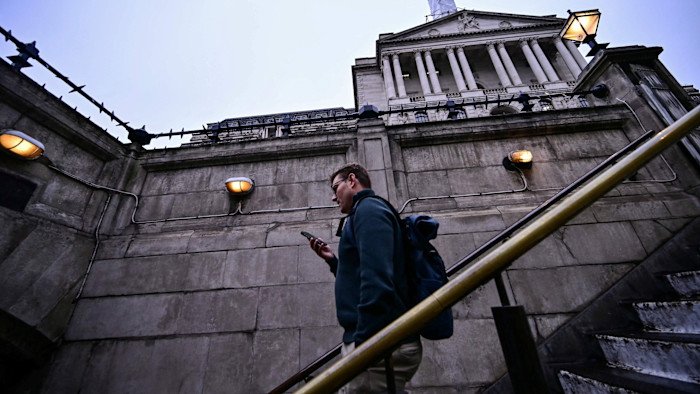
Stay informed with free updates
Simply sign up to the UK interest rates myFT Digest — delivered directly to your inbox.
High interest rates are not the reason for “lacklustre” UK growth, the Bank of England’s chief economist said on Friday as he pushed back against calls for cuts from more dovish voices on the Monetary Policy Committee.
Huw Pill, speaking at an event hosted by Santander in London, said the BoE had cut interest rates too fast over the past two years and needed to take a more cautious approach to bring inflation durably back to target.
After stripping out the effect of Budget measures to hold down household energy bills, “underlying” inflation would be running at 2.5 per cent in the middle of the year, rather than the 2 per cent the BoE targets.
This suggested the MPC had been “insufficiently cautious” in cutting rates from 5.25 per cent in 2024 to 3.75 per cent in December, Pill said, and should now keep them on hold for longer.
“Progress with disinflation is ongoing but it’s not quite as rapid or as convincing as we might have hoped 18 months ago,” he said, adding that this was “a call for caution rather than a call for reversal”.
Pill, who has consistently been on the more hawkish side of a split MPC, was speaking a week after the committee voted by a narrow margin to keep rates on hold, with some members in favour of a cut.
The dovish tone of the BoE’s communications helped convince traders that the central bank was preparing to cut rates again in March or April, with markets now pricing in a two-thirds chance of a move next month.

Some MPC members argued that wage pressures that had fuelled inflation in recent years would soon ease, against a backdrop of rising unemployment, and that the Budget measures would help because households would see lower bills and be less likely to press for pay increases.
But Pill said that while economic growth was “not very dynamic”, there was no sign of any collapse in activity. Official figures this week showed the economy grew 0.1 per cent in the final quarter of 2025.
He said that, during a recent visit to meet business owners in the Midlands: “I didn’t talk to people who felt we were on the cusp of a sharp downturn,” and “they did not point to interest rates as a constraint on activity”.
Chancellor Rachel Reeves, in her November Budget, announced a freezing of rail fares in 2026 and cuts to energy bills, as part of a package of policies intended to “cut the cost of living” and “bring down inflation”.
But Pill said that, while Reeves’ decisions would bring headline inflation down to 2 per cent in the short term, there was “a sort of special measures element of that” and it was an “open question” whether the fiscal measures would have any longer-term effect.