dailynewsnblog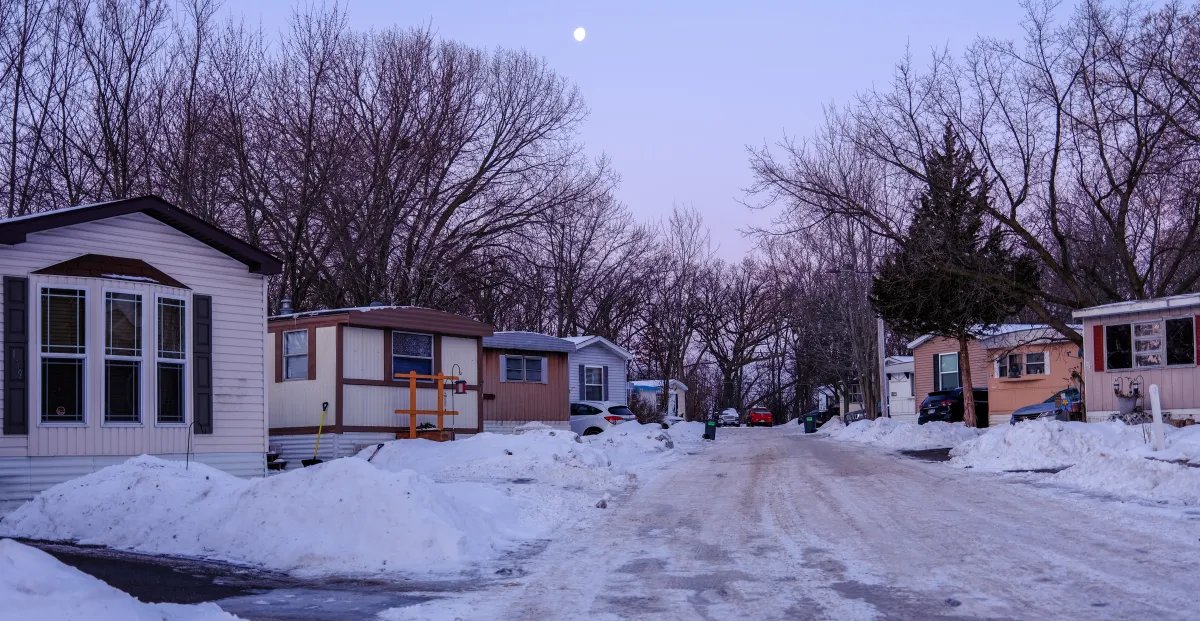
We sat in a parking lot and waited. We watched, knowing we were being watched in return. Two men, masked and presumably armed, idled in a gray SUV. “They’re all on this fucking street now,” Lety, a lifelong resident of the Minnesota suburbs, told me. ICE had been spotted at a gas station and a mobile home park, and they were here with us now, in a strip mall that was home to a dispensary, an auto parts shop, and little else. I stared straight ahead as Lety monitored the Signal chat on her phone. We didn’t speak. A knock on the passenger-side window startled us both. Earlier, Lety had shown me dashcam footage of a pair of ICE agents pulling up in front of her, getting out of their car, and threatening her with bear mace. This time, the figure on the other side of the glass was friendlier: not an ICE agent, just the manager of the auto shop. We were blocking a loading zone, he said, and he was fine with us loitering in the parking lot, but could we move our car up a bit?
Lety was out watching ICE, which she tries to do a couple times a week. Eventually the ICE agents left and we did too. Lety led us to Sunny Acres, the mobile home park 20 miles south of the Twin Cities where there had been rumors of ICE activity earlier that morning. We ran into another patroller and he and Lety exchanged pleasant, cautious hellos, addressing each other by their respective Signal codenames. He hadn’t seen ICE yet, but he worried it was just a matter of time.
Lety called a friend whose parents live in Sunny Acres. She figured they could warn their neighbors, most of whom were probably at work. Lety’s friend agreed to pass along the message. “Are you chasing those motherfuckers right now?” he asked. “You’re crazy.”
This was my sixth day in Minnesota and my first in Lakeville. After days of fruitlessly searching for ICE in Minneapolis, with Lety’s help, I spotted them within minutes of arriving in Lakeville. Lety has lived here her whole life. The reports from the cities had been chilling: ICE breaking people’s windows, shipping children off to jails in Texas. And it was happening here, too, she said. “You always hear about what’s happening in the city,” she told me, “and that’s great. But it’s like, please don’t forget about the suburbs!”
It’s not hard to see why ICE has expanded its reach beyond the Twin Cities. The qualities that have hindered ICE’s operation in Minneapolis and St. Paul — density and walkability; a large, almost exclusively left-of-center population — are absent here. In Minneapolis, I saw patrollers on nearly every street corner. It’s easy to gather for protests or come together to organize a mutual aid network. The sidewalks in Lakeville were deserted, as were the broad streets that led onto the highway. Had there been any bystanders, they may not have wanted to get involved.
“Here, we’re connected enough with these resources, even beyond auditory whistles, that if someone blasts a message in a Signal chat, you’ll get 20 or 30 people showing up at an intersection because they’ve gotten an alert on their phone,” Garrett Guntly, a Minneapolis-based activist, told me. “I don’t think that exists in Lakeville, Prior Lake, any of these larger suburbs that are geographically spread out.”
“I hide my whistle under my clothes when I’m out in Lakeville,” Lety said. Not everyone in town is conservative — it’s closer to a 50/50 split — but unlike in the cities, it would be unwise to assume that everyone here is on the same side.
Minnesota hasn’t gone red since 1972, but its reputation as a Democratic bulwark is largely due to the Twin Cities. The party’s hold on the state grows weaker each year. Where Kamala Harris swept in Minneapolis and St. Paul (receiving just over 70 percent of the vote in Hennepin and Ramsey counties), the election was much closer in Dakota County, of which Lakeville, with a population of just over 74,000, is the largest city.

Photo by Jaida Grey Eagle / The Verge

One day earlier, I was at a coffee shop in Uptown Minneapolis when someone came in saying ICE was outside. Word spread quickly: two men in plain clothes, a suspicious-looking car whose plate number was on the crowdsourced database of confirmed ICE vehicles. Within minutes, the shop was empty. Everyone donned their coats and hats and ran out the door. The agents, it turned out, had stopped into a nearby pizza place for lunch. The crowd stood outside and waited, ready to jeer them as soon as their meal ended. The people of Minneapolis would give no quarter to ICE.
And what of Lakeville? There were just two patrollers waiting at the entrance of Sunny Acres. If they blew their whistles to warn that ICE had arrived, would anyone hear? And if people heard, would it change anything at all?
Even here, every now and then, patrollers can draw enough of a crowd to make a difference. Lety joined her local Signal chat at a relative’s suggestion on January 7th, the day Renee Good was killed. “I low-key didn’t know what it was for, but I was like, ‘Okay, I’ll join it,’” she told me. “I thought it was like, ‘ICE is here.’ I didn’t know it was rapid response.”
That same day, she received an alert that ICE was trying to arrest four construction workers in Lakeville. The men were on a job site in a subdivision when ICE showed up. There were 30 or so agents, Lety told me, and they had surrounded the house — but they were outnumbered by neighbors who refused to let the agents get onto the roof. “This was my first time patrolling, and I was like, ‘What the fuck?’” she said. “There were maybe 50 or 100 people outside.”
She and a friend went door to door trying to get more neighbors to join in, and to her surprise, most of them were amenable. Soccer moms came out with their megaphones. People brought coffee and blankets. Lety showed me a video she took that day, as the afternoon light dimmed: a cacophony of whistles, people screaming at the agents to go home, lights flashing in the half-built house. A man in a neon green vest stands on top of the roof he’s helped build. After three or so hours, the agents gave up, and the men got away.
There is power in numbers. But sometimes there’s no one to call. Lety drives around Sunny Acres, looking at every car pulled into every driveway, making a note of anything that looks off: an SUV with out-of-state plates, a sedan with especially tinted windows. The sun, impossibly bright, makes everything shimmer. Everything is still. No one else is here.
The mutual aid and rapid response networks in the Twin Cities are effective partly because they’re hyperlocal. One St. Paul resident who regularly tracks ICE activity in her neighborhood — a practice that, depending on where you are, is called commuting or patrolling — told me she wouldn’t feel comfortable doing the same in communities she’s less familiar with. “I’d be a danger to myself and to others,” she explained. Guntly, who is active in the South Minneapolis Signal groups, told me the decentralized nature of the work makes it difficult to coordinate outside of one’s immediate neighborhood. In the chats, he said, “there’s a lot of messages like, ‘There’s something happening in Burnsville, does anyone have any relays down there?’”
That’s not to say that there’s no resistance outside the Twin Cities. People throughout Minnesota’s suburbs and small towns are also mobilizing against ICE — they just have more hurdles and fewer allies.
“It’s hard to know who you can trust, neighbor to neighbor,” Andy, a lifelong resident of Shakopee, Minnesota, told me. “You don’t know if they’re leaning right or leaning left, or what their stance is on things. There’s definitely a divide.”
Andy has been delivering groceries with Neighbors Helping Neighbors, a mutual aid group that started in Minneapolis in December, for about a month. He’s noticed a significant amount of fear among the immigrant community in Shakopee, where just over 15 percent of the population is foreign-born. To receive assistance from Neighbors Helping Neighbors, people need to submit a request describing what they need help with: groceries, rent support, rides to and from work, or something else. In addition to helping with grocery deliveries, Andy is a “connector” — he reviews these requests and matches the petitioners with people in the community who can help.
Part of his role involves reaching out to the people who submitted the requests to see if they still need assistance. “Sometimes it’s met with a lot of suspicion, like, ‘Who are you? How did you get this number?’” he said, because people are worried that ICE is trying to lure them out of their homes. “It’s really sad and frightening that people have to be wary of receiving aid.”
He explained: “It takes time to build trust. Some of these neighbors have been out of work for two months. They’re behind on rent because they aren’t going to work. They’re taking care of their whole family, and they’re terrified to go outside.”
The resistance is much smaller in St. Cloud, a community of just over 72,000 people, where nearly two-thirds of voters favored Trump in 2024. “When observers are out responding to ICE activity, it’s not just ICE they have to be aware of,” Audrey*, a lifelong resident of St. Cloud, Minnesota, some 60 miles northwest of the Twin Cities, told me. Some of their neighbors are “hostile towards our observers and supportive of ICE.” Still, the small community of observers in St. Cloud is a group of overachievers, covering ten towns across more than 200 square miles.
This level of geographic and ideological isolation comes with its own set of problems. Just like in the Twin Cities, observers in St. Cloud and the surrounding area have been harassed and intimidated by ICE, Audrey told me. “We never want observers alone, and yet it’s been hard to not have that happen in this type of community,” she said. “We have had, for example, calls about potential ICE activity where we question sending an observer because it is 30 to 40 minutes away, and they may be the only observer in a town without any rapid response in place. What are they walking into? But they go anyway.”

La Viña, an Evangelical church in Burnsville, Minnesota, has distributed more than 818,000 pounds of food since DHS’s Operation Metro Surge began. The church does upwards of 5,000 deliveries each week, pastor Miguel Aviles told me. Each Saturday, carloads of volunteers line up to help at La Viña, snaking past the church’s grounds and off the street.
The church began calling on volunteers in December, and now counts on a network of more than 8,000 people to sort, pack, and deliver groceries. Lety told me she sometimes joins her mom, a regular volunteer, though she’s found herself more suited to patrolling. (“I have ADHD,” she said by way of explanation; she gets antsy waiting in line.) La Viña’s volunteers deliver far beyond Burnsville, a suburb 20 or so minutes south of Minneapolis. Aviles told me some drivers have traveled as much as two hours away.
“We’ve had drivers who have been intimidated,” Aviles told me. “I had a lady call me and say, ‘Pastor, I’m with my father doing deliveries and I’ve had ICE following me for 40 minutes.’”
Still, he said, the support from the community has been overwhelming, and so has the need. At first, Aviles said, most of the requests the church received were for groceries. Now, two months in, rent has become the most urgent need. “People haven’t been able to go to work for over two months,” he told me. Some were able to pay rent in January but fell behind in February. La Viña has started a rent fund to keep people housed while the ICE operation continues.
Even if the occupation ends soon, Aviles expects it could take months or years to return to some semblance of normalcy. On February 12th, border czar Tom Homan announced the “surge operation” would be ending soon, but he also said a “small footprint” of agents would remain in Minnesota during the wind-down. This isn’t the first time Homan has claimed to be winding down the operation. In early February, the Department of Homeland Security announced that 700 agents would be leaving the state.
Homan’s announcement hasn’t yet translated to actual change. Audrey said the town saw an exceptional amount of ICE activity on Thursday, the day of Homan’s announcement.
“Even if they leave tomorrow, we still have a lot of work to do, mentally and physically,” Aviles said. People have lost their jobs. Once they return to work, it’ll take them at least two weeks to get paid again, and that first paycheck won’t cover all their necessities. “I’ve been telling our volunteers and community that we still have a lot of work ahead. It’s going to take time to recover.”
In some respects, the community has already been indelibly altered. Aviles told me about a family that first came to La Viña two years ago. He presided over the patriarch’s funeral; he was present at the son’s engagement and officiated his wedding. “And then we had to say goodbye,” Aviles told me, because life under Metro Surge became so unbearable that the family chose to leave the country. “On Monday, we had to say goodbye to a Brazilian family. Same thing. She was a Sunday school teacher. They love God, they love our community, and they had to self-deport because this country is pushing them out.”
These, he told me, are wounds that cannot heal. “They say they’re going after the worst of the worst. That’s not true. These were the best of the best, and we miss them dearly.”