dailynewsnblog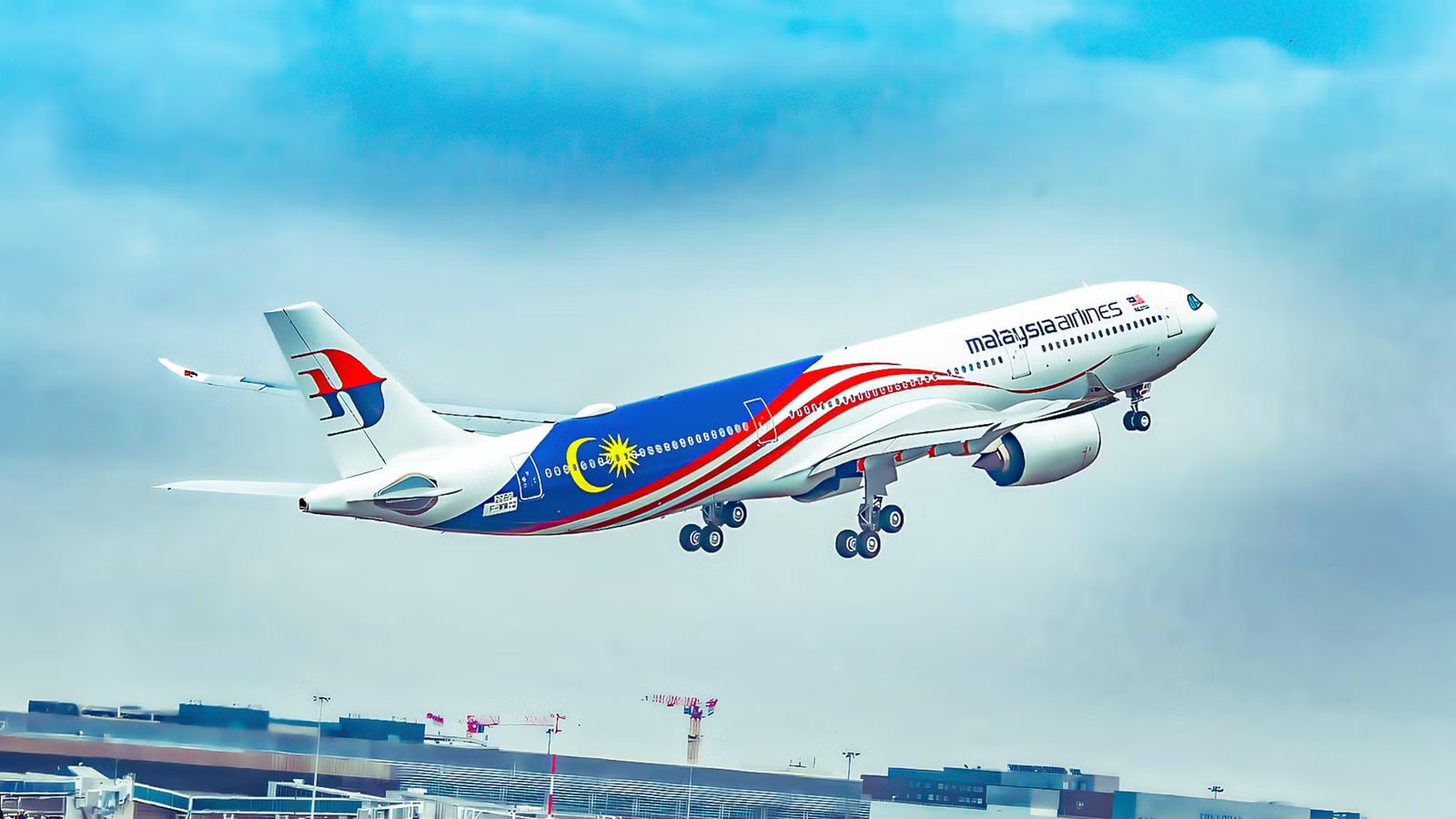
The Airbus A330neo is the updated version of a classic aircraft, falling somewhere between a completely new design and a simple refresh. When Airbus launched the program in 2014, the goal was clear – keep the strengths of the wildly popular original A330 while bringing its efficiency closer to the newest generation of widebody aircraft.
For airlines, the appeal of the Airbus A330neo was its lower fuel burn, quieter operations, and cockpit commonality with existing Airbus fleets, together with an aircraft that pilots, engineers, and lessors already knew well. That positioning has shaped the A330neo’s success ever since. In this article, we will take a closer look at this modern aircraft and how it has gone on to form the backbone of several major fleets across the world, including those of Delta Air Lines and Malaysia Airlines.
From Airbus A330ceo To Airbus A330neo

The concept for the Airbus A330neo, short for New Engine Option, was developed as a response to changing market dynamics rather than a technological arms race. By the early 2010s, Airbus faced pressure from the Boeing 787 program, which offered composite structures and strong fuel efficiency, while at the same time, many airlines still valued the robustness and lower acquisition costs of metal widebodies like the Airbus A330ceo.
Airbus chose evolution over revolution, and instead of replacing the A330 outright, it invested in a targeted upgrade that would extend the type’s life well into the 2030s. The result was a family consisting of two variants – the smaller Airbus A330-800 and the larger Airbus A330-900, replacing the earlier A330-200 and A330-300, respectively. The European manufacturer’s focus was on improving economics without forcing airlines into a completely new operating philosophy.
This approach also aligned with the realities of fleet planning, with many carriers needing widebody aircraft in the 250- to 300-seat range but hesitant to commit to higher-priced aircraft with long wait times. The Airbus A330neo slotted neatly into that gap, offering earlier deliveries and familiar maintenance practices, and in that sense, it was as much a strategic product as an engineering one.

7 Ways Airbus Made The A330neo Different From The Original A330
The A330neo represents progress in seven key areas compared to the older A330ceo.
Engines, Aerodynamics & Cabin Updates

The most visible change on the Airbus A330neo is its engines, and the Rolls-Royce Trent 7000 was developed specifically for the aircraft, drawing heavily on the technology of the Trent 1000 and Trent XWB. With a higher bypass ratio and improved materials, the engine delivers a significant reduction in fuel burn compared to the previous Trent 700, along with lower noise and emissions.
However, these new engines required more than just new pylons, and Airbus redesigned the wing to accommodate them, adding a new composite wingtip inspired by the Airbus A350. The so-called Sharklet Plus increases span and improves aerodynamic efficiency, contributing to a fuel burn reduction of around 14% per seat compared to the A330ceo. While the wing structure remains largely metal, these refinements show how incremental changes can still yield meaningful gains.
Inside the cabin, the Airbus A330neo saw the introduction of Airbus’ Airspace concept, including larger overhead bins, updated lighting, and a quieter cabin environment. Airlines also gained flexibility in the aircraft’s layout, with higher-density configurations possible without sacrificing passenger comfort. For long-haul routes where margins are tight, these interior improvements play a real role in overall economics.

Over 30 Routes: Where Delta Air Lines Is Flying The Airbus A330-900neo
With its long range, the Airbus A330-900 has helped to revolutionize the commercial long-haul market. We investigate the routes Delta flies with them.
The Airbus A330neo’s Entry Into Service

The Airbus A330-900 entered service in late 2018 with TAP Air Portugal, with the  Star Alliance carrier deploying the aircraft on transatlantic routes to destinations across North America and South America. Subsequent feedback from various operators has highlighted the aircraft’s smooth handling, strong dispatch reliability, and fuel performance broadly in line with expectations.
The smaller Airbus A330-800 followed later, entering service in 2020. Its longer range makes it something of a niche variant, capable of flying routes that sit between traditional midsize widebodies and larger long-haul aircraft. However, that same niche has limited its sales, especially as newer narrowbody aircraft have expanded into longer routes once reserved for widebodies, and today, only three commercial carriers operate the A330-800 – Kuwait Airways, Uganda Airlines, and Air Greenland.
That said, overall sales of the Airbus A330neo are booming, and today, Malaysia Airlines is one of the most high-profile operators of the Airbus A330neo, with nine active aircraft and a further 31 on order, according to the latest data from ch-aviation. Each of the  oneworld carrier’s A330neos is able to accommodate up to 297 passengers in a two-class configuration – 28 in business class and 269 in economy class (including 24 extra legroom seats). Let’s take a closer look…
Malaysia Airlines & The Airbus A330neo

In an interview with Simple Flying, Captain Nasaruddin A. Bakar, President and Group CEO-designate of Malaysia Aviation Group (MAG), spoke about the role that the Airbus A330neo will play in the carrier’s operations over the coming years, saying,
“The A330neo fleet will be deployed progressively to support both fleet renewal and targeted network growth, particularly across high-demand APAC markets. This measured approach allows us to improve fuel efficiency, enhance product consistency, and build capacity in a disciplined manner as additional aircraft are inducted.”
Bakar went on to speak about further fleet enlargement and the arrival of more widebody aircraft, adding,
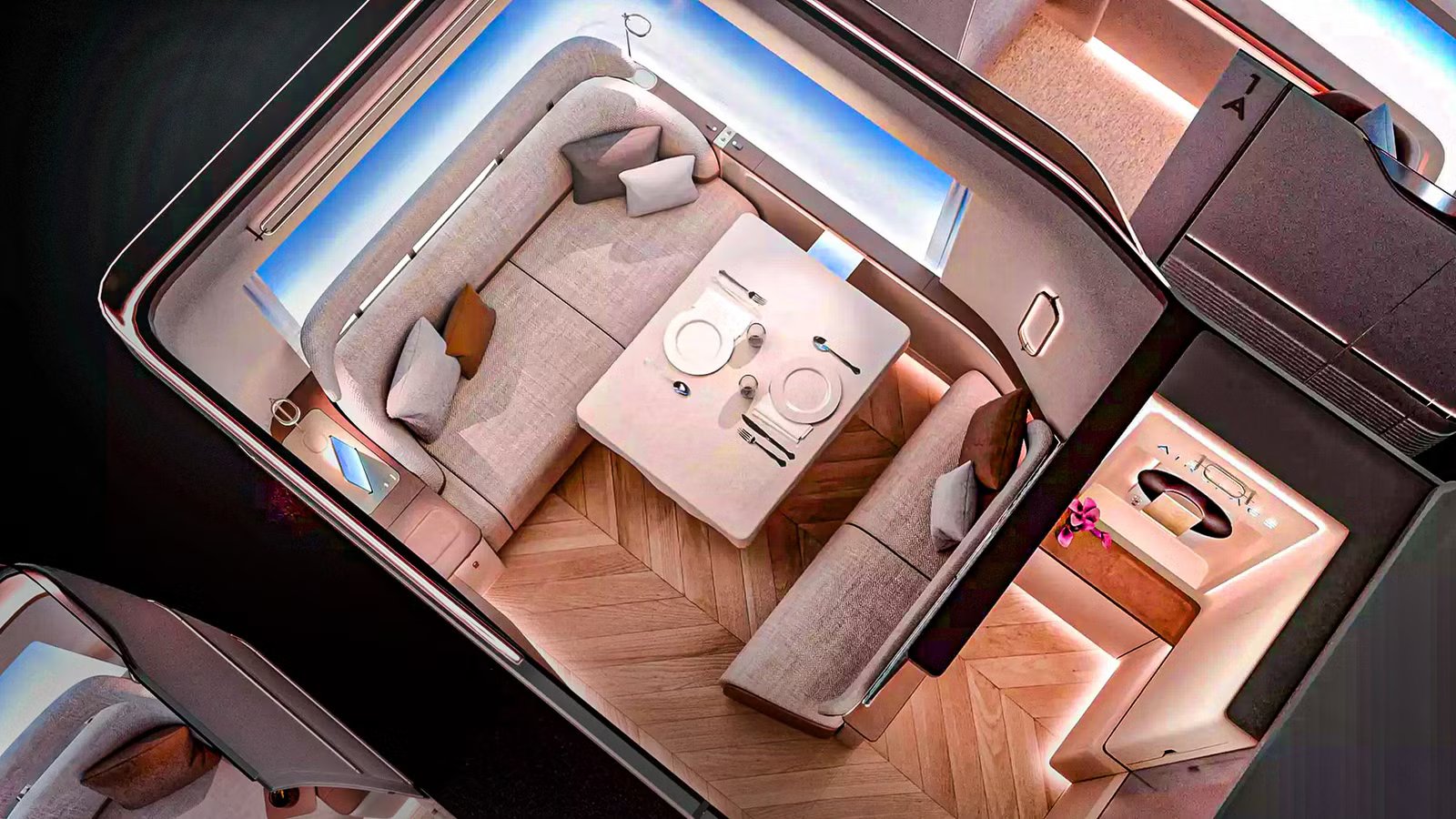
“The A330neo will remain the backbone of Malaysia Airlines’ widebody fleet. In July 2025, MAG confirmed an additional order for 20 A330neo aircraft, bringing the Group’s total commitment to 40 aircraft and positioning Malaysia Airlines as amongst the largest A330neo operators in the Asia-Pacific region. The aircraft supports both fleet renewal and network growth across key markets in ASEAN, China, India, and Australasia, while delivering a consistent, premium widebody product, including all-suite Business Class cabins and next-generation inflight comfort.
“Beyond the A330neo, we have issued a Request for Quotation (RFQ) for a future long-range widebody aircraft to eventually replace our A350-900 fleet, with a decision expected in 2026. This ensures a phased, disciplined evolution of our widebody fleet, aligned with demand, efficiency, and long-term sustainability.”
All About Malaysia Airlines

Malaysia Airlines is the flag carrier of Malaysia, and has had a long, often turbulent history that reflects both the rise of commercial aviation in Southeast Asia and some of the industry’s darkest moments. The airline was originally founded in 1947 as Malayan Airways and gradually expanded its network across Asia and beyond. Over the decades, it developed a reputation for friendly service and competitive regional reach, growing into a full-service carrier and joining the oneworld alliance.
Malaysia Airlines’ primary hub is at  Kuala Lumpur International Airport (KUL), from where the carrier operates flights across Asia, to Europe, Australia, and beyond, acting as a key connector between Southeast Asia and the rest of the world. However, despite its strong network, Malaysia Airlines is often remembered for two major accidents in 2014 that profoundly affected its fortunes.
In March 2014, Flight MH370 vanished during a routine flight from Kuala Lumpur International Airport (KUL) to Beijing Capital International Airport (PEK) with 239 people on board. The aircraft has never been found, and renewed search efforts were announced for late 2025 in hopes of finding wreckage. Just a few months later, Flight MH17 was shot down over eastern Ukraine while en route from  Amsterdam Schiphol Airport (AMS) to Kuala Lumpur International Airport (KUL), killing all 298 aboard. In 2025, the International Civil Aviation Organization (ICAO) formally found that a Russian-made missile struck the aircraft during the conflict.
These events reshaped Malaysia Airlines’ identity, prompting restructuring, safety culture reviews, and a focus on resilience. Since then, the carrier has shown significant signs of recovery, rebuilding passenger trust, enhancing operational efficiency, expanding route networks, modernizing its fleet, and investing in employee training to strengthen overall performance and competitiveness in the global aviation industry. Malaysia Airlines’ current fleet is shown in the table below:
Aircraft | Number In Fleet | Number On Order |
|---|---|---|
Airbus A330-200 | 3 | – |
Airbus A330-300 | 15 | – |
Airbus A330-900 | 9 | 31 |
Airbus A350-900 | 7 | 3 |
Boeing 737-800 | 40 | – |
Boeing 737 MAX 8 | 14 | 29 |
Boeing 737 MAX 10 | – | 12 |

An Ideal Market: Why The Airbus A330neo Is Uniquely Perfect For Asia-Pacific
The jet has impressive capabilities and versatility.
The World’s Largest Operators Of The Airbus A330neo

 Delta Air Lines is currently the world’s largest operator of the Airbus A330neo, with 39 in its fleet, although the
  SkyTeam carrier could be overtaken by VietJet Air, which has 40 of the aircraft on order. The airline continues to leverage the A330neo for long-haul routes, benefiting from its improved fuel efficiency, passenger comfort, and extended range on routes such as
  Hartsfield-Jackson Atlanta International Airport (ATL) to Buenos Aires Ministro Pistarini International Airport (EZE) and New York John F. Kennedy International Airport (JFK) to Accra Kotoka International Airport (ACC).
The world’s largest operators of the A330neo are outlined in the table below:
Airline | Airbus A330-900 |
|---|---|
Delta Air Lines | 39 |
TAP Air Portugal | 19 |
Condor | 18 |
Cebu Pacific | 12 |
ITA Airways | 11 |
Corsair International | 9 |
Malaysia Airlines | 9 |
Lion Air | 8 |
Virgin Atlantic | 8 |
Azul Linhas Aéreas | 7 |
Garuda Indonesia | 5 |