dailynewsnblog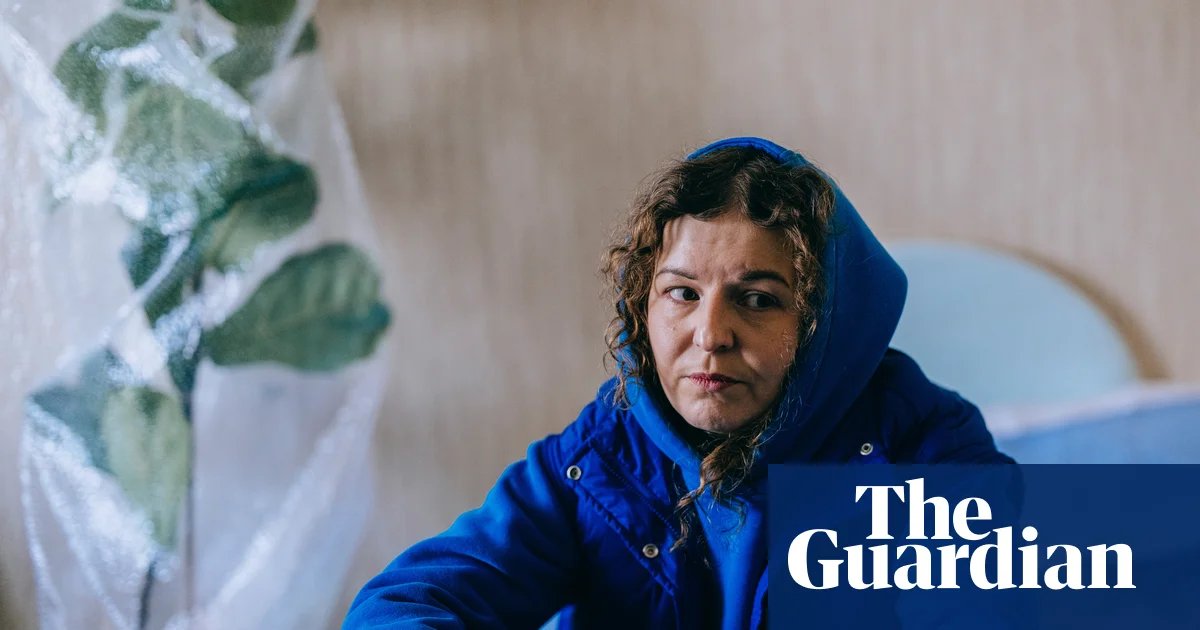
Natalya Pavlovna watched her two-year-old son, Danylo, play with Lego. “We are taking a break from the cold,” she said as children made drawings inside a warm tent. Adults sipped tea and chatted while their phones charged. The emergency facility is located in Kyiv’s Troieshchina district, on the left bank of the Dnipro River. Outside it was -18C. There was bright sunshine and snow.
“Russia is trying to break us. It’s deliberate genocide against the Ukrainian people. Putin wants us to capitulate so we give up the Donbas region,” Natalya said. “Kyiv didn’t use to feel like a frontline city. Now it does. People are dying of cold in their homes in the 21st century. The idea is to make us leave and to create a new refugee crisis for Europe.”
Her apartment is in one of 2,600 buildings in the Ukrainian capital currently without power or heating. The Kremlin has been bombing the country’s energy infrastructure since the start of its full-scale invasion nearly four years ago, targeting substations, thermal power plants and rescue workers battling to save the electricity network from multiple attacks.
In recent weeks Russia has overwhelmed Kyiv’s air defences and inflicted further damage, coinciding with one of the coldest, bitterest winters for decades. Ballistic missiles flattened the Darnytska combined heat and power plant that supplied much of the left bank of the Dnipro. There have been frequent capital-wide blackouts restricting electricity supply to three or four hours a day.
Natalya said the impact of Vladimir Putin’s aerial campaign was reminiscent of the 1932-33 famine in the Soviet Ukraine, engineered by Stalin, in which millions perished. The words in Ukrainian are similar – holodomor (extermination by starvation) and kholodomor (death by cold). “Putin wants to do to Kyiv what he did to Mariupol,” she said, adding that many of those shivering in the capital had fled fighting elsewhere.
“There has been a massive impact on families and people with children,” said Toby Fricker, a spokesperson for Unicef, which had donated the warming tent. In Kyiv, 45% of schools are closed because of a lack of central heating. “Education has been disrupted. Kids and teenagers experience social isolation. They are missing out on normal life,” Fricker said.
Some mums have swapped tips in chat groups about cheap accommodation abroad, in Bulgaria, Egypt and Greece. Others have decided to stay put. Yuliia, a mother of six-year-old twins, said: “I see reasons to leave and to remain. At the moment we are together with my parents. If I left I would lose them,.” She added: “We don’t know how long this situation will last. It’s cold. We sleep in our hats.”
Residents have used ingenious hacks to try to make their homes a bit warmer. They have bought power banks, camping gear, gas cylinders and generators, a rumbling presence outside offices and shops on Kyiv’s icy streets. Some people heat bricks and rocks over gas stoves. Others have erected tents inside living rooms. Cafes are a popular refugee. Ukraine’s state emergency service has set up shelters with beds.
Julia Po, an artist, showed her seventh-floor home in Kyiv’s Dniprovskyi neighbourhood. She led the way with a torch up a dark staircase. With no electricity, the lights and lift do not work; frozen water pipes burst two weeks ago, causing a flood; a chill wind whipped through slatted panels. “The building dates from the 70s and the Soviet era. It’s badly designed and can’t cope,” she said.
Po had insulated her front door with bubble wrap. Walls, windows and a ficus house plant had also been wrapped, in order to reduce drafts. She sleeps under two blankets, wearing thermal underwear and a hoodie. “Underneath, from the ground, it’s just cold. When you wake up in the morning you can feel your kidneys. My electric kettle cracked. I didn’t wash my hair for two weeks,” she said.
Her cat – named after the Radiohead singer Thom Yorke – sleeps under a blanket in a cupboard. Po, originally from Russian-occupied Crimea, said she felt she had been dispossessed. “It’s as if someone has stolen my home. There is the same vibe as 2022. I’ve been through several stages, from depression-aggression to acceptance and a degree of irony. It’s not pleasant, but what can you do? There is a war in our country, unfortunately. This is our reality.”
The artist, who has a gas stove and a boiler, acknowledged she was better off than some of her neighbours. The blackouts have badly hit pensioners, who are often too hard-up to buy extra equipment. Some are trapped in their flats. At least 10 people have died from hypothermia and 1,469 have been hospitalised. Russian attacks on power facilities have all the while continued, with strikes on Thursday in Kyiv and the battered southern city of Odesa.
Maksym Timchenko, the head of the energy provider DTEK, said Moscow had wiped out 80% of Ukraine’s power generation capacity. “We are not talking about an energy crisis. It’s a humanitarian and national crisis. As a country we are in survival mode,” he said. Only one out of five company power plants was currently connected to the electricity grid, he added, with repairs difficult because “everything is frozen”.
Tymchenko said Ukraine needed urgent international help. He said it required additional air defences, ammunition and an energy ceasefire – something Moscow briefly agreed to at Donald Trump’s request, before resuming bombing after a matter of days. “Kyiv has become the main target. We have lost all sources of power generation in the city. We are doing everything we can to keep the economy alive,” Tymchenko said.
Oleh Yaruta, a DTEK engineer, said the capital’s power grid was overloaded. It has suffered burnouts as people used electric heaters and boilers to stay warm. He was repairing an underground power cable. Hopping out from a hole, he produced an iPad. On it was a long list of pending repair jobs caused by outages across the capital. What did he think of Russians? “They are devils and orcs. They are bombing because they can’t conquer us,” he replied.
Earlier this week electricity returned to some left bank buildings, with lights flickering on again for a few hours. Natasha Naboka said she had shared a bed in January with her 10-year-old daughter, Sofiia, and their yorkshire terrier, Bonya. “We were together under one blanket. Bonya wore a jacket. I woke up and my nose was frozen. It was 4-5C inside the flat.” She added: “Sofiia’s school was closed. For her it was an adventure.”
With no working fridge, Naboka has been leaving food out on her fifth-floor balcony. She washed clothes by hand and took them in a rucksack to dry in her workplace, a beauty parlour in central Kyiv, where the power situation is better. During air raids she and Sofiia moved to the corridor, she said, hiding between two walls. Her husband, a soldier, is based in Kharkiv oblast, another region badly affected by power breakdowns.
Some Kyiv residents have criticised the city authorities for failing to protect infrastructure. Volodymyr Zelenskyy has pointed the finger at the city’s mayor, Vitali Klitschko, accusing him of doing too little. Naboka, however, said Russians were to blame. “They thought they could seize Ukraine very quickly. They failed. So instead Putin is trying to destroy us.” She added: “This is all about the jealousy and unhealthy ambition of one man.”