dailynewsnblog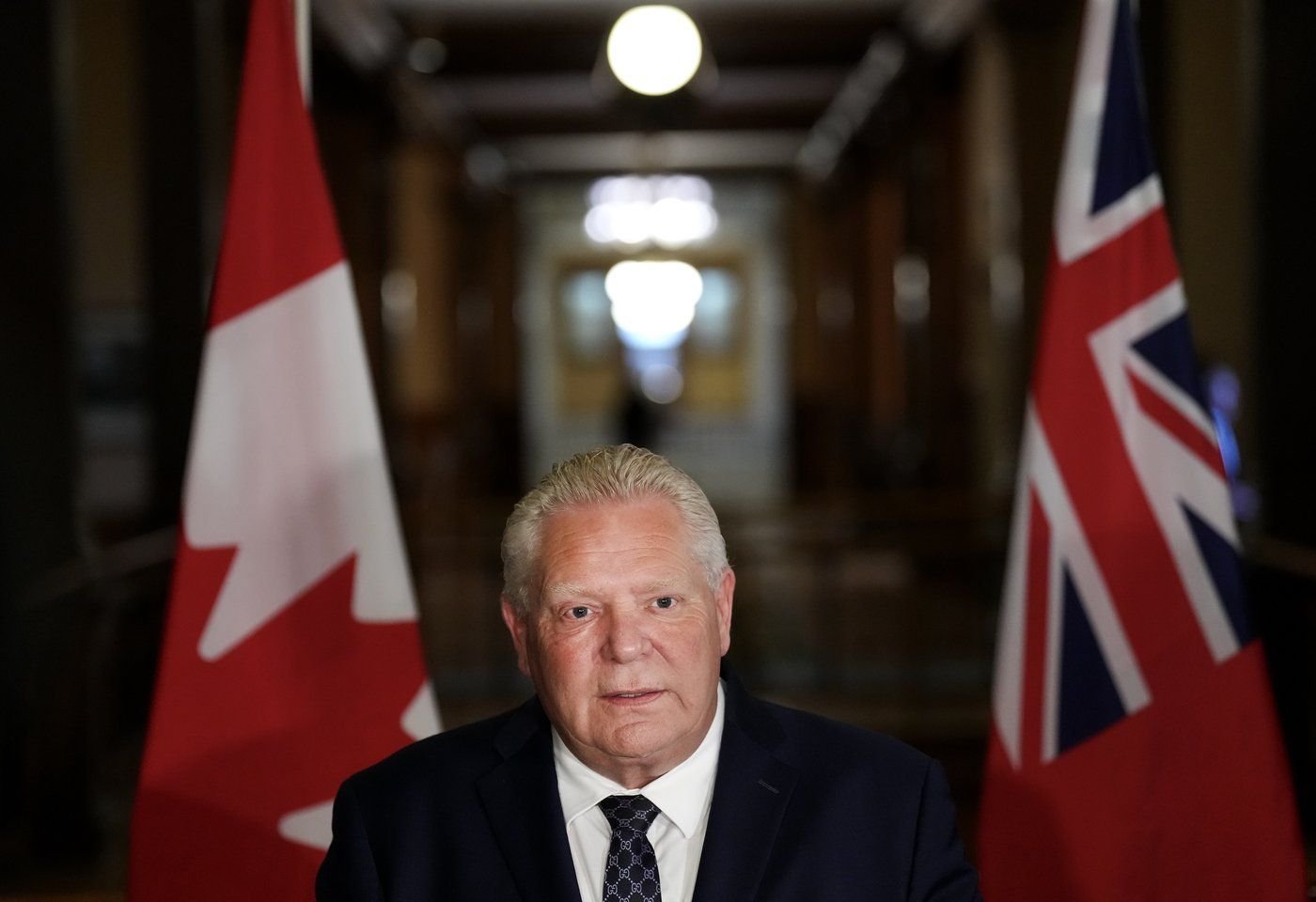
Welcome back to Adjournment Proceedings, our weekly deep-dive into the issues and people driving Canadian politics. Today, we look at Doug Ford’s future as premier and leader of the PCs, and what’s next for the party when he ultimately heads out.
Welcome back to Adjournment Proceedings, our weekly deep-dive into the issues and people driving Canadian politics. Today, we look at Doug Ford’s future as premier and leader of the PCs, and what’s next for the party when he ultimately heads out.
Missed a week? Take a look through our archives here.
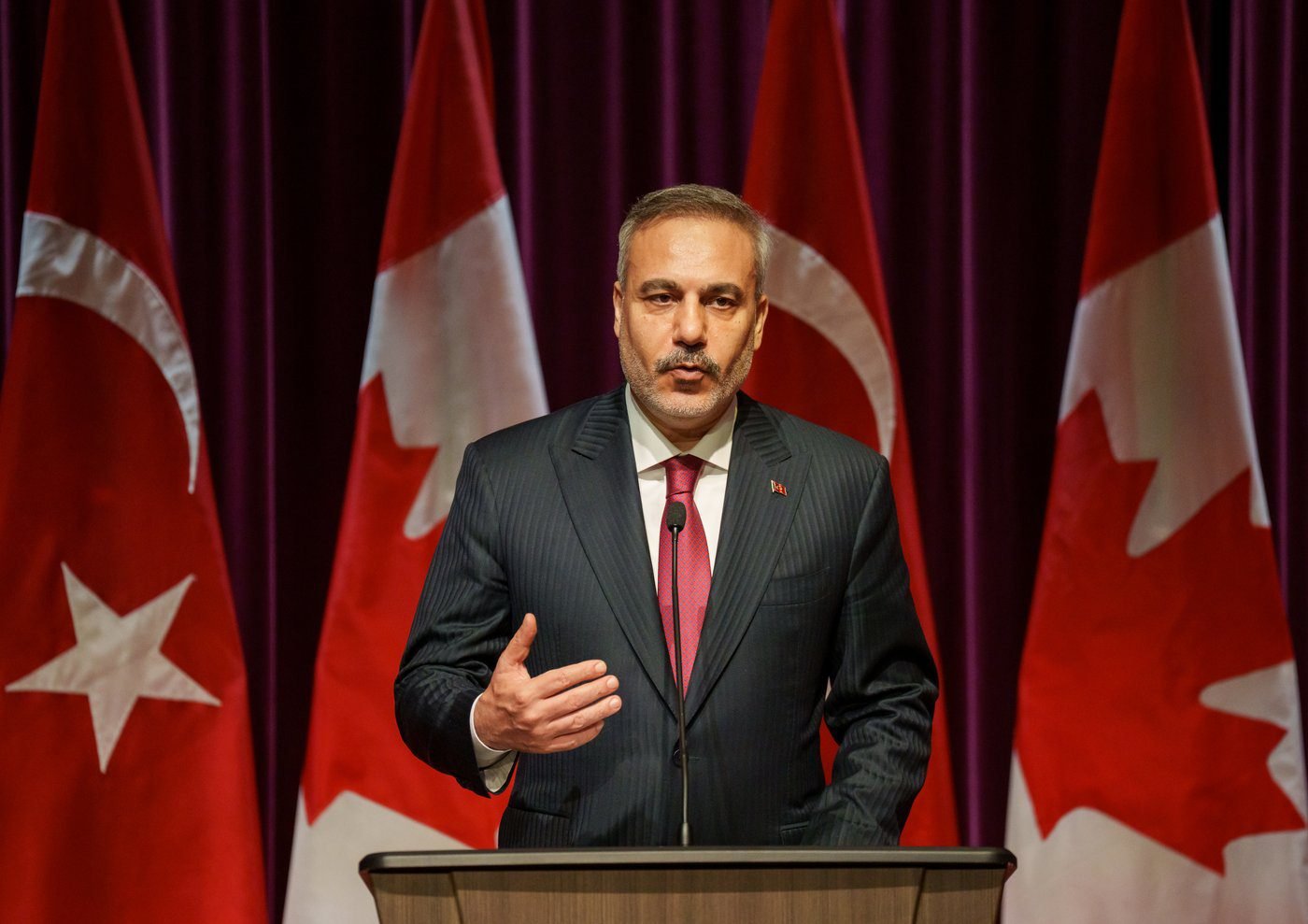
When Doug Ford stood before PC delegates during their convention on Jan. 30th, he declared he intends to seek a fourth mandate.
He and the legislature just decided to give themselves raises and bring back the pensions that the previous PC government cut. Even if he loses the next election, he is likely to become one of the five premiers in Ontario history who has served the longest time.
Ford could last longer than James Whitney without breaking the Charter, which caps how long the current legislature can serve.
He already has three majority governments in a row, and the opposition in Ontario remains divided.
But the question hovering over Queen’s Park is no longer whether he wants to stay, but rather what happens to the Ontario PC Party when he can’t.
How long can he stay on?
Ford’s PCs still lead in Ontario. Polling from Abacus Poll suggests that if an election were held today, the PCs would likely win again.
But the poll also found that 48 per cent of the respondents say it is definitely time for a change in government in Ontario, with only 18 per cent saying Ford and the PCs should definitely be re-elected.
Ford still is, as Abacus Data’s David Coletto put it, “an asset to the PC party today.”
But the numbers beneath the surface are shifting.
Coletto says the desire for change is rising, not yet at “red flashing lights” levels, but moving steadily upward. Ford’s personal negatives have climbed, and more Ontarians say the province is headed in the wrong direction than the right one.
“This is a natural thing that happens to any government,” Coletto said. “The longer a government is in office, the more likely it is that people are going to want change.”
Matt Spoke, a conservative organizer behind Project Ontario, sees something similar. He doesn’t expect a leadership challenge tomorrow, but after nearly eight years in office, he says the question of Ford’s future is becoming unavoidable.
“I don’t expect anything in the short term,” Spoke said. “But he’s coming up on that time… where naturally questions are going to start surfacing around how long does he wants to stay in that role.”
The deeper issue, Spoke argues, isn’t electoral math, but identity and values.
“The party has built a political machine that is very, very good at winning elections,” he said. “But not very good at governing and not very good at advancing a conservative political ideology.”
Winning, eventually, may not be enough.
The Ford-shaped hole
What complicates any discussion of the future is how thoroughly Ford has fused himself to the party brand.
Coletto says the premier is unusually fused with the party’s identity, more so than most modern premiers.
“He has found a way to hold the conservative base together while extending it into places that may not normally be conservative,” Coletto said, pointing to crossover voters who could back both Ford provincially and Mark Carney federally.
Ford’s populist, retail-politics style allowed him to expand the coalition into the 905, into parts of Toronto, and into segments of the electorate not instinctively conservative.
And at the same time that this elasticity is his superpower, it is also creating some vulnerabilities.
“What would the party be like without Doug Ford?” Coletto asked rhetorically. “It’s really hard to answer because he is so connected, for good and for bad, to the brand.”
That means that if his personal approval continues to soften, that fusion could become a liability instead of an advantage.
The fourth-term problem
History is not kind to fourth mandates.
Three consecutive majority governments in Ontario’s modern political era is already a rare thing. A fourth would be almost unprecedented.
John Milloy, a former Liberal cabinet minister who has watched multiple governments rise and fall, says the risks of overstaying are structural.
“People just get sick of politicians,” Milloy said. “You can be the best politician on earth and people just get sick of you.”
By a fourth term, he argues, a leader “owns everything.” There are no previous governments left to blame, so healthcare pressures, housing frustrations, economic headwinds, they all accumulate under one name.
In Ford’s case, there’s also the factor that some other members of his cabinet might expect to wear the Premier shoes at some point.
“There are members of his cabinet who would love to be premier,” Milloy said. “One of two things is going to happen: they’re either going to leave… or they’re going to start organizing.”
As long as Ford keeps winning, it is unlikely that an internal rush to get rid of him happens. A loss, or even a minority, changes the math.
“Does a leader who has won three majorities want to risk being remembered for the loss? No leader wants to be remembered for that,” Spoke said.
Is he still an asset?
Polling firm president David Valentin says Ford’s approval numbers have deteriorated in key regions, including the 905. But he cautions against absolutes.
“Structurally their coalition is intact,” Valentin said. “They’ve run the playbook before, define the opponent early, drive up their negatives, and run on affordability. It’s worked three times.”
He said that Ford has rarely faced a unified opposition. Liberal and NDP vote splitting has allowed the PCs to win comfortably, and if that dynamic persists, a fourth victory is possible.
The Ontario Liberals are poised to officially kick off their leadership contest, and whoever emerges victorious will take the helm of a party that, despite its structural challenges, is better positioned than it has been in years. The new leader will have a crucial advantage: time to shape their public image, reconnect and strengthen party infrastructure, and make their case to voters well ahead of the next election.
The New Democrats, meanwhile, have a tougher road ahead.
Deputy leader Doly Begum’s decision to step down as the MPP for Scarborough Southwest and seek a federal seat under the Liberal banner creates new challenges for a party hoping to present itself as a credible alternative government. Her exit sets up a provincial byelection in a riding expected to draw an intense three-way battle. Should the NDP fail to hold the seat and see it flip to the Liberals, many would interpret that outcome as further evidence of the party’s fragility.
For years, the PCs have benefited from vote-splitting on the centre-left. That structural advantage has allowed Ford to win comfortable majorities without commanding majority public support.
But at some point, leaders must decide whether to leave on their own terms, or risk being pushed.
What’s next for the party?
If Ford did step aside before the next election, the party would face a defining choice.
An internal successor, someone from cabinet, could struggle to present themselves as “change” after nearly a decade of PC rule, and at the same time, an outsider could refresh the brand but risk fracturing the coalition Ford built.
Coletto points to examples across Canada where leadership changes either revived governments or failed to save them. It depends entirely on timing and context, especially the level of public appetite for change.
“If you get to 60 or 65 per cent saying they want change,” he said, “it becomes harder for someone inside that government to replace him.”
But the “best before” date for governments is a real thing. And if economic conditions worsen, especially in manufacturing regions Ford has promised to protect or if we see a worsening of Ontario’s EV market, the vulnerability grows.
“He set himself up with that frame,” Coletto said. “If he’s successful, he gets another mandate. If not, people may look for an alternative.”
The irony of strength
There is an irony in Ford’s current position.
His dominance has kept rivals at bay and unified the caucus. But that same dominance has prevented the party from visibly cultivating a successor.
If he were to be outed suddenly, through scandal, economic downturn, or a polling collapse, the PCs would face a leadership vacuum in a compressed timeline.
And unlike the Liberals in 2013, who replaced Dalton McGuinty after fatigue had already set in, or the federal Liberals in 2025, who changed leaders after defeat and could rebuild in opposition, the Ontario PCs would likely be attempting a transition while still in government, and possibly on the brink of an election.
That is a far more delicate maneuver.
A mid-mandate leadership race risks exposing factional lines that have so far remained buried. Is the future of the party more culturally conservative? More overtly populist?
Ford has managed to straddle those impulses, Milloy says, but a successor would have to choose.
“They would have to see, with a new leader, what would the new-PC brand be; if it would be more conservative, or more on the liberal side of the political spectrum, and what would the core message of the party be,” he said.
There is also the public optics problem. Just the act of replacing a long-serving premier can validate the opposition’s central critique: that it is simply time.
If Ford stays and wins, he will cement himself among Ontario’s longest-serving premiers. On the other hand, if he stays and loses, he risks redefining his own legacy.
But if he leaves before that test, he hands his party a different gamble: can Fordism survive without Ford?
“The fact that he won all these elections and has not really been affected by anything yet has given him control over the timing,” Spoke said, “but it hasn’t eliminated the clock entirely, and it would definitely be interesting to see what the Ontario PC could become after him,” he said.