dailynewsnblog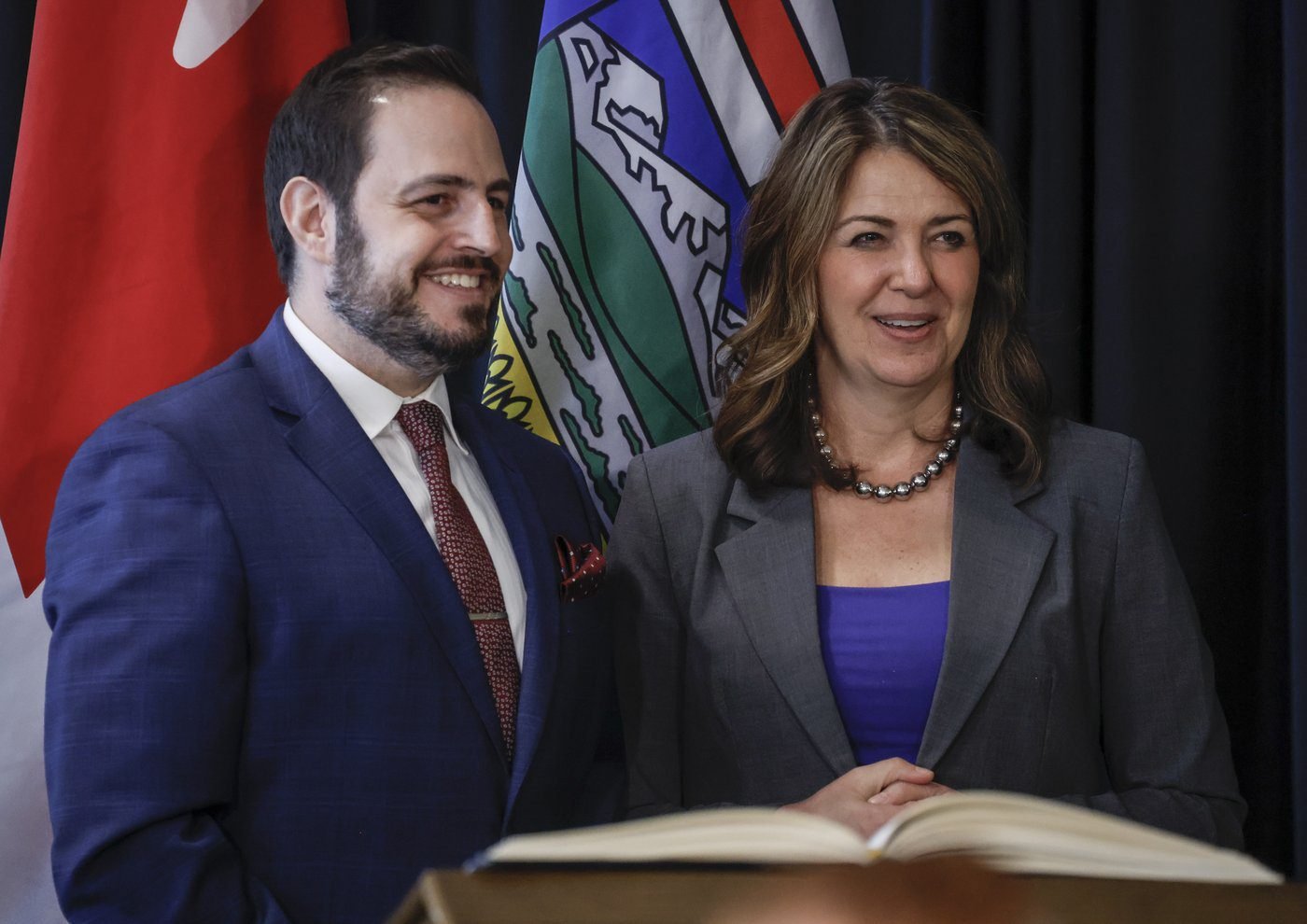
CALGARY — Alberta’s government is spending $143 million to dispatch about 1,400 extra teachers and educational assistants to support students in strained elementary school classrooms across the province.
The bulk of new staff is meant for schools in Edmonton and Calgary to provide in-class help, where Premier Danielle Smith’s government says the latest data indicates the greatest need.
The move is part of a broader pledge and is made to hire 3,000 new teachers and 1,500 educational assistants over the next three years.
In October, the government invoked the Charter’s notwithstanding clause to end a provincewide teachers strike and imposed a pay deal teachers previously rejected.
At an announcement in Calgary on Thursday, Smith said the strike laid bare teachers’ concerns about the pressures they were facing on the front lines amid population growth and students demanding special attention.
“Our message to teachers and to school administrators is this: we have heard you. We’re here for you, and help is on the way,” she said.
She added that the government determined it had to “get a lot deeper than just having some kind of arbitrary pupil-teacher ratio written into a contract.”
Junior high and high school classrooms won’t see a similar funding boost immediately, but Education Minister Demetrios Nicolaides said the government is prioritizing addressing complex needs in the kindergarten to Grade 6 classrooms that need it the most.
He said early intervention has the greatest impact.
“We will be continuing to look at additional schools that require support in the coming months and years,” he said.
The $143-million pot of money is coming from the ministry’s existing 2025-26 budget.
Nicolaides said it will go out the door immediately so school boards can begin hiring. He said the government didn’t deploy it at the beginning of the school year because it wanted to take a data-driven approach.
“We didn’t have a strong line of sight into the nature of complexity affecting our schools,” he said.
The province is set to unveil the coming year’s budget on Feb. 26.
Jason Schilling, president of the Alberta Teachers’ Association, told reporters Thursday the announcement is a long-overdue admission the government has chronically underfunded schools for years.
He said had the government taken teachers’ concerns more seriously earlier, the system would not be “in this crisis mode that’s going to take us awhile to dig out of.”
Schilling said in collective bargaining last year, teachers asked for a student-teacher ratio that had a complexity factor to be written into the contract so it would not be subject to political whims.
“It would have addressed a lot of these issues.”
He added that the province needs to address class size and complexity in every classroom across the province, and school boards must move quickly to onboard staff.
New class size and complexity data, released by the government Thursday, pegs the average class size across the province at 25 students, and says less than one per cent of classrooms have a class size over 40.
It’s the first detailed provincewide reporting of such numbers since the United Conservative Party government stopped reporting it under then-premier Jason Kenney in 2019.
However, the government said class size alone is not the best predictor of classroom pressures, and that the data shows classroom complexity is widespread and growing.
Of some 89,000 classrooms in Alberta, 27 per cent have 11 or more students with some degree of special needs or who speak English as an additional language.
The data flags 655 schools and 4,486 classes as “high priority,” but only 476 “complexity teams,” made up of one teacher and two educational assistants each, are to be hired.
Nicolaides said they’re targeting those classrooms that need the most support first, but Schilling said the government could provide more funding to hire more people.
“They can make this happen.”
The teams are to provide one-on-one help, including managing disruptive students or helping students learn English.
All 61 school authorities across the province will have funding for at least one three-person complexity team.
This report by The Canadian Press was first published Feb. 12, 2026.
— by Lisa Johnson in Edmonton
The Canadian Press