dailynewsnblog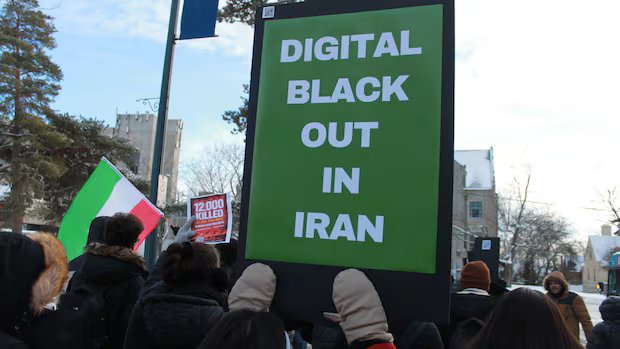
For three weeks in January, Carleton University student Maryam Mansouri had no idea whether her mother was dead or alive.
The last Mansouri had heard, her mother was about to join thousands of Iranians in the streets of Tehran in protests that quickly turned deadly. That same day, Iranian authorities severed phone and internet access, effectively cutting the country off from the outside world.
“I was zooming in on [news] footage to find the body of my mom and my best friends,” Mansouri recalled. To her relief, her mother was safe, but the internet shut down created other problems. She couldn’t access the funds she needed from back home to pay the overdue tuition of more than $20,000 for her final semester at Carleton.

Mansouri is one of thousands of international students from Iran struggling with both the emotional and financial toll of the turmoil back home.
“I know that people … think that international students are rich … but many of them, like me, they are coming from countries in danger of regime changes and uprisings,” she said.
Iran’s economic crisis
Thousands have died in the violence in Iran since the protests began in late December.
While the country has seen waves of mass protests in recent years, Dena Abtahi, a research associate with the Institute for Research on Public Policy (IRPP), says the latest government crackdown, coupled with the economic collapse, is having a profound effect on Iranians around the world.
“There is no purchasing power to actually make ends meet within Iran,” said Abtahi, a former international student.
For students like Mansouri who rely on financial support from their family back home, those contributions have become “essentially worthless,” Abtahi said.
On top of Mansouri’s full-time course load, the fourth-year journalism student works two part-time jobs to try to cover her living expenses. She said she uses a food bank and has been able to cover her rent thanks to help from members of the Iranian community in Ottawa.
Stories like Mansouri’s are common, according to Abtahi, who’s heard from others who have had to change their visa status from a study permit to a work permit to afford basic necessities.

Protests have swept across Iran but it’s not the first time people have taken to the streets to demand change. For The National, CBC’s Ashley Fraser breaks down the key differences this time and why some say pressure has never been higher on the regime.
Abtahi has reached out to Iranian student associations across Canada to offer her support and resources for students affected by global conflicts.
The level of help on offer varies from school to school. Some including her alma mater, the University of Toronto, offer bursaries and other measures such as academic extensions.
In a statement to CBC, Carleton University said financial assistance is available on a case-by-case basis, and encouraged students in need to reach out.
But Mansouri says she received no support when she did so previously.
U of O, Queen’s students also struggling
Mana Khosrowshahi, president of the Iranian Students’ Association at the University of Ottawa, has also been advocating on behalf of international students, but says little support has been shown and few students are aware of what’s available.
In a statement to CBC, the university acknowledged that “a limited number of students have come forward to report challenges,” and said it’s offering help to individuals “including through payment agreements.”

But Khosrowshahi says communication delays meant that by the time most students found out about help being offered, the deadline to pay their tuition had already passed and they’re now incurring interest.
Khosrowshahi said certain departments within the University of Ottawa have offered assignment extensions, but she hopes the school will consider a more uniform policy to aid those affected by global conflicts.
At Queen’s University in Kingston, Ont., Aila Payroveolia has had better luck, including more flexibility with academic and tuition deadlines, and counselling.
“Students who were still unsure of their family’s well-being, students who were experiencing trauma from those images and videos and voice recordings that they were hearing, they had some time to gather themselves and continue,” the co-president of the university’s Iranian Students’ Association said.

The university confirmed it’s reaching out to its Iranian student population to provide “compassionate, flexible support.”
Iranian students at Queen’s say they also want to work with administrators to establish free, culturally appropriate and easily accessible mental health care.
Khosrowshahi says tailored mental health resources would also benefit students at the University of Ottawa, but first she’d like the university to issue a statement acknowledging the human rights violations in Iran.
“[Iranian students and faculty] want to be seen and heard for the pain that they’re feeling and the difficulties they’re experiencing,” she said.
An uncertain future
For Mansouri, a future career as a journalist in Canada is now in doubt.
“Staying in journalism is the only way I can feel connected to the world,” she said. “I know that because of the situation in Iran, it will be the last chance for me to study journalism and to study at the university.”
But without financial support or flexibility from the university, she fears she won’t be able to graduate.
Abtahi hopes it doesn’t come to that, for Mansouri or any other Iranian student in Canada.
“We have a lot of beautiful, bright minds that … have chosen to come here to be a part of our academic community, a part of Canadian society,” she said. “What does that mean when we suddenly close the door on them?”