dailynewsnblog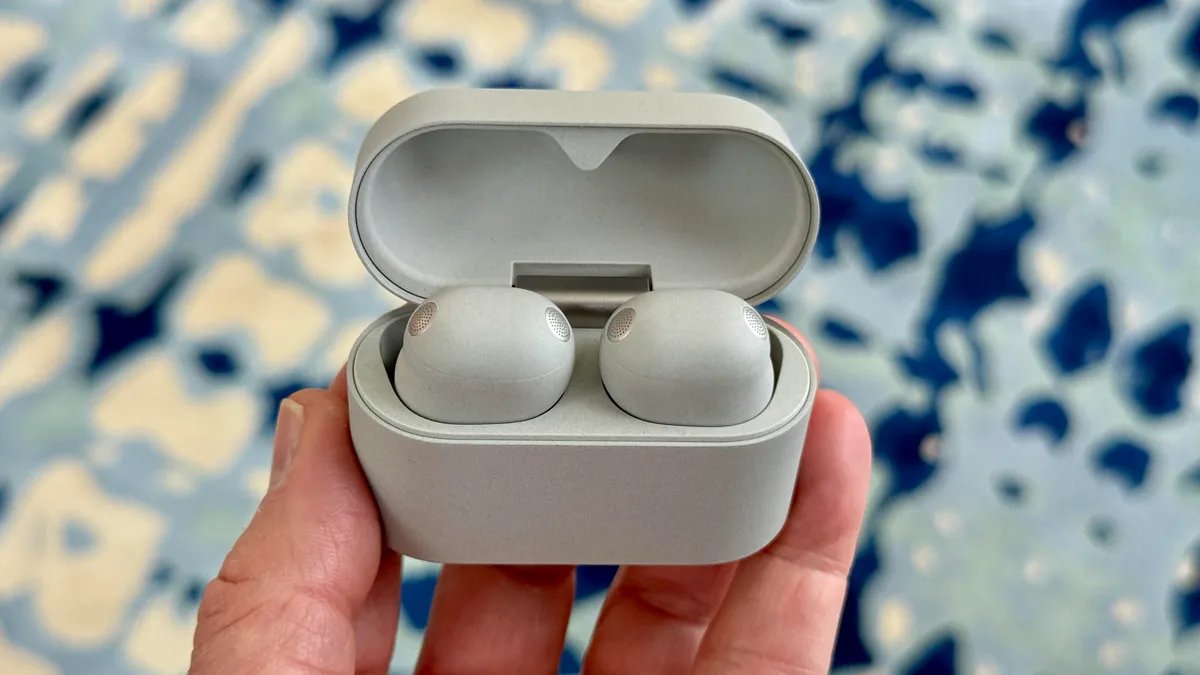

Pros
- Completely redesigned with upgraded components and slightly better fit than XM5
- Top-notch sound that’s accurate, well-balanced and natural
- Excellent noise-canceling and voice-calling performance with 8 microphones (4 in each bud)
- Decent battery life
Cons
- Pretty pricey
- Included eartips may not be a good match for all ears
- Android-only spatial audio features
When I first heard that Sony was coming out with new sixth-generation 1000X earbuds, I wasn’t quite sure what to expect. Companies like Bose and Apple have basically stuck with the same design — or a similar one anyway — for their flagship noise-canceling buds for the last few years. But Sony’s new WF-1000XM6 buds are completely overhauled inside and out and look nothing like the models that preceded them.
The end result is impressive: While expensive at $330, the WF-1000XM6 not only features great sound and excellent noise canceling, but their voice-calling performance is also top-notch. Are they the best noise-canceling earbuds out there right now? Aside from a caveat or two, I’d say so, though the AirPods Pro 3 remain a safer bet for Apple users from a fit and features standpoint (not to mention a lower price tag).
The WF-1000XM6’s design shift
Both the buds and their case are a little plain-looking. I’m OK with that, and from a practical standpoint, I liked that the case is flat on both its top and bottom, making it easy to place down on a flat surface, such as a wireless charging pad.
The XM5s have a partially glossy finish, but these have a full matte finish, which I prefer. That said, they don’t have anything to distinguish them as the XM4s did with their eye-catching copper ring that served as a microphone housing.
Enlarge Image
Sony calls this color silver.
More intricately molded than your typical stemless buds, Sony says the new shape (11% slimmer overall than the XM5s and more aerodynamic to reduce wind noise) conforms better to the natural curves of your ears, and I agree with that. I also appreciated the little ridge along the top side of each bud that allows you to grip it better, so the bud is less likely to slip from your fingers when putting them in or taking them out.
The buds have touch controls that are nicely responsive and are equipped with ear-detection sensors that pause audio when you take a bud out of your ear and resume playback when you put it back in. They’re IPX4 splashproof and seem fine for gym use, though I probably wouldn’t recommend them for running because I wasn’t certain they’d stay in my ears with a lot of jostling.
The buds now have eight microphones (four in each bud) instead of six.
Like a lot of high-end buds, they’re a little beefy and will stick out of your ears a bit. That didn’t really bother me. But once again, I can’t say I was thrilled with Sony’s included eartips, which are the same firm foam tips that were included with the XM5s. I was able to get a fairly secure fit with them, but I didn’t get a truly tight seal, according to the seal test in Sony’s SoundConnect app for iOS and Android. I didn’t find the tips super comfortable, either, so I went with a pair of large-size silicone tips from another set of buds I’d tested (I favor tips from Sennheiser and Bowers & Wilkins, which are wider and more rounded). With the tip change, sound quality and noise-canceling performance improved noticeably, which makes me wonder why Sony doesn’t include more tip options.
To be clear, many people should get a good fit from one of the included tips. But my ears fall into the 10% to 20% of ears that just aren’t a great match for Sony’s tips. And, as you may have read or heard me say too many times, it’s crucial to get a tight seal to get optimal sound quality and noise-canceling performance. That’s especially true of these buds because they deliver some real wow factor if you get a tight seal.
Enlarge Image
Sony’s tip on the left, my own on the right. Sound quality and noise-canceling performance improved when I swapped in my own tips and got a tight seal.
Upgraded components lead to better performance
Aside from the external makeover, the XM6s are upgraded on the inside with new drivers, a 3X more powerful QN3e chip with improved analog conversion technology, eight microphones — up from six — and an improved bone-conduction sensor that helps with voice-calling performance. The “HD Noise Canceling” QN3e processor is paired with Sony’s Integrated Processor V2, which now supports 32-bit processing compared with 24-bit processing. The same V2 chip is also found in Sony’s XM5 earbuds and its flagship WH-1000XM6 over-ear headphones.
Sony says the new XM6 buds feature 25% “further reduction in noise” than the XM5s, with gains made in the mid-to-high frequency range. I spent a lot of time comparing the XM6s to other leading premium noise-canceling earbuds, including Apple’s excellent AirPods Pro 3, the Bose QuietComfort Ultra Earbuds (2nd Gen) and Bowers and Wilkins’ Pi8. Both the AirPods Pro 3 and QuietComfort Ultra Earbuds have superb noise canceling. Sony says the XM6s have the best noise canceling for earbuds right now, based on international testing standards.
I compared the WF-1000XM6 buds to the Bose QuietComfort Ultra Earbuds (2nd Gen).
Alas, I don’t have access to expensive technical equipment to test noise-canceling performance, so I have to rely on a few less scientific tests, including comparing how well each set of buds muffles the noisy HVAC unit in my kitchen and wearing the buds in the noisy streets of New York and on the subway. In the HVAC test, they were all really close, though I thought the Sony had a very slight edge.
In the streets of New York, it’s really hard to sense that the noise canceling is any better than what you get with those competing models. All three are very close, and your experience could vary with the quality of the seal you get. It’s quite possible that these Sonys are able to muffle a wider range of frequencies with slightly more vigor, but they still can’t muffle higher frequencies as well as lower frequencies. That means you can still hear people’s voices and higher-pitched noises, albeit at significantly reduced volume levels.
I do think Sony has also made some improvements to its transparency mode. Apple’s is still the gold standard, but Sony’s now sounds quite natural at its highest setting. Previously, you had to play around with the level to find the most natural setting (the sound from the outside world was actually augmented at the highest setting).
Sony also now has an auto ambient mode that’s similar to Apple’s Adaptive Audio mode, which automatically adjusts the level of ambient sound filtered in, depending on the level of noise around you. Plus, you can toggle on a voice pass-through mode that filters in voices while suppressing ambient noise.
The buds have a little ridge on their side that help you get a better grip on them when putting them in you ears and taking them out.
Superior sound
When it comes to sound, both the AirPods Pro 3 and Bose QC Ultras sound excellent, with the Ultras sounding smooth and clean across a variety of music genres. Some people complained that the AirPods Pro 3’s sound was a little too aggressive (not enough warmth) compared with the AirPods Pro 2’s, with more dynamic bass and treble and slightly recessed mids. I preferred the AirPods Pro 3’s sound — to my ears, it has a little more clarity and definition, and I was OK with the more energetic bass. But everybody has their own sound preferences, and you can experience some listening fatigue if you feel the treble has too much sizzle or the bass kicks too hard in the wrong way.
I think the XM6’s sound is better and more special than both the AirPods Pro 3’s and QC Ultra’s sound. Music sounds more accurate and natural with better bass extension, overall clarity and refinement, along with a wide soundstage where all the instruments seem well-placed. Additionally, I found the XM6s came across slightly more dynamic and bold-sounding than the Bowers & Wilkins Pi8 buds, which also feature accurate, natural sound for Bluetooth earbuds.
As I said, all the models mentioned here sound impressive, but the tonal quality varies a bit. While companies often talk about how their buds and headphones deliver audio the way artists intended you to hear it, some do it better than others and are able to live up to audiophile standards — or close to them anyway. Such is the case for the WF-1000X6 buds.
I tested them with an iPhone 16 Pro and a Google Pixel 9, listening to a variety of music genres on Spotify using the lossless audio setting. They handled everything with aplomb (virtually no distortion) and didn’t cause any listening fatigue. My connection was also rock solid with no Bluetooth hiccups. While I didn’t experience, any major connectivity issues with the XM5s, some people apparently did, and Sony says it equipped the XM6s with a new wireless antenna that’s 1.5x larger than XM5’s antenna to improve the wireless connection, particularly in crowded signal areas (there are certain intersections in new York City that have a lot of wireless interference and can cause Bluetooth hiccups).
Enlarge Image
Testing the WF-1000XM6 earbuds on the bone-chilling streets of New York.
Top-notch voice-calling performance
They’re also hard to beat for voice-calling performance, which I also grade an A. Callers said my voice sounded mostly natural and clear, and they didn’t really hear any background noise when I wasn’t speaking (and only a little when I did speak). If you want to hear a test, check out the one I did with fellow CNET editor Josh Goldman in my video review of the XM6 buds.
It’s worth noting that the buds have a side-tone feature, so you can hear your voice in the buds when you’re talking. And like previous 1000X models, these have Sony’s speak-to-chat feature, which lowers the volume of your audio and goes into ambient mode when you start to have a conversation with someone.
Watch this: Sony WF-1000XM6 Earbuds Review: Supreme Performance, Subdued Design
Also, Sony has redesigned the venting of the earbuds to increase airflow and reduce internal noises such as “footsteps and chewing sound.” I did notice some improvements there (yes, a lot of people don’t like having their ears feel occluded and hearing their footsteps).
As far as audio codecs go, the buds support AAC, SBC and LDAC as well as multipoint Bluetooth pairing, which allows pairing to two devices to the buds simultaneously. Sony says the buds are “ready for LE Audio,” which means that at some point they should support the LC3 audio codec and Auracast broadcast audio with a firmware update.
Sony has continued to streamline its SoundConnect app for iOS and Android, so it’s a little more user-friendly, though there are still a lot of settings to play around with, including scene-based listening settings and various equalizer settings.
Battery life is rated at up to 8 hours at moderate volume levels, with an extra two charges in the case. That’s a little better than what competing models offer and, again, the case supports wireless charging.
Sony WF-1000XM6 final thoughts
The XM6s are noticeably improved across the board from the XM5s, which I still like. And while these buds are certainly expensive, they’re pretty hard to beat from a performance standpoint across all the key areas, including sound quality, noise canceling and voice-calling, which is why I’ve awarded them an Editors’ Choice.
The one thing I can’t tell you is just how well they’ll fit your ears. While the AirPods Pro 3 don’t offer quite as good sound quality, they’re less expensive and are in some ways a safer pick for Apple users, as their lightweight stem design tends to fit a wide range of ears comfortably. They also have more features overall, including a Hearing Aid mode, Apple’s new Live Translation feature and personalized spatial audio (Sony’s spatial audio features are Android-only).
That said, if you’re able to get a good fit with a comfortable seal, the XM6s are truly impressive earbuds. They may just be the best out there at the moment.