dailynewsnblog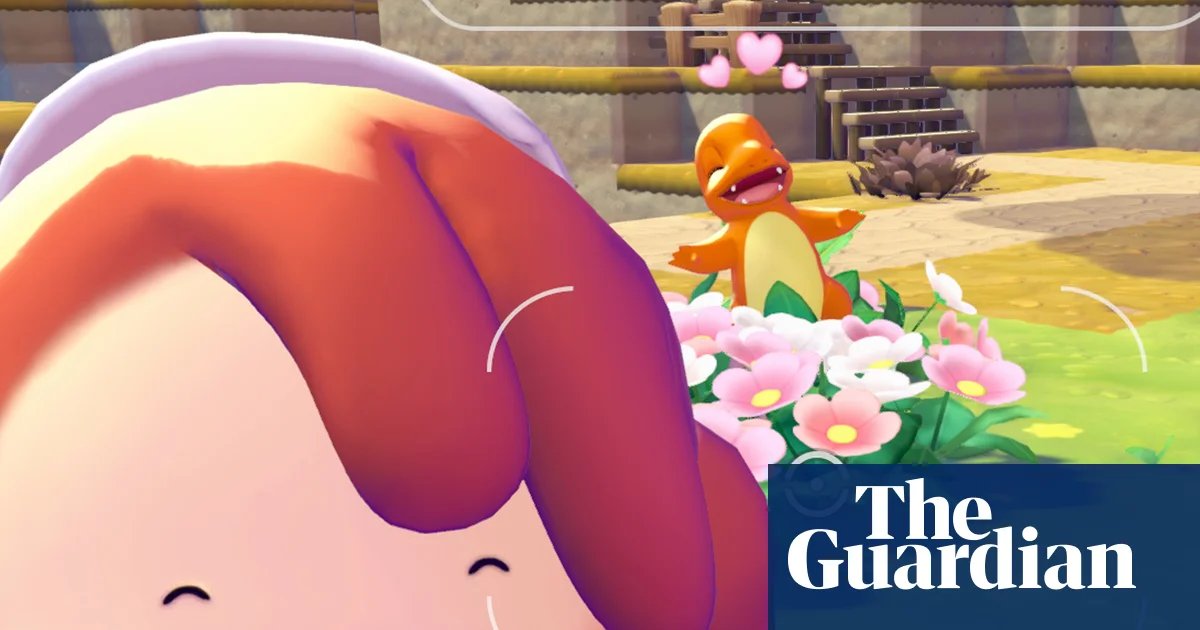
Pokémon is celebrating its 30th anniversary this month, and everybody knows what to expect from these games by now. The concept is simple: head into a cartoonish paradise full of whimsical creatures, capture them in red-and-white balls and assemble a team of warriors from them, before battling other aspiring Pokémon masters. But the latest entry in the series is different – a game that’s more about building than battling.
In Pokopia, a refreshingly pacific twist on the series, players are dropped into a virtual world where Pokémon are freed from their spherical prisons and happily roam their natural habitats. There’s one minor caveat – you have to create those habitats by hand, building them from what you can find.
Taking its cues from Nintendo’s all-conquering Animal Crossing, this Switch 2 game sees you rebuilding decaying habitats in order to attract new Pokémon to move into your sanctuary. (Players of the Xbox classic Viva Piñata, rejoice.) It’s a welcome departure from the main series’ long-running training and battling loop. Veteran Pokémon developer Shigeru Ohmori, who started thinking about Pokopia’s concept while working on 2022’s Pokémon games Scarlet and Violet, says that the idea for Pokopia arose after spending many years dreaming about finding Pokémon in tall grass.
“The first Pokémon game I worked on was [2003’s] Ruby and Sapphire,” recalls Ohmori with a smile. “My first project for that game was to create the map – and whenever I put grass on to the map, Pokémon appeared on screen. That feeling of Pokémon appearing when creating the habitat, and then meeting those Pokémon, was something that I really cherished.” He created a basic prototype for Pokopia in his spare time, and then Pokémon’s developers Game Freak brought on Dragon Quest Builders 2 studio Omega Force to help.
This feeling is lovingly recreated for players in Pokopia. As you create tufts of grass, a Bulbasaur suddenly appears, shuffling his way towards you to say hello. There are no humans to be found anywhere in this virtual utopia. In the strange and initially desolate patch in which you create your Pokémon paradise, you control the adorably wobbling mass of everyone’s favourite shape-shifting jelly, Ditto. Haunted by memories of its former trainer, Ditto decides to take a humanoid shape that you determine in a character creation screen. This is your uncanny-looking avatar, doing its best to approximate a faded memory of a human being.
After you’ve customised your Ditto/human-hybrid, you are greeted by a sentient shrub, Professor Tangrowth, complete with a data disc attached to his curly tendrils and a pair of glasses strapped to his chin. The prof informs you that it’s your job to restore this barren land. Where do you begin? In exactly the same way that Ohmori did, all those years ago – by making lush, green grass.
In order to create new habitats, Ditto borrows moves from each new creature you meet, mimicking their abilities so that you can till the land. Bulbasaur’s ability transforms Ditto’s appendages into floppy, leaf-producing vines. Squirtle’s water gun sees Ditto puke water like a derpy Roman fountain, and Scyther’s cut blesses Ditto with comically oversized razor-sharp blades for arms. In a nice touch, whenever Ditto learns a new move you’re treated to the classic Pokémon level-up music.
For an hour I wander the barren wasteland, working to turn sand into grass and hacking trees for wood. Everything feels effortlessly charming, with a level of care and polish that elevates Pokopia’s opening 60 minutes above the series’ many middling spin-offs. Like Animal Crossing: New Horizons, Pokopia also allows you to visit friends’ islands and meet their Poké pals, surfing between lands as a Ditto-Lapras or soaring through the skies in the form of a Dragonite.
Marina Ayano, the game’s art director, tells me that she grew up with the franchise – making this something of a dream project. During development, Ayano and the sound director landed on two key words to steer the game’s cutesy and laid-back vibe: “chill and pop”. “Chill is slow and cosy, and pop ensures that everything is colourful … [we wanted] a very universal cuteness,” she says. As I make friends with a Pidgey, build a straw bed for a sleepy Charmander and field a request from an amusingly emo Umbreon who desires a black-painted home, it’s certainly very cute. For Ayano, Pokopia offered a chance to let the cutest Pokémon shine: creatures that are usually cast aside in the mainline games in favour of stronger battlers.
Playing as a Pokémon rather than the games’ usual human protagonists, you can fully understand – and converse with – every species of Pokémon, and given that Pokémon’s writing is normally pretty bland, the dialogue has unexpected personality. “Because there are no trainers in the game, we really thought about how the Pokémon communicate with each other,” says Takuto Edagawa, Pokopia’s director. “What are they thinking? How are they feeling? We made sure that if you put one piece of furniture anywhere in the world, Pokémon will react based on their personalities. I really liked how it came out.”
Pokopia is the first spin-off game that Game Freak has worked on directly, and Ohmori suggests that it may have influenced the direction of future mainline Pokémon games. “Battles have always been the focus, but there are so many [other elements] to these games, and I believe that fans have enjoyed these components as well,” he says. “I would like to show this more and scale the Pokémon games up, outside of battling. And I would like the Pokémon franchise to seek new possibilities to grow the Pokémon world.”