dailynewsnblog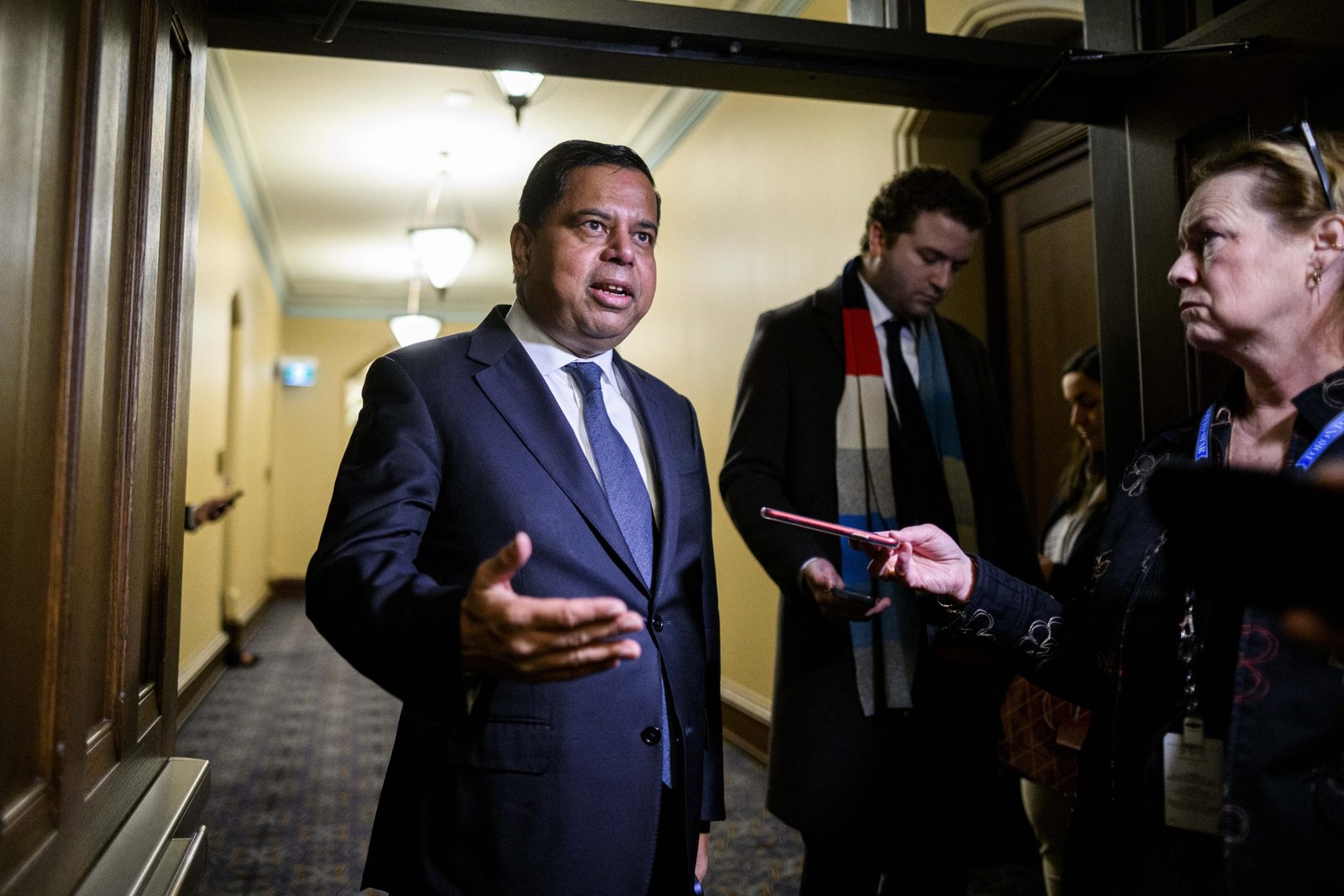
iPolitics explores the government’s border security proposal as it appears poised to pass in the Senate this month.
Ottawa’s border security bill, C-12 or the Strengthening Canada’s Immigration System and Borders Act, is making its way through Parliament.
The bill aims to tighten immigration enforcement and manage security and fraud concerns, while combatting transnational crimes.
The government’s first border bill, C-2, was widely panned as opening the door for excessive government overreach.
C-12 was supposed to address those concerns, but it remains controversial amongst refugee advocacy and civil liberties groups.
It’s still on track to clear Parliament soon, passing second reading in the Senate last week.
It was sent to two separate committees — national security, defence and veterans affairs, and social affairs, science and technology, for study.
The committees were given a fixed reporting deadline, setting up an accelerated path for the bill to clear third reading and receive royal assent, the final step to become a law.
What is Bill C-12?
Public Safety Minister Gary Anandasangaree said he introduced C-12 to strengthen border security and the asylum system, and give law enforcement stronger tools to track down transnational crime, especially fentanyl trafficking and money laundering.
The bill would expand both Canada Border Services Agency (CBSA) and Canadian Coast Guards’ authority. Specifically, it would give CBSA the authority to search exports for smuggled drugs, weapons and stolen cars.
It also promises to tighten the immigration system. The government claims that the bill will improve how asylum seekers are received, processed and decided — giving the government authorities to cancel, suspend or change immigration documents deemed in public interest.
Why was it introduced?
There are two parts to the bill. Anandasangaree and Immigration Minister Lena Diab have said that it aims to “fill gaps” in the current immigration regulations and authorities that the system currently doesn’t have.
It’s designed to address the severe backlog in the immigration system, according to Diab.
The bill is also in response to mounting U.S. concerns about cross-border fentanyl trafficking and money laundering.
Anandasangaree said the bill wasn’t introduced in direct response to Washington’s claims about crime at the northern border, but rather to demonstrate that Canada is doing the “appropriate level” of border security.
What C-12 will do
Securing the Border
To address transnational crimes, the border bill focuses on amending the Customs Act to certain ports of entry and exit to support inspections, including examining export goods.
This is a significant change because while CBSA can already search inbound and outbound goods, port authorities are currently only required to provide search facilities for imports, not exports.
Anandasangaree said this makes inbound and outbound goods inspection “more fluid.”
“Our ability to do outbound searches is somewhat limited, and what we’re doing here is to ensure that we close that gap and have more flexibility,” Anandasangaree said at a Senate committee on Monday.
The bill also aims to strengthen Canada’s anti-money laundering and anti-terrorist financing regime through information reporting.
“This is because we know that without money, the transnational organized crime groups cannot function,” Anandasangaree said.
C-12 would enforce stronger penalties for money laundering violations. It would expand the Financial Transactions and Reports Analysis Centre’s role as the central hub for detecting and disrupting illicit finance.
The bill integrates FINTRAC more closely with Canada’s financial regulators, by allowing information-sharing to disrupt illicit financing linked to organized crime and fentanyl trafficking.
“The old adage of following the money is that crime can be a lucrative opportunity in Canada and everybody is looking at different pieces,” Bryan Larkin, Senior Deputy Commissioner of RCMP said. “We need to take a blended, integrated approach to ensure the safety of Canadians.”

The border bill would change the mandate of the Canadian Coast Guard services as well, giving them more ability and resources to conduct security patrols, and collect information with security and law enforcement partners, without giving them law enforcement authority.
Anandasangaree said the proposed change focuses on allowing Coast Guard to gather information about Canada’s safety and security, and to also gather information for Canada’s Arctic Sovereignty.
Immigration and refugees
At the heart of Bill C-12 are proposals to reshape Canada’s immigration system. The bill targets the immigration and refugee system by introducing tighter eligibility requirements — found specifically under parts 5, 6, 7, and 8 of the bill.
C-12 is divided into four key immigration provisions:
- New limits on who gets a full refugee hearing
- Shift from refugee hearings to pre-removal risk assessments
- Expanded powers to suspend or cancel immigration documents
- Stronger information-sharing across governments
“A lot of these measures, we already have,” Diab said. “It’s meant to provide us with more efficiency and more control over our documents in terms of information sharing.”

The proposed changes would introduce new ineligibility rules that prevent some asylum seekers from having their claims heard referred to the Immigration and Refugee Board of Canada. This would apply to people who made claims more than a year after a person’s first entry in Canada and claims that are made more than 14 days after crossing irregularly from the U.S.
Instead of making a case in front of the Immigration and Refugee Board, the bill would direct claimants to the pre-removal risk assessment. This also means that claimants wouldn’t get a full review from an independent tribunal, or guaranteed an oral hearing.
Critics argued C-12 goes too far in prioritizing enforcement and speed over fairness, and the effect of the provision would impact on asylum seekers’ life and security.
Another contentious point raised is how Sections 73-75 would make refugees who cross into Canada between ports of entry and make a claim for protection after 14 days “ineligible” to claim asylum status to the Immigration Refugee Board (IRB).
Claimants will instead be routed to a pre-removal risk assessment conducted by an Immigration, Refugees and Citizenship officer.
Senator Tony Dean, Senate sponsor of Bill C-12, said there’s a distinction between someone who’s “lawfully” in the country making an asylum claim and an individual who has “walked across the border” with no documentation.
He explained that the section aims to “sort out” what happens to people under the Safe Third Country Agreement (STCA), a pact between the U.S. and Canada that requires asylum seekers to claim protection in the first safe country they reach.
The agreement is based under an assumption that both the U.S. and Canada are “safe” countries, which makes claiming a refugee status ineligible at an official port of entry.
However, if refugee claimants arrive at the border at an unofficial port of entry, STCA doesn’t automatically apply, which means they can make a claim on the 15th day.
Dean said that while claimants can seek refugee status after 14 days, they’d have to make a case to an IRCC officer during a pre-removal risk assessment, instead of full refugee hearings.
Civil liberties groups argue that this creates a lower-standard process, leading to fewer protections and appeal rights.
At a senate committee Monday, Cheryl Milne, executive director of the David Aspen Center, said a 14 day period for asylum seekers who crossed through an irregular border from the U.S. is concerning, considering the ongoing court challenges surrounding the policy.
“The expansion of the reach of the Safe Third Country Agreement in this current context is, in our opinion, tone deaf to what we are witnessing in the U.S. right now,” Milne said.
When asked if the bill’s proposal has anything to do with the U.S. ‘s influence over its immigration policies, Dean said it’s quite “offensive” to compare.
“I think if you’re a member of the immigrant community or an advocate for immigrants in Canada, you’re watching the United States, and you’re looking for any signs that what’s happening in the U.S. might leak across the border in terms of policies,” Dean said in an interview with iPolitics.
During a committee meeting on Monday, Diab said the government is still encouraging immigration, but the current system is simply too “stressed.”
“When I first went into politics over 10 years ago, this was not an issue, in fact we were crying and wanted people to come,” Diab said.
“We still want people to come, the issue is we want them to come properly by using the immigration channels that we have.”
Support for the bill
Despite concerns from advocacy groups, the bill was able to easily pass in the House, although with significant amendments.
Joanie Riopel, a spokesperson for the Bloc Quebecois, said the party was successful in pushing through an amendment that adds clear language to ensure a warrant is issued when searching through a house.
“[It] was a concern in the original wording of the bill,” Riopel wrote.
The Conservative party proposed several amendments before ultimately voting in favour of the bill.
“Conservatives are calling on the Liberals to listen to Canadians and implement to changes needed to make Canada’s immigration system fair and efficient, while serving citizens and newcomers alike,” Conservative MP Michelle Rempel Garner wrote in a statement in November.
Only members of the NDP caucus and Green Leader Elizabeth May voted against the bill.
Meanwhile, National Security and Intelligence Review Agency chair Marie Deschamps expressed support for the bill in an email submitted to a committee studying the legislation.
Deschamps said while the bill expands the government’s power related to national security and intelligence she’s concerned with having enough resources to conduct effective reviews.
As per the Senate motion on C-12, the bill must return from committee on Feb. 24.
It will be deemed reported without amendments and then placed in line for third reading at the next sitting of the Senate.