dailynewsnblog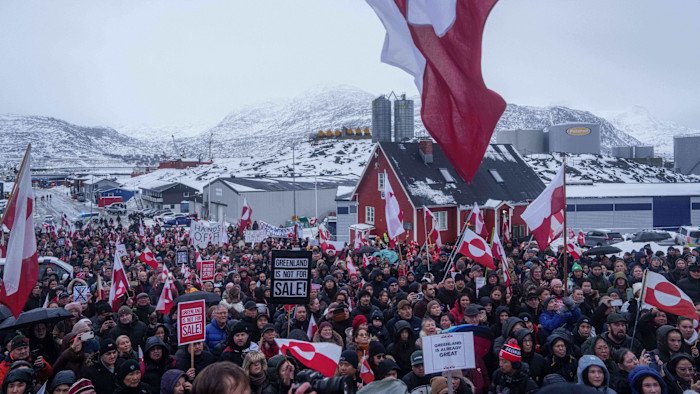
Unlock the Editor’s Digest for free
Roula Khalaf, Editor of the FT, selects her favourite stories in this weekly newsletter.
It’s quite surreal to see the Trump administration invoking international co-operation to address a genuine problem in a not obviously irrational way. Yet looking at its plan for a coalition of countries to create a reliable supply of critical minerals independent of China, here we are.
Insulating the global economy from the geopolitics of minerals would be exceedingly useful. China last year demonstrated how controlling the supply of heavy rare earths could be weaponised to threaten manufacturing supply chains in the US and Europe. But a combination of traditional Washington dysfunction plus Trump’s deep unreliability means the US is poorly placed to lead this initiative.
Already we can see how misplaced priorities are warping the initiative, spraying money around unnecessarily and inefficiently. An early stage of the plan is Project Vault, a government-financed ($10bn from the US Export-Import Bank) stockpiling programme focused on serving US companies. Fierce lobbying from the mining industry has ensured that the producers of more than 50 materials are eligible to suck at the public teat, including widely traded metals like copper for which state-led stockpiling is absolutely not a priority.
Another on the list is lithium, a good example of a case where market forces are more useful than state intervention. The formerly stratospheric lithium price has plunged in recent years after shortages induced more supply. Chinese manufacturers have started to switch to making sodium-ion rather than lithium-ion batteries.
There are of course some exceptions, particularly the so-called heavy rare earths skulking at the bottom of the periodic table which are used in magnets for electric vehicles, wind turbines and defence technologies. China has a unique multi-stage rare earth supply chain, whose high technical and financial barriers to entry certainly justify state intervention to create competitors abroad.
The US government has already taken stakes in a string of domestic minerals companies. However, the shortage of heavy rare earth deposits in the US explains the Trump administration’s uncharacteristic internationalism, including signing various bilateral deals with mineral-producing nations.
But US credibility in a wider producer-consumer coalition is scarcer than the minerals themselves. Even Joe Biden’s much more internationalist administration failed to persuade (ie bully) partners into joining its supposed green steel and aluminium club; other governments correctly saw it as another iteration of traditional US protectionism rather than genuinely about climate change.
Expanding rare earth production until competitive critical mass has been achieved will require long-term price guarantees to producers outside China, preventing Beijing undercutting them by tactically flooding the market with low-priced minerals. That could be achieved by an open-ended commitment to buy minerals above manipulated Chinese prices or by the use of import tariffs.
Building rare earth mining and refining capacity is at least a decade-long project. Governments outside the US would need extreme amnesia to feel confident betting their economic security on Congress or any US administration continuing to send money abroad after America’s immediate needs had been met — or refraining from using stockpiles for political leverage. “All in this together” will quickly decay into “America First”.
These are not negotiations between free and equal partners: they are proposals by a mafia boss. It’s bizarre that the Trump administration is solemnly proposing a market-based mineral supply system while simultaneously threatening to annex Greenland after eyeing up its natural resources.
Nor is the backup plan of keeping up prices by imposing import tariffs against Chinese minerals likely to take off. The US’s partner countries have to manage their relationships with China in a far more delicate fashion than the US. They emphatically do not want to be seen joining Trump in a trade war.
A key member of any international minerals coalition will be Australia, traditionally a strong foreign policy ally of the US, which has extensive deposits of rare earths and is relatively well advanced in developing them. But Australia had a bruising trade dispute with China between 2020 and 2024, including a Chinese ban on Australian coal exports, and has no desire to repeat the experience. Madeleine King, Australia’s resources minister, has already said it will resist tariffs against China.
You only have to remember the bitter intergovernmental conflict during the Covid pandemic about vaccines and personal protective equipment, involving export bans and procurement restrictions, to see how quickly national self-interest reasserts itself even with relatively co-operative administrations like Biden’s. If you think the Trump administration will public-spiritedly run a rules-based international rare earths coalition, I’ve got prospecting rights for the deposits of Imaginium in the mineral-rich territory of Delusionia to sell you.
It’s only three weeks since Mark Carney, prime minister of Canada — another mining country Trump has threatened with annexation — warned that an international order could no longer be led by the US. And yet here we are with Trump at the helm of the only substantive multi-country initiative to be addressing such a pressing issue in geoeconomic security. The principle is fine, but the credibility of the self-appointed leader leaves a huge amount to be desired.
alan.beattie@ft.com