dailynewsnblog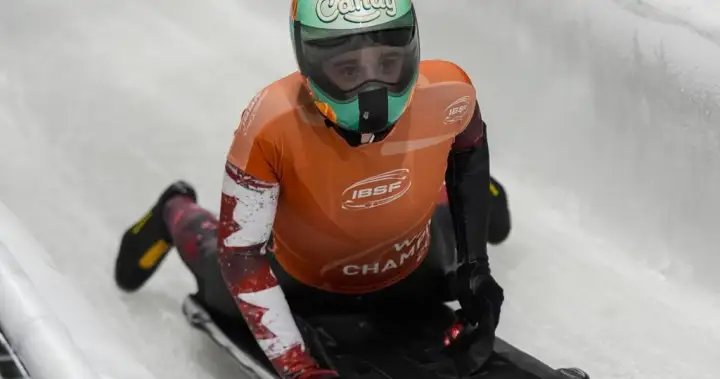
The youngest woman to win a world championship in skeleton will make her Olympic debut and represent Canada at the Milan Cortina Winter Olympics.

Canada’s Hallie Clarke was just 19 when she claimed the women’s world title in Winterberg, Germany, in 2024.
When Clarke won the world junior women’s championship a year later, she was the first to hold both titles at the same time.
Women’s skeleton starts Friday with the first two heats, followed by Saturday’s two heats when the Olympic champion will be crowned.
Clarke’s father, Wayne, was an NHL draft pick of the Toronto Maple Leafs in 1992.
Her mother, Kelly, was a figure skater and is now a power skating coach.
Clarke was once a figure skater but eventually chose a different type of ice sport with very different blades.
The 21-year-old from Brighton, Ont., talked about her skeleton career with The Canadian Press (this interview has been edited and condensed for space):
How did you get into skeleton?
Clarke: “Super random. I didn’t even know what it was before I started. I had just moved to Calgary, walking around WinSport and saw a sign that said ‘free learn to push’ in skeleton. I had to Google it because I was like, ‘I don’t know what skeleton is.’ I’d heard of luge and bobsled. It was different, and I tried it — and I ended up loving it.”
Related Videos

Is it true your parents saw your sled slide to the bottom of the track without you on it at skeleton school in 2018?

Get breaking National news
For news impacting Canada and around the world, sign up for breaking news alerts delivered directly to you when they happen.
Clarke: “It’s very true. I crashed right in front of where my dad was watching, so I have a video of the whole thing. I stopped right in front of him on my stomach, and then my mom was at the finish line and watched the sled go without me on it. Like any good parent, they would try and kind of convince me to go home and say ‘maybe let’s think about this. Is this a safe thing to do? Is this right?’ I was 14 and stubborn and said, ‘no I need to give this a fair shot,’ and I went and did it two more times that day.”
What’s been the biggest challenge you’ve overcome in your career?


Clarke: It’s been mental health. In any high-level sport, especially at a young age, you haven’t quite figured out who you are as a person outside of sport. I really went through a lot of anxiety and depression over the last few years. I feel like I’m on the other end of that now and learned so much from it, but it’s really hard when you’re away from home for so long, you have high pressure, and we’re kind of a dangerous sport too, so a lot of adrenalin, which kind of makes that so much bigger.
Can you tell me about some of the work you’ve done on that?
Clarke: I work with sport psychs and mental performance coaches, even psychologists. All of that work, I used to think I didn’t need it. I think everyone does. It gives you such an edge, such an advantage, when you’re able in these high-pressure moments to calm yourself down, bring yourself down to where you want to be. The biggest thing was remembering my reason why I do this sport. It’s because it’s fun.
Do you have a pre-race or race superstition?
Clarke: So my family’s really superstitious, and I tell them not to tell me their superstitions because I don’t want to be superstitious about it. When my dad comes to watch, he goes, ‘You did really well when I stood in a corner like this, so I’m going to stand here.’ I’m like, ‘don’t tell me these things because I don’t need to wonder if you’re doing them.’ I try to keep it to a minimum so that it doesn’t get like in my head and go over the top with it. I wear the same socks for race day. I got them before my first World Cup and I’ve worn them for every race since.
This report by The Canadian Press was first published Feb. 12, 2026.
© 2026 The Canadian Press