dailynewsnblog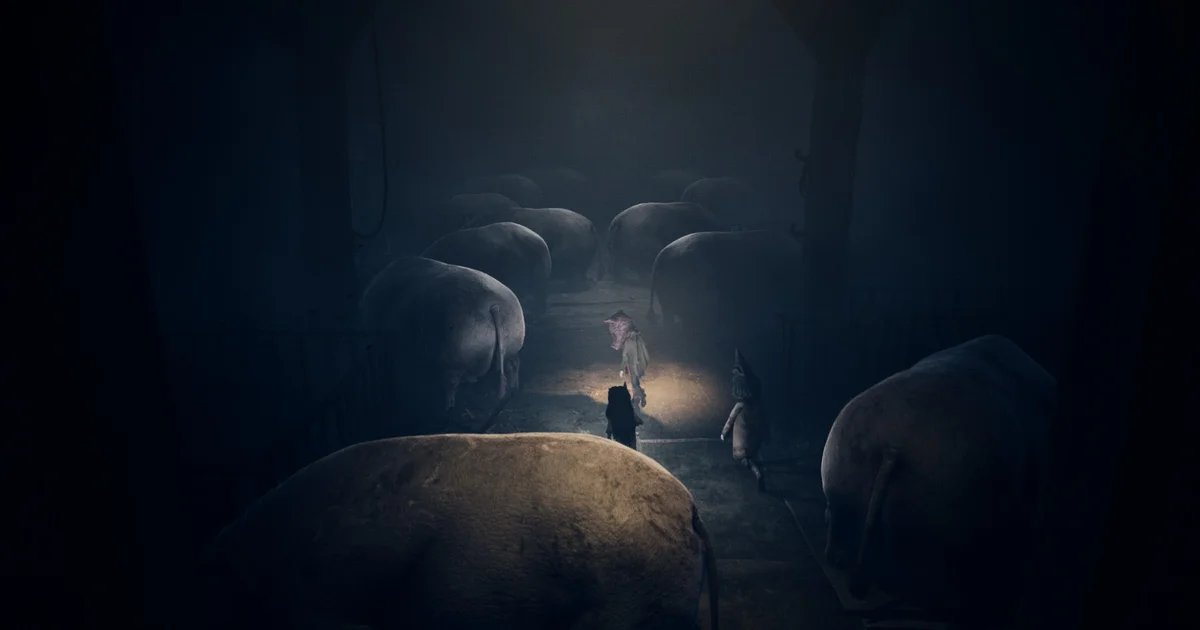
In an industry pestered by calls to “think of the children”, Tarsier’s games are useful reminders that children can be utterly depraved in ways no coddling adult would ever dream. Later in Reanimal, the developer’s latest, strictly ‘co-optional’ horror game, two kids rip an eyeball out of a massive, sunken horse skull and shove it into what I sincerely hope is the eyesocket of a slumbering whale. Somehow, this is necessary to advance.
It’s the kind of thing that would only occur to children, because children do not reason like ‘we’ do, those disgusting creeps. They sense that they exist in a world that isn’t for them: a world of baffling laws, high shelves, and everyday monstrosity; a world they’re required to ‘grow into’ by means of repeated shedding and sprouting and subjection – milk teeth and pubic hair and doing your goddamn chores. So they instinctively come up with ways to screw with the system, twist its horrible logic against itself. Why not push a horse’s eyeball into a whale?
While we’re at it, why not use a plunger to extract a discarded human skinsuit from a toilet, revealing a key that has no earthly grounds for being there? Why not wear the head of a pig you found in a closet? It’s no madder than anything else in this universe. I relish Tarsier’s tales of little nightmares surviving and vandalising the larger nightmare of existence. I’d love to see this developer’s take on Peter Pan. That said, I don’t think Reanimal is their greatest escapade. It’s a tentative departure from the dollhouse puzzling of Little Nightmares that never quite finds its own centre of gravity.
Reanimal is the story of an orphan boy and girl – the latter controlled by the computer in single player – who are searching for their friends in a cyclopean charnel daydream of bogeymen and minefields and rancid, anguished animals. Each chapter sees you rescuing one friend from some enormous, forbidding structure, rearing up at you on approach care of an elegantly scripted, semi-manual camera.
You’ll travel much of the intervening waste by motorboat, the boy steering while the girl aims her lantern from the bow. The boat gets pretty crowded, but your NPC passengers typically stay behind while you explore on foot. In general, the partner AI is solid, seldom forgetting to help out when, say, you need two pairs of hands to open a door or turn a wheel. The camera keeps track of both playable characters effectively enough that I can imagine this being a decent co-op play, though I wasn’t able to sample co-op before writing this review.


Reanimal’s world is older, shabbier, and less hopeful than that of Little Nightmares. There are fewer gleeful callbacks to the tumbling toybox of Tarsier’s old gig LittleBigPlanet. The proportions and atmosphere are closer to Playdead’s Inside, all cracked fog and vaporous stone. The architecture is more naturalistic, less of a witch’s cottage, more appropriate to your size. But you are still a child, which puts certain objects and surfaces beyond reach, while conferring a degree of passive protection against larger creatures who can’t chase you into the crevices. This is still a world in which you hide without intending to, and such ‘adults’ as you encounter react to you with hysterical outrage. You are a spider peeking out from between their toes. You are a moving dust mote in a setting that inclines toward paralysis.
The kids themselves are leaner and harder, more direct and less poetic of method, happy to wrap a marauding seagull around a crowbar, shiv a calcified mutant child, or smash the fingers of a ghoul. There’s a dedicated attack button, and later on, various ‘special weapons’. You will throw spears from the motorboat, rotate and fire a ponderous coastal turret, shoot a bazooka, hurl a grenade, and even drive a tank.
This isn’t any kind of combat system, mind. The flashes of Resident Evil are infrequent, with the game mostly driven by stealth, platforming, and gentle lock-and-key puzzles. With the exception of the tank – a cathartic endgame rush – the weapons feel like disposable puzzle props. There ain’t any ‘gunfeel’ to write home about, either. The turret has to be electrified and activated, after gaining access to another structure. It takes two of you to heft that bazooka, and you only get one shot.
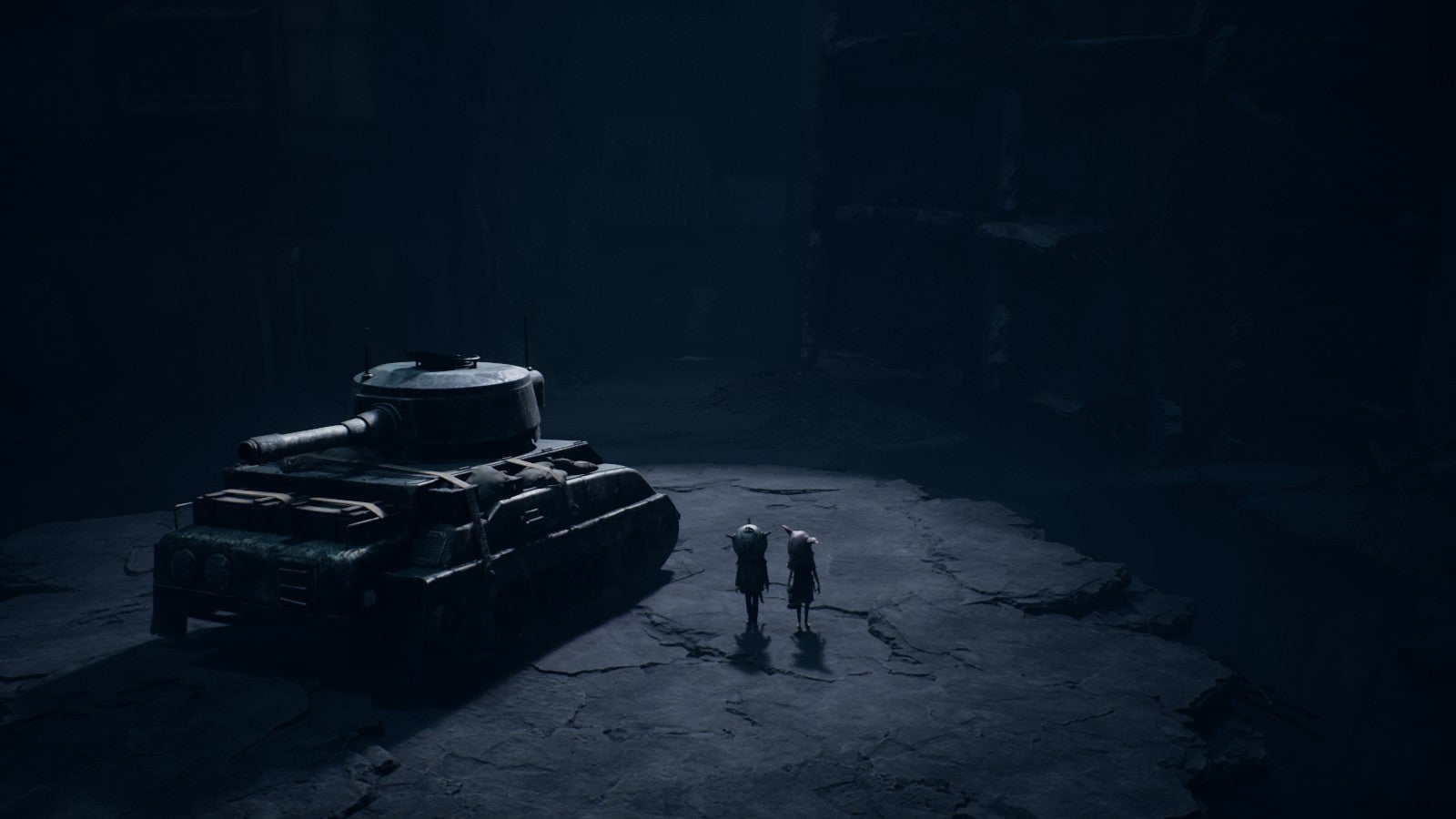
I do think Tarsier have lost their way by flirting with combat, mostly because it accompanies some repetition. Harpooning explosive mutants from your boat is irritating busywork, a process of nosing forward and waiting for the lock-on icon to appear. But the presence of firearms is justified inasmuch as Reanimal is more wartime phantasm than grim fairytale.
The war element sneaks up on you, admittedly. Across the first two thirds of its seven hour runtime, the game digs into a familiar vein of industrial decrepitude, cowled in negative space that is fitfully pierced by searchlights, winking red buoys, and those ever-so-delicate patches of brighter ground that indicate a path through wreckage. There is a mill made up of pipes and locker rooms housing computer monitors that drizzle lines of red and white code. There are carparks doused in volcanic ash. There is an orphanage of clapboard and chains and underground streets, entered by clambering through the face of a clock.
The settings are dingy projections, channelling primal fears and slowly revealing something about your fey handful of orphans. The same is true of the creatures. The first major antagonist is a lanky, lumpen abductor who spends half his time peering under tables, the other half engrossed in putrid domestic routines, gathering and ironing suits of human skin. You look at him and you fear becoming him. It’s best to keep an eye on the skinsuits, as well: some flop down from branches to chase you through the long grass.


Later, you face a many-elbowed abomination with a pitch-black maw that recalls the watering well shown during the game’s opening. These visual reciprocities are load-bearing pillars. While there’s the suggestion of a world map here, with a critical path that loops between locations, Reanimal isn’t a consistent work of geography but a spiral of symbols. In particular, animal symbols. The game explores the figure of the animal as both a thing to slaughter and a thing to sacrifice, with the predictable implication that you are next on the chopping block – an anxiety you can poke at, by having your kids wear pig head hats.
The visual composition is exquisite throughout, each piece of architecture carefully framed to foreground exits and puzzle pieces, without recourse to overt yellow-paint condescension or some kind of magic highlighting vision. That said, I do feel that Tarsier’s designers need to break out of their groove. Reanimal’s landscape fits together with a smoothness that feels too practised, bordering on enervating. The segmentation of scenes and the foreshadowing can be rather by-the-numbers. For example, a monster happening to leave the room just as you enter, not quite seeing you, a few scenes before the moment when you finally have to confront or escape it.
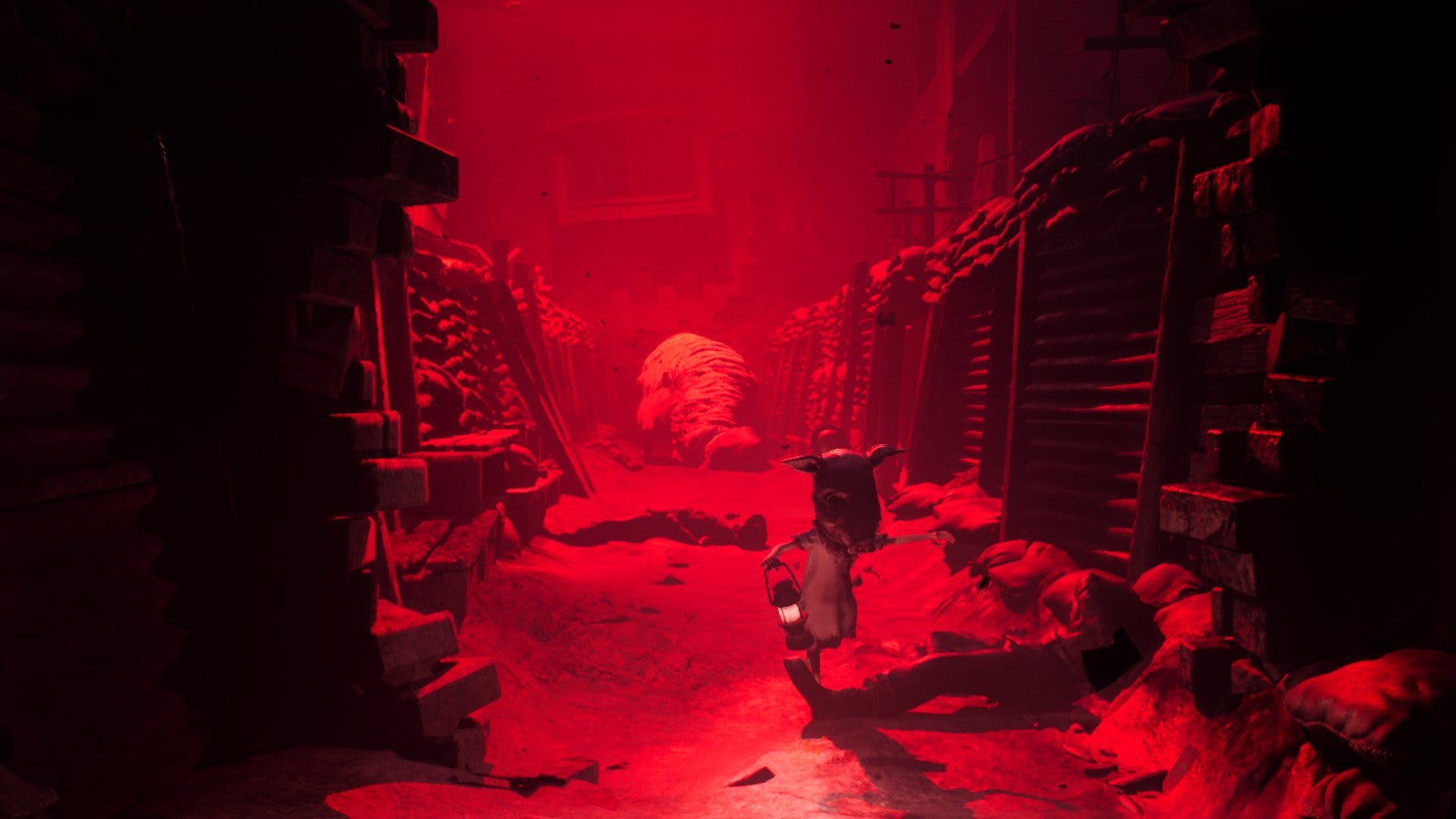
And then the shells start to fall. Over the last third, Reanimal sheds its Silent Hillian pallor and veers a bit randomly into World War parody, with areas made up of trenches, stripped trees, and Futurist gutted cityscapes. In some ways these closing chapters are the heart of the game. Reanimal’s zoological body horror appears to take heavy inspiration from the agony of animals during the World Wars – beasts of burden splintered and thrashing in the mud, lashed to artillery cannons or caught on the wire, entangled and transformed into vengeful, howling machines.
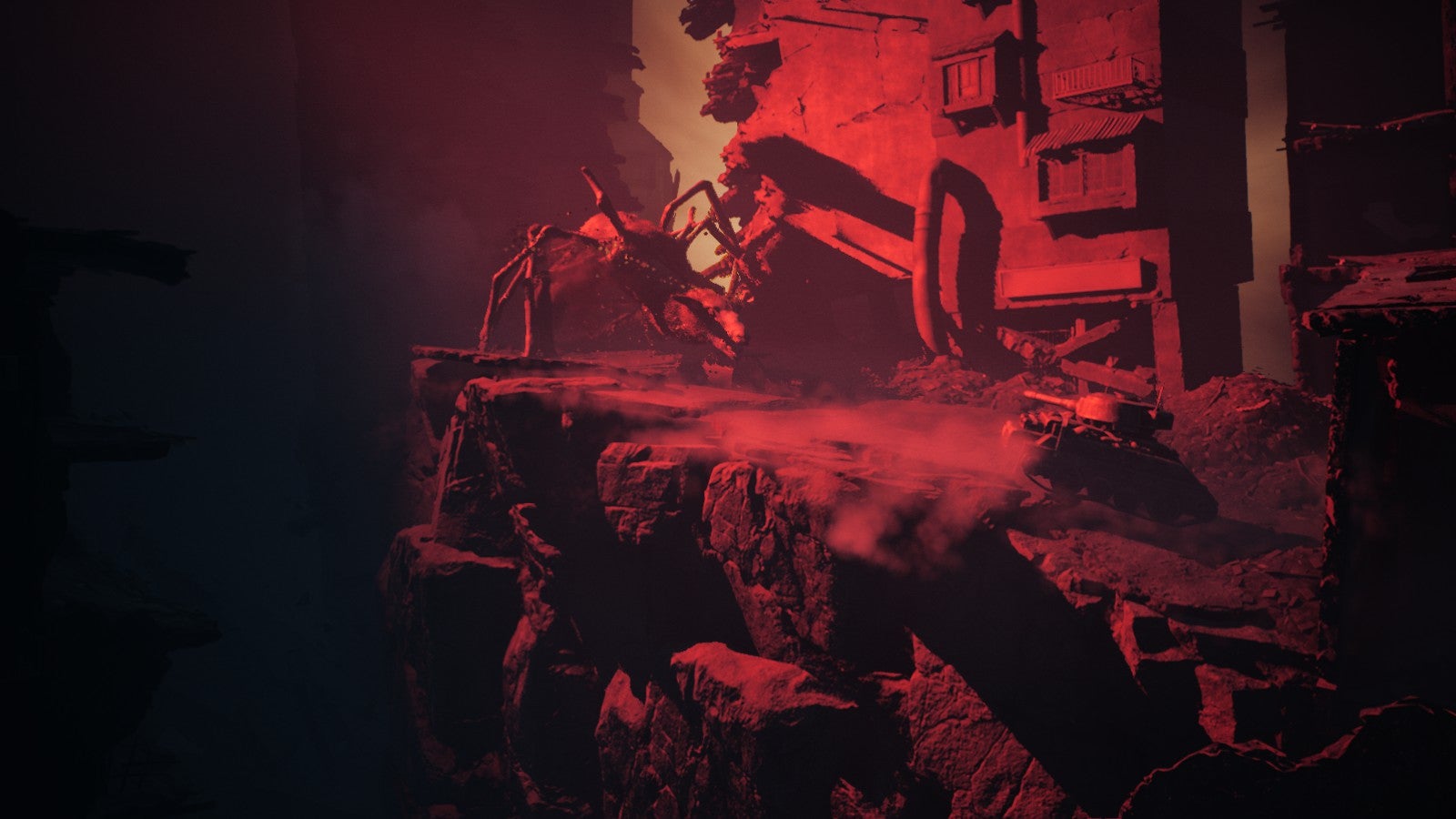
Assuming I’m diagnosing the inspirations correctly, I think the animal metaphors here work well. That sheep from the trailer is a hell of a thing. I’m less sold on the invocation of the World Wars in general. The game doesn’t do anything very imaginative or probing with that colossal archive of pain and atrocity; it kind of just throws more bodies on the pile. It also leads to a closing act that, at worst, feels like a mopey Medal of Honor, in which you dart between shadows to avoid snipers, and navigate bunkers while being hounded by crawling grenadiers.
The Little Nightmares series continues in the hands of Supermassive. Nic (RPS in peace) called their Little Nightmares 3 “a heartbreakingly competent cover act of the series previous entries” with “a few truly brilliant moments, but a comparative dearth of imagination.” Not having played LN3, I get the sense that Reanimal is the more impressive game, inasmuch as it’s clearly trying to shatter the mold, but for every ghastly surprise there’s a moment of either aimlessness or overfamiliarity. It’s a game tottering through the mist of No Man’s Land with an armload of flapping skins and a porcine helmet, not quite sure of its destination.