dailynewsnblog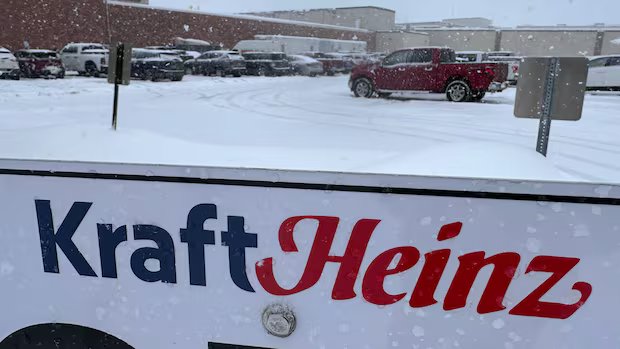

Listen to this article
Estimated 4 minutes
The audio version of this article is generated by AI-based technology. Mispronunciations can occur. We are working with our partners to continually review and improve the results.
Kraft Heinz has halted efforts to split the company, in a surprise move that new CEO Steve Cahillane said was necessary due to deteriorating conditions in the food industry, though he called the challenges “fixable and within our control.”
The packaged-foods maker announced plans in September to split into two — with one company focused on groceries and the other on sauces and spreads — after failing to achieve the kind of growth expected when the firm was formed a decade ago, under a merger orchestrated by Warren Buffett’s Berkshire Hathaway and 3G Capital.
Kraft Heinz has since lost out to rivals, with Cahillane saying a recent spate of price hikes alienated consumers who were already straying from its brands in favour of healthier alternatives at a lower cost.
“We busted through four or five levels of price points in a very accelerated fashion and the consumer was left very disappointed in that,” Cahillane said on a post-earnings call.
Shares were little changed on Wednesday after earlier falling about five per cent.
‘We ought to pause’
“Faced with the choice of continuing the separation and all the work that’s required there or shifting all resources against growing the business and the early opportunities that I saw, it became very compelling that we ought to pause the separation,” Cahillane told Reuters in an interview.

While he did not rule out the possibility of a split in the future, Cahillane said there was no end date for the pause, which is expected to save the company $300 million US in costs in 2026.
Kraft Heinz had expected to close the spinoff at the end of 2026 and brought on industry veteran and former Kellogg boss Cahillane in January to guide it through the split.
“The company’s decision to table/postpone separation plans and instead accelerate reinvestment reveals deeper problems than previously acknowledged by the company,” said Steve Powers, analyst at Deutsche Bank.
Kraft Heinz is among the few companies to reverse a major breakup, as only about one in 10 corporate spinoffs are cancelled on average, according to a 2022 report by KPMG.
Buffett disapproved of split
In January, Kraft Heinz’s shares tumbled after it disclosed that Berkshire Hathaway may sell its 27.5 per cent stake in the company and exit a more than decade-old investment that did not work out for Buffett.

Buffett told CNBC at the time of the announcement of the split that he and Greg Abel, then a Berkshire vice-chair and now its chief executive, disapproved of the split.
“We support CEO Steve Cahillane and the Kraft Heinz board of directors’ decision, under Steve’s new leadership, to pause work on the company’s previously planned separation,” Berkshire Hathaway’s CEO Greg Abel said in a statement on Wednesday.
“As a result, management can commit to strengthening Kraft Heinz’s ability to compete and serve customers.”
Cahillane also outlined his strategy to restore the company to profitable growth.
He said Kraft Heinz would focus on marketing and research with a $600-million US investment to drive recovery in its U.S. business, where market conditions have worsened since the decision to split last summer.
Kraft Heinz, like other packaged foods companies, has been struggling with weak demand for its pricier condiments and pantry staples as consumers look for cheaper options, but has also lost out to rivals due to a lack of innovation.
Q4 results fall short
On Wednesday, Kraft Heinz reported fourth-quarter results that fell short of estimates and forecast 2026 earnings below expectations.
“To turn this around, we are increasing investments in R&D by approximately 20 per cent in 2026 compared to 2025,” Cahillane said, adding that the product innovation would also circle nutrition and value.
He also acknowledged that Kraft Heinz has not provided consumers additional benefits for the higher price tag.
“There’s terrific brands here. And they’ve been underinvested in for quite some period of time. And separations are always best done when the business is healthy, when it’s stable and when it’s growing.”