dailynewsnblog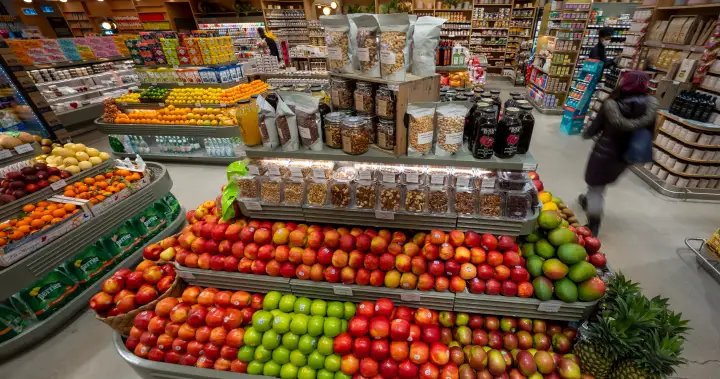
The Manitoba government launched a study Wednesday aimed at keeping groceries affordable, although it’s unclear how data would be collected and whether one of its main topics is a reality in the province.

The study, promised in the NDP government’s throne speech in November, is to look at issues such as differential pricing _ a practice where people can be charged different prices for the same grocery product from the same store, based on their prior shopping patterns or personal information.
Finance Minister Adrien Sala couldn’t point to an example in Manitoba but cited a recent report by Consumer Reports and two advocacy groups in the United States. It said some online shoppers using a third-party platform were charged different prices for the same item bought at the same time.

Get breaking National news
For news impacting Canada and around the world, sign up for breaking news alerts delivered directly to you when they happen.
“This is personalized pricing and it can happen quietly, without consumers knowing how or why a price is set,” Sala said.
The Retail Council of Canada said the issue has not come up north of the border.
“We’ve seen no evidence of that occurring across Canada and specifically Manitoba,” said John Graham, the council’s regional director of government relations.
The government study is also considering whether to expand the province’s control over the retail price of milk. The province already sets a maximum retail price for one-litre cartons and could move to also limit the price of two- and four-litre formats.
The study is to further examine whether fees or taxes could be changed to reduce grocery bills and whether new restrictions are needed on expiration dates for loyalty points and gift cards.


Regulations governing food grades and donations could be changed to reduce food waste and support food banks, Sala said.
The most recent figures from Statistics Canada show Manitoba had the second-highest inflation rate for store-bought food among provinces during the 12-month period that ended in December, at 5.9 per cent.
The government study is being led by the province’s central statistics bureau. Sala didn’t offer details about how the bureau might get data from private grocery companies on how they set their prices.
“There’s lots of very talented researchers and experts out there that we’re going to be able to consult with, to better understand what’s happening on the ground, (and) to get insights into the data we need.”
© 2026 The Canadian Press