dailynewsnblog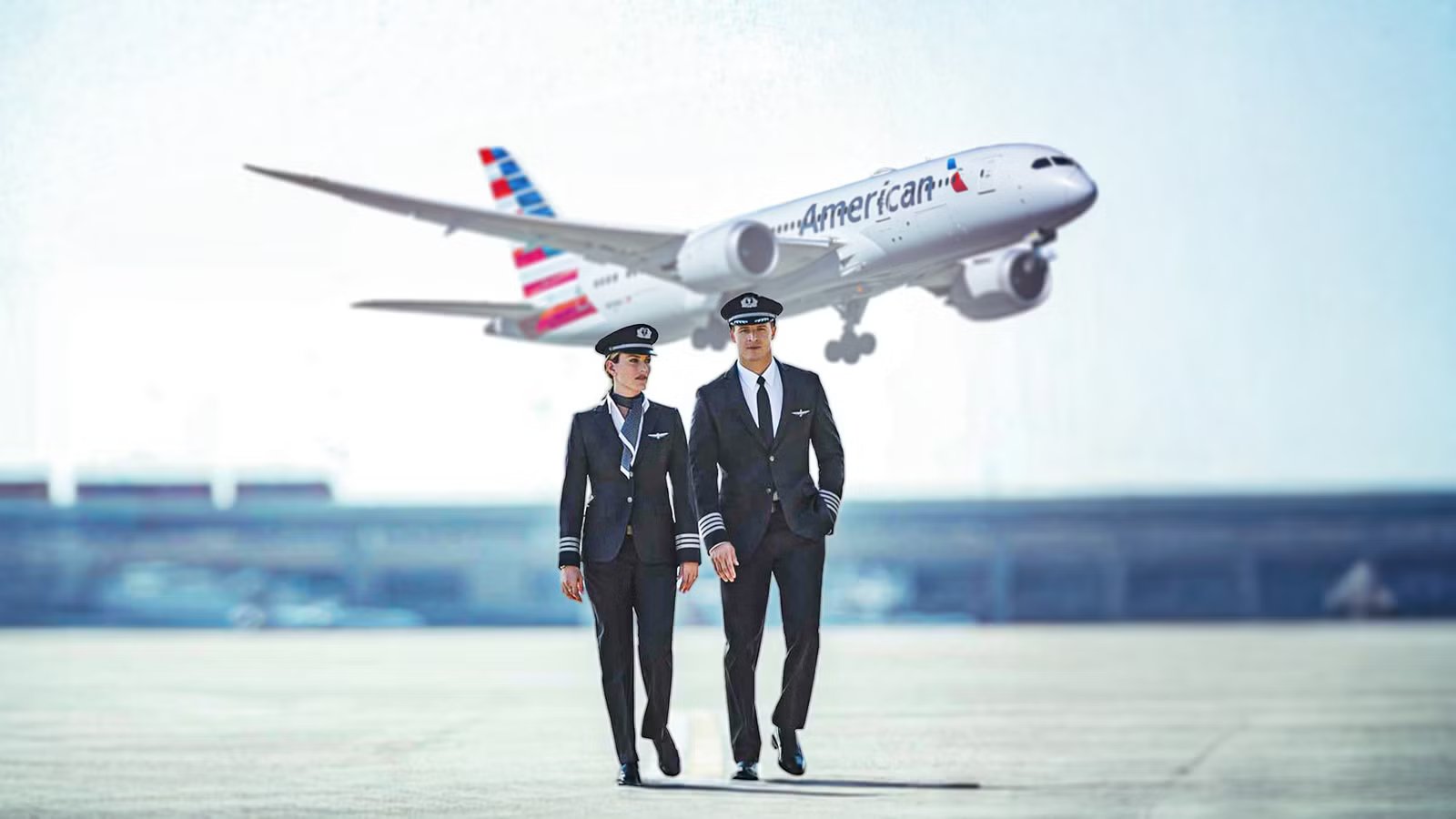
The 2023 contract agreement between  American Airlines and the Allied Pilots Association (APA) included a policy change that allows pilots to clear for upgrades ahead of elite members, ruffling the feathers of first-class travelers. Specifically, pilots deadheading to reposition on trans-oceanic international flights are given the highest class of service.
The reason why many frequent flyers and AAdvantage loyalty members are upset is that this effectively devalues the most important perk associated with being an invested customer. Complimentary first-class upgrades are less available thanks to the policy for pilots, which has AAdvantage members upset. At the same time, pilots making the deadhead journey to fly another aircraft must meet legal requirements for crew rest, which the first-class upgrade allows them to do.
Slim Pickings At American

Only one or two seats are usually available for upgrades within 24 hours of departure due to the small size of first class cabins. When devoted, paying customers are seated in coach while uniformed staff are seated in first class, it irritates travelers. Critics contend that regardless of internal labor contracts, a company should put its highest-paying clients ahead of its employees.
While the airline’s management, including CEO Robert Isom, praised the deal as a method to increase training capacity and boost pilot careers, the specific upgrade clause has remained a source of great dissatisfaction for the airline’s most devoted frequent passengers. This shift comes at a time when upgrades are already difficult to obtain, as American has been more active in selling last-minute first-class tickets at a discount rather than giving them out to elites.
Deadheading pilots are given priority on the upgrade list within 24 hours of departure. Pilots occupy the identical inventory that premium ConciergeKey and Executive Platinum members have paid tens of thousands of dollars to compete for when they take these seats. The shift is seen by frequent flyers as ‘another nail in the coffin’ for elite status.
The Industry Standard

The upgrade priority for pilots was a crucial ‘quality-of-life’ clause negotiated by the APA to align American’s standards with those of United Airlines and Delta Air Lines. On long-haul international flights and select domestic routes, deadheading pilots are contractually assigned to the highest class of service at booking. On other domestic flights, they are originally assigned to economy but are moved to the head of the upgrade queue upon check-in.
Deadheading pilots are allocated to first class largely to guarantee that they are physically and mentally rested before flying the next flight, which is crucial for maintaining safety standards and Federal Aviation Administration (FAA) fatigue management requirements. While federal regulations consider traveling as a passenger for a work assignment as duty time rather than relaxation time, placing pilots in a premium cabin helps reduce the fatigue that comes with long shifts.
Many AAdvantage members contend that they should be given priority because they fund the pilots’ wages with expensive tickets and credit card purchases. This was a non-negotiable component of a $9.6 billion labor agreement with the APA, not a decision made by AA. In order to stay competitive in the hiring and retention of pilots, American was effectively compelled to match the regulations already in place at United and Delta.
Cost Of Doing Business

American Airlines has virtually no control over this policy, and it was not included in the company’s business strategy. So, notwithstanding the frustration that regular fliers who are unfamiliar with this regulation may experience, it is now a truth that cannot be changed. Airline attendants frequently remind passengers that they are entitled to the seat they paid for, not the one they hope to acquire for free. They say that a rested pilot is safer for everyone on the plane.
The first rounds of negotiations are anticipated to start in late 2026 before your contract between APA and AA is extended in 2027. It is extremely doubtful that this policy will be altered in the upcoming negotiations. This appears to be becoming a permanent feature of the commercial aviation business, based on a number of considerations.
There is a global pilot shortage, making it extremely competitive for airlines around the world to hire pilots. Removing a quality-of-life incentive available on many other airlines across the world would make it more difficult for American to attract pilots and ensure that its operations not only endure, but expand. The 2023 round of negotiations includes 20% of the contract’s total value for pilot quality-of-life enhancements.

Why First Class Upgrades Have Become Increasingly Difficult
Airlines seem to be getting stingier when it comes to complimentary or discounted upgrades.
Supply And Demand

In order to ensure that its aircraft actually stay in the air, American Airlines has been forced to emphasize pilot quality of life due to the global pilot shortage, which has drastically changed the power dynamics in airline labor discussions. Pilots are required by federal law to retire at age 65. As the ‘Baby Boomer’ generation reaches this limit, legacy carriers like American are currently losing thousands of senior captains per year.
American had to match or beat Delta and United’s record-breaking contracts only to keep its pilots from departing for competitors. Pilots requested more than just money; despite receiving 46% raises, they demanded improved working conditions. The first-class upgrade policy for deadheading pilots was a critical demand to ensure that pilots arrived at their next gate relaxed and ready to fly, rather than weary from sitting in the middle seat.
Because there aren’t enough personnel to fly them, American has forced to ground about 100 regional jets that service smaller cities due to pilot shortages. Over the next five years, the airline intends to hire 10,000 pilots to replace retirements and support expansion. To get into a major airline, a new pilot must complete at least 1,500 flight hours and pay about $100,000 for training. Airlines reduced expenses during COVID-19 by pausing training and providing early retirements. The pipeline of new pilots was unable to keep up with the unexpected spike in travel demand.

A Look At The Salaries Of Commercial Airline Pilots In The US In 2026
Salaries in the industry have continued to rise.
The Evolution Of Aviation

While top frequent travelers are understandably furious that pilots are moving ahead of the upgrade line, the alternative is worse for everyone. If American did not provide these benefits, pilots would switch to other airlines, resulting in more cancellations and fewer trips to smaller airports. Due to the shortage, pilots have transitioned from employees to partners with the ability to set terms.
Younger pilots frequently display greater adaptability and technological aptitude. The new generation of pilots is being trained using high-fidelity simulators and virtual reality (VR), which allow them to rehearse maneuvers and emergency scenarios in a safe, controlled setting. This current training frequently results in more skilled pilots who have encountered a broader range of flight conditions than traditional flight hours alone.
American Airlines believes that losing a few first-class seats to pilots is a necessary expense of operating its aircraft and ensuring the safety of its customers. Although some passengers may be irritated by the shift in bargaining power and the mass retirement of “Baby Boomers,” the aviation industry sees these developments as critical to modernization, safety, and the long-term stability of air travel. Instead of giving away first-class upgrades, the majority of airlines are shifting to a business model where they sell them. Regardless of the pilot policy, the free upgrade for elites is already a diminishing benefit.

Hubs In Crisis: Is American’s Network Strategy Failing Its Pilots?
Is a crisis of confidence brewing at the world’s largest airline?
The Future Of Flying

Major US airlines lose between 3,000 and 4,000 pilots each year due to the mandatory retirement age of 65. Although there is a little experience gap as a result, there are certain long-term benefits. The balance has shifted in favor of pilots due to the global pilot shortage, yet this power is often used to get improvements that benefit the system as a whole rather than simply the pilots’ financial accounts.
Younger pilots can progress from cadet to captain far more quickly than in past decades, thanks to the retirement boom. Aspiring pilots now have access to previously unheard-of opportunities and employment security. AI is being used more frequently in the sector for real-time weather monitoring, predictive maintenance, and route optimization. By reducing pilot effort and minimizing human error, these safety-enhancing solutions are already familiar to new pilots when they join the workforce.
Pay on smaller airlines was seen as appallingly low for many years. The job is now more lucrative and fulfilling due to modern contracts that offer better perks and higher entry-level compensation. In order to avoid more significant service disruptions in the future, this guarantees that the sector attracts a consistent flow of people. These are seen as essential concessions for a stable aviation system, even if customers may have to pay more for tickets as a result of increased labor expenses and may no longer be eligible for free upgrades.
If American Airlines had failed to offer a competitive contract, the loss of pilots would have caused a catastrophic operational and financial downturn. With fewer pilots, the airline would be legally and physically unable to keep its flight schedule, causing widespread delays. Without these competitive contracts, airlines would see significantly greater rates of route cancellations and stranded aircraft, particularly at smaller regional airports where the pilot shortage is most acute.

![Singapore Airlines’ 10 New Ultra-Long Routes In 2026 [Updated]](https://dailynewsnblog.com/wp-content/uploads/2026/04/singapore-airlines-boeing-777-300er-mock-up.jpeg)