dailynewsnblog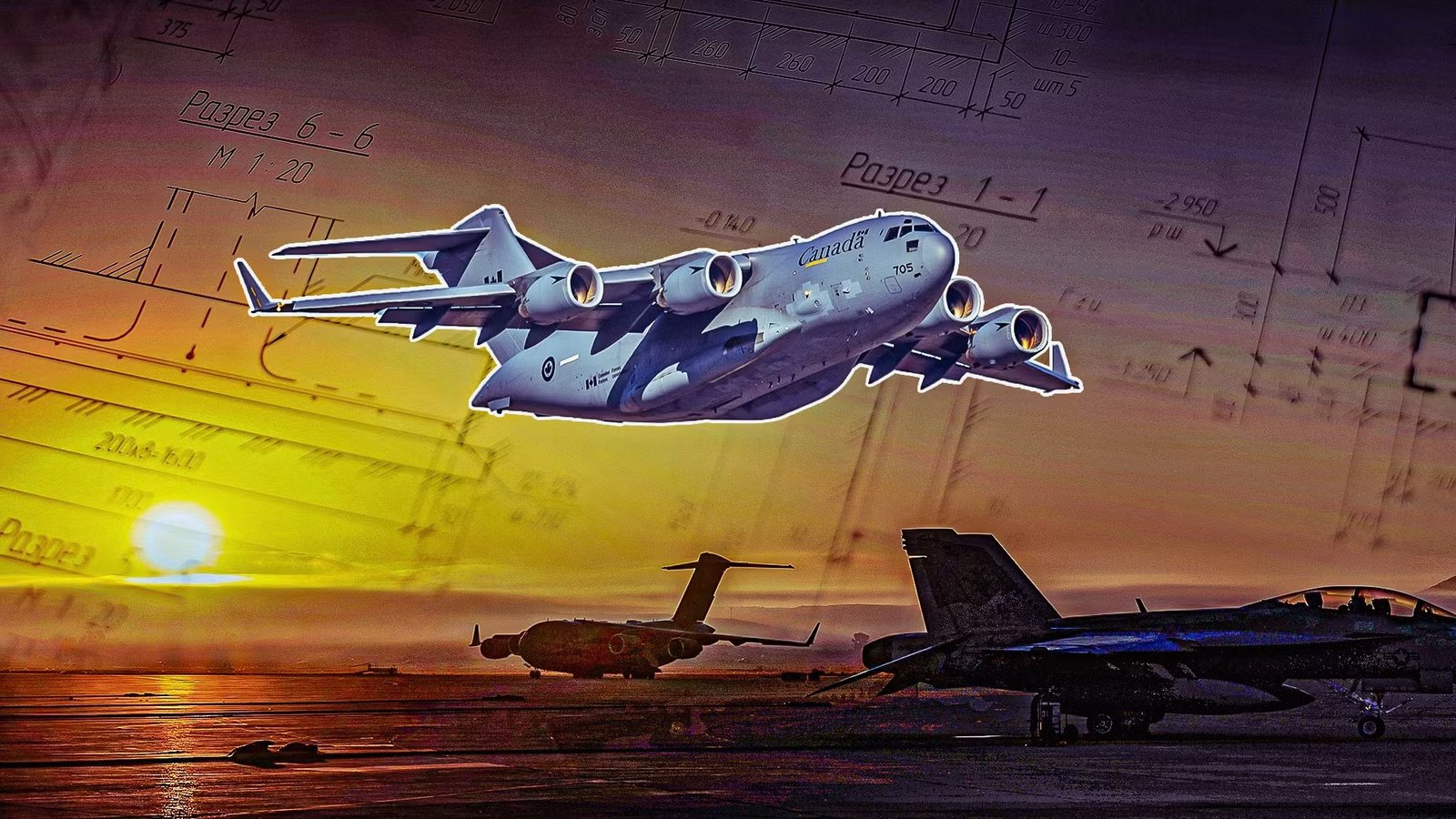
 Boeing has long been a key player in the global aviation industry. Its commercial jets are used by airlines around the world and form the core of many global fleets. But alongside its presence in the commercial market, the US planemaker has also developed some of the most widely used military aircraft in service today.
Several of its defense platforms have become essential to the operations of air forces across North America, Europe, the Middle East, and the Asia-Pacific. One of those platforms is the C-17 Globemaster III, a four-engine military transport aircraft that has become a mainstay of strategic airlift operations since its launch in the 1990s.
It can carry large payloads over long distances and land on short, austere runways, which makes it especially valuable in conflict zones and remote locations. Boeing ended production back in 2015, but interest in the type has remained. Now, with defense spending increasing and several countries looking to strengthen their fleets with such heavy-lift aircraft.
Falling Demand And Budget Cuts Ended C-17 Production

The C-17 Globemaster III was developed in the 1980s by McDonnell Douglas to meet the United States Air Force’s (USAF) need for heavy-lift transport that could operate from short, austere runways. The first flight took place in September 1991, and the aircraft entered service in January 1995. Later in 1997, Boeing acquired McDonnell Douglas and continued the production.
However, over time, demand for new C-17s began to fall. Additionally, the program also became a target of budget constraints; the 2011 Budget Control Act introduced significant cuts to US defense spending. In its 2010 budget request, the Department of Defense (DOD) stated, “DOD does not need additional C-17 aircraft. Therefore, we are ending production under this program.” With no substantial new demand, the long-term viability of the line came into question.
By 2013, the Air Force’s entire order had been fulfilled, apart from a few aircraft for international customers still in production. Boeing began winding down the program that year and completed the main wing spar of the final aircraft in 2014. The last C-17 was delivered in 2015 and marked the end of more than two decades of manufacturing at the Long Beach, California, plant.
Nations Eye C-17 Orders Amid Growing Airlift Needs

For years, the C-17 Globemaster III has remained a core asset for the United States Air Force. It is regularly tasked with moving heavy equipment, vehicles, and troops, and is also used for humanitarian and relief missions. In recent years, the C-17 fleet has been used heavily for operations in Afghanistan, Ukraine, and the Indo-Pacific. This higher usage has accelerated wear on the fleet, which has prompted discussions about whether more aircraft are needed before a future replacement becomes available.
In addition, defense budgets are increasing in several regions (including Europe, Asia-Pacific, and the Middle East), and more countries are looking to expand their airlift capacity. And conflicts such as Russia’s war in Ukraine and unrest in the Middle East have renewed attention on the type.
In fact, Boeing has received interest from countries that failed to secure orders before the production lines closed and is looking to potentially restart production, as reported by Shephard Media. During the 2025 Paris Air Show, Turbo Sjogren, Vice President and General Manager of Boeing Global Services–Government Services, confirmed that “early infancy” talks were underway with at least one country.
Even last year, as reported by FlightGlobal, Sjogren said, “There are a number of other customers who wish they had acquired it at the time…The C-17 is a product that does come up quite often. If we still had a lukewarm production line, there are a number of customers who have expressed interest.” It remains unclear which nations are interested, but Japan has previously expressed a desire to buy at least one C-17. Additionally, Saudi Arabia also came “very close” to confirming an order prior to production ending.
Lack Of Alternatives Keeps C-17 In High Demand

Part of the renewed demand for the C-17 is the lack of another Western-built aircraft with the same capabilities. The aircraft, according to Boeing, can carry up to 164,900 pounds of cargo over more than 4,500 NM and operate from runways as short as 3,500 feet and 90 feet wide. This enables it to deliver outsized loads, including an M1 Abrams main battle tank, directly into small or austere airfields.
The Airbus A400M and Embraer C-390 Millennium are the closest Western-built alternatives, but their capabilities are significantly different. The A400M, which was originally marketed as a bridge between the C-130 Hercules and C-17, can carry 30,000 pounds over 2,400 NM. It is effective for many tactical missions and can also operate from unprepared surfaces, but its payload capacity falls well short of the C-17’s.
C-17 Globemaster Specifications | |
|---|---|
Wingspan to Winglet Tip | 169.8 feet (51.74 m) |
Length | 174 feet (53.04 m) |
Height at Tail | 55.1 feet (16.79 m) |
Fuselage Diameter | 22.5 feet (6.86 m) |
Engines | Four Pratt & Whitney PW2040 (military designation F117-PW-100) 40,440 pounds thrust each |
Payload | Up to 164,900 pounds (74,797 kg) |
Range | 6,230 NM (without payload) |
The C-390 Millennium, which is often described as a jet-powered C-130, is similarly limited in strategic applications and cannot transport the heaviest loads that the C-17 is designed to carry. Neither of these types is a direct replacement for the C-17, yet Boeing has said it has no planned successor to the Globemaster III.
Sjogren told European Security & Defense, “That product [the C-17 Globemaster III] has been extremely successful and there is currently no planned replacement for that aircraft, as a result of which we are currently undertaking with the United States Air Force and all of our international operators an extension program, as well as a modernization program for that aircraft.”
Bringing Back The C-17 Production Won’t Be Easy

Furthermore, restarting production, regardless of the level of interest, would not be a straightforward process. The US planemaker has already said that it does not currently have manufacturing capability for the C‑17, and the Long Beach, California, facilities were put up for sale in 2018 after production ended.
The lines have been idle since the last aircraft left the plant in 2015, which means any restart would require new arrangements for where and how to build the jet. Cost is a major barrier. A 2013 RAND Corporation study estimated close to $8 billion to restart production and support up to 150 improved, more fuel efficient derivatives, assuming manufacturing would take place somewhere other than Long Beach.
Current interest is expected to be in the dozens at most, not hundreds, which raises questions about return on investment. Building a new facility would also be costly and time‑consuming, even if production assets could be saved and moved. In addition, there are program considerations as well. A restart could align with Boeing’s C‑17 Integrated Sustainment Program and might lead to an updated, more capable configuration.
But the US Air Force is also studying future airlift concepts such as NGAL and blended‑wing‑body designs that emphasize higher survivability; the C‑17 would not meet that survivability requirement. Depending on foreign interest, a US order could be crucial for initiating any restart. For now, whether restarting production is possible or economical remains in doubt.
275 C-17s Still In Frontline Service Worldwide

If Boeing does move forward with a C-17 production restart, it would be the first new aircraft of the type to roll out in a decade. Any decision will depend heavily on confirmed orders, possible US participation, and whether a business case can be made despite the high restart costs. In the meantime, the existing fleet continues to play a major role in global airlift operations.
As of last year, a total of 279 C-17 Globemaster IIIs were produced, including prototypes. Of these, only one has been lost in an accident, leaving around 275 examples active today, according to Boeing. The United States Air Force is by far the largest operator, with a fleet of 222 aircraft based at 12 locations worldwide. Outside the US, 52 aircraft are in service with other nations and the NATO Strategic Airlift Capability (HAW) program.
Operator | Aircraft |
|---|---|
Australia | 8 |
Canada | 5 |
Hungary | 3 |
India | 11 |
Kuwait | 2 |
Qatar | 8 |
United Arab Emirates | 8 |
United Kingdom | 8 |
United States | 222 |
In Europe, the Royal Air Force operates eight aircraft, while the NATO HAW unit, based in Pápa, Hungary, flies three aircraft, which are shared by 12 member nations. The Royal Australian Air Force also fields eight. Additionally, Canada, India, Qatar, the UAE, and Kuwait have also included the type in their fleets. Across all operators, the C-17 remains in frontline service, with none retired or scrapped apart from the single example lost in a crash.
C-17 Restart Remains Uncertain

At present, a C-17 production restart is only in the discussion stage. Boeing has confirmed early talks with at least one potential buyer, and several nations have signaled interest, but no formal commitments have been made. Without a significant number of confirmed orders, moving ahead remains a challenge.
Any restart would hinge on resolving the cost and logistics of building the aircraft again, along with the question of where production would take place. A strong business case, likely requiring both foreign sales and possible US Air Force involvement, would be essential to justify the investment.
If these conditions are met, the Globemaster III’s established track record, broad operator base, and unmatched heavy-lift capabilities could give it a second production run. If not, the existing fleet will continue to carry the load for global airlift operations, keeping the type in frontline service well into the future. The C-17s are expected to remain in service until 2070.

![6-Hour Flights: Southwest Airlines Launches Exciting New Route To Hawaii In August [Map]](https://dailynewsnblog.com/wp-content/uploads/2026/06/imua_one_departs_santa_barbara_-53981372594-_cropped.jpg)