dailynewsnblog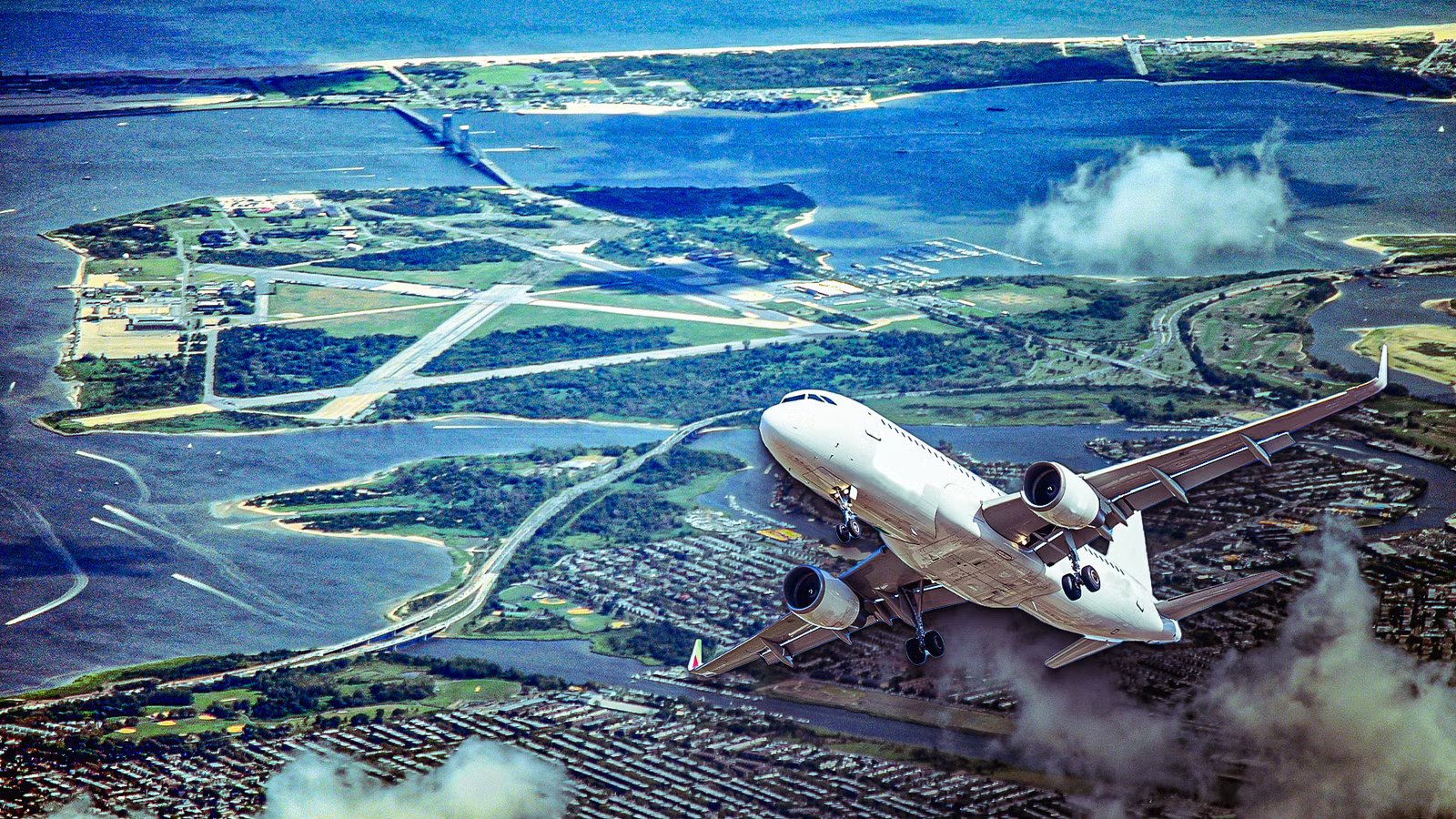
New York is one of the most important gateways in the United States, connecting the country to destinations across every continent. When people think of flying in or out of the city today, three names usually come to mind: New York John F. Kennedy International Airport,  LaGuardia Airport, and
  Newark Liberty International Airport.
These are the main hubs that shape the region’s aviation identity now, but in the early days of air travel, during a very different era, another airport held that position. New York’s first municipal airport, Floyd Bennett Field, was once the airport that dominated the city’s skies. It was built in the early 1930s and operated through World War II and beyond.
It played a central role in the city’s early aviation development, welcomed record-breaking pilots and hosted key military operations. Today, that once-busy airfield has taken on a very different identity: it is now a part of a national park, which offers wide open landscapes, historic infrastructure, and a surprisingly rich ecological habitat on the edge of Brooklyn.
How Floyd Bennett Field Was Planned And Built

Floyd Bennett Field is located in the Marine Park neighborhood of southeastern Brooklyn, along the shore of Jamaica Bay. The decision to build a city-owned airport came at a time when air travel was expanding in Europe but remained limited in the United States. Following World War I, many European countries embraced commercial aviation as part of their national infrastructure.
The US, by contrast, relied heavily on its extensive railroad network and had little urgency to develop public airports. Later, cities like Cleveland and Atlantic City moved ahead with dedicated airports, but New York remained dependent on scattered private airstrips and had no centralized facility of its own. But in the late 1920s, it became increasingly clear that New York lacked a modern airport within the city limits.
Following Charles Lindbergh’s 1927 transatlantic flight, which departed from Roosevelt Field on Long Island, New York leaders were determined to develop an airport that the city could officially call its own. And in 1928, the city’s Board of Estimate approved plans to build a municipal airport. Construction of the airfield began in 1928, and the project was designed with durability and modernity in mind.
Unlike many grass airstrips of the era, Floyd Bennett Field featured concrete runways, large steel hangars, and a formal terminal building. The airport was officially opened in 1931 and named in honor of naval aviator Floyd Bennett, who had flown with Admiral Richard Byrd on his polar expeditions.
Floyd Bennett Field Was Never A Commercial Success

Over the years, Floyd Bennett Field has supported a wide range of aviation activity, from general aviation and military operations to a brief period of commercial use. In its early years, the airport handled both civilian and government traffic; it recorded more than 25,000 landings by commercial and military aircraft in just the second half of 1931.
The site quickly gained a reputation as an ideal gateway for long-distance flights across the Atlantic. According to the 1932 Annual Report from the Department of Docks, Floyd Bennett Field had become “the most desirable American field as an ocean hop terminal.” That year alone, at least four transatlantic flights took place from the airport, with several more scheduled for the following year. In total, 26 around the world or transatlantic flights started or ended at Floyd Bennett Field between 1931 and 1939.
By 1933, the airport had become one of the busiest in the country by flight volume, surpassing even Newark Airport in total arrivals and departures that year. Yet despite this early momentum, Floyd Bennett Field never achieved commercial success. Its remote location on the southeastern edge of Brooklyn made it difficult to access from Manhattan and other population centers.
Passenger airlines were reluctant to schedule regular service, and the airport failed to secure a lucrative airmail contract, a key factor in sustaining airline operations during that era. According to author Tony Wrenn, most of the passenger aircraft and mail planes that did use the airfield likely only did so when Newark was unavailable. By the end of 1934, it had served only 52 airline passengers, with nearly all air traffic either general aviation or special-purpose flights.
American Airlines briefly operated a shuttle to Boston, and seaplane routes were launched to connect with Manhattan, but neither gained lasting traction. With limited airline activity and passenger volume, the city soon turned its attention to a new airport in Queens that would eventually become LaGuardia.
But It Did Succeed In General Aviation And Military Use

Even though it didn’t see much success in commercial service, Floyd Bennett Field became an important center for general aviation in the years before World War II. Its modern infrastructure, wide open surroundings, and proximity to the Atlantic Ocean made it a practical choice for long-distance flyers. The airport attracted record-breaking pilots of the interwar period who used the site for transcontinental and transoceanic attempts, as well as other aviation milestones.
During its peak in the 1930s, the airfield hosted dozens of “firsts,” speed records, and endurance flights. It was also a regular venue for competitive events like the Bendix Cup, and civilians were allowed to take flying lessons at the facility. These activities gave Floyd Bennett Field a degree of aviation prominence. In the years leading up to World War II, the airport’s role began to shift.
The United States Navy gradually expanded its presence on-site, and in 1941, the military formally took over the airfield and converted it into Naval Air Station New York. The base supported both Navy and Marine aviation units and hosted training flights, patrol missions, and reserve operations throughout the war.
That military use continued into the postwar years. The station was briefly redesignated as a Naval Air Reserve Training Station in 1946, before returning to full NAS status as Cold War tensions increased. Activity at the base persisted until 1971, when the Navy officially decommissioned the facility and left the site.
Floyd Bennett Field Is Now Part of the Gateway National Recreation Area

Following the Navy’s departure, Floyd Bennett Field entered a period of uncertainty; several proposals were put forward for its reuse. Some ideas even explored converting the site back into a civilian airport, but that option was ultimately ruled out due to its close proximity to the busy airspace around New York-JFK airport.
Fixed-wing operations were deemed impractical, and attention shifted toward alternative uses for the site. In 1972, Floyd Bennett Field was formally integrated into the newly established Gateway National Recreation Area, a major initiative by the National Park Service to protect and repurpose significant waterfront lands around New York Harbor. The site reopened to the public as a park in 1974.
Many of its original buildings ( hangars, terminals, and airfield infrastructure) were preserved and later designated as part of a historic district listed on the National Register of Historic Places. Today, Floyd Bennett Field is part of the Jamaica Bay Unit of Gateway National Recreation Area and is operated by the National Park Service.
While it no longer supports commercial or military aviation, it remains active in other ways. The New York City Police Department maintains a helicopter base on-site, and a portion of the runway system is open to hobbyists flying model aircraft. In August 2023, a temporary shelter for migrants and asylum-seekers was also established at the field.
The Airport Has Become A Unique Spot for Birdwatching and Grassland Habitat

Furthermore, its wide-open landscapes and unique ecology have made it one of the city’s most popular birding sites. The airport was constructed on a marshy island near the mouth of Jamaica Bay, using landfill materials like rubble and dredge spoil. At the time, the large grassland area between the runways was maintained, which has now become a rare urban habitat for grassland bird species.
After the airport was decommissioned in 1971, mowing and other maintenance stopped, and natural vegetation began to take over. In 1985, the National Park Service and the NYC Bird Alliance launched a grassland restoration effort across 130 acres, removing trees and resuming mowing to protect bird habitat.
These managed grasslands are now home to species like the Savannah Sparrow, which still nests at the site, along with seasonal visitors such as Grasshopper Sparrows, Bobolinks, and American Woodcocks. The airport is now considered one of the best birding locations in the city.
The North Forty, a remote section near the model airplane area, includes a trail leading to the Return-A-Gift Pond, where birders can spot everything from warblers to herons. Winter visitors might see hawks roosting in the pine groves, or even a Snowy Owl on the runway fence line. Across the bay, nearby islands also attract nesting ospreys, egrets, and marsh birds.
What’s Next for Floyd Bennett Field?

Looking ahead, Floyd Bennett Field is poised for another transformation. In partnership with the National Park Service and the Science and Resilience Institute at Jamaica Bay, the Jamaica Bay-Rockaway Parks Conservancy is working to repurpose the site as a regional center for environmental innovation and research.
Under this plan, historic hangars and underutilized buildings will be revitalized, creating space for nature-based restoration projects, cultural programming, and public gathering areas. In September last year, the Conservancy unveiled plans for a Center for Innovation in Nature-Based Solutions and Restoration.
The facility, which is located in Hangars 3 and 4, near the Ryan Visitor Center, will include 50,000 square feet of interior space dedicated to advancing coastal resilience through scientific research and applied environmental technology. It aims to address issues such as flooding, biodiversity loss, and rising urban heat, using scalable, measurable methods rooted in ecological science.

![6-Hour Flights: Southwest Airlines Launches Exciting New Route To Hawaii In August [Map]](https://dailynewsnblog.com/wp-content/uploads/2026/06/imua_one_departs_santa_barbara_-53981372594-_cropped.jpg)