dailynewsnblog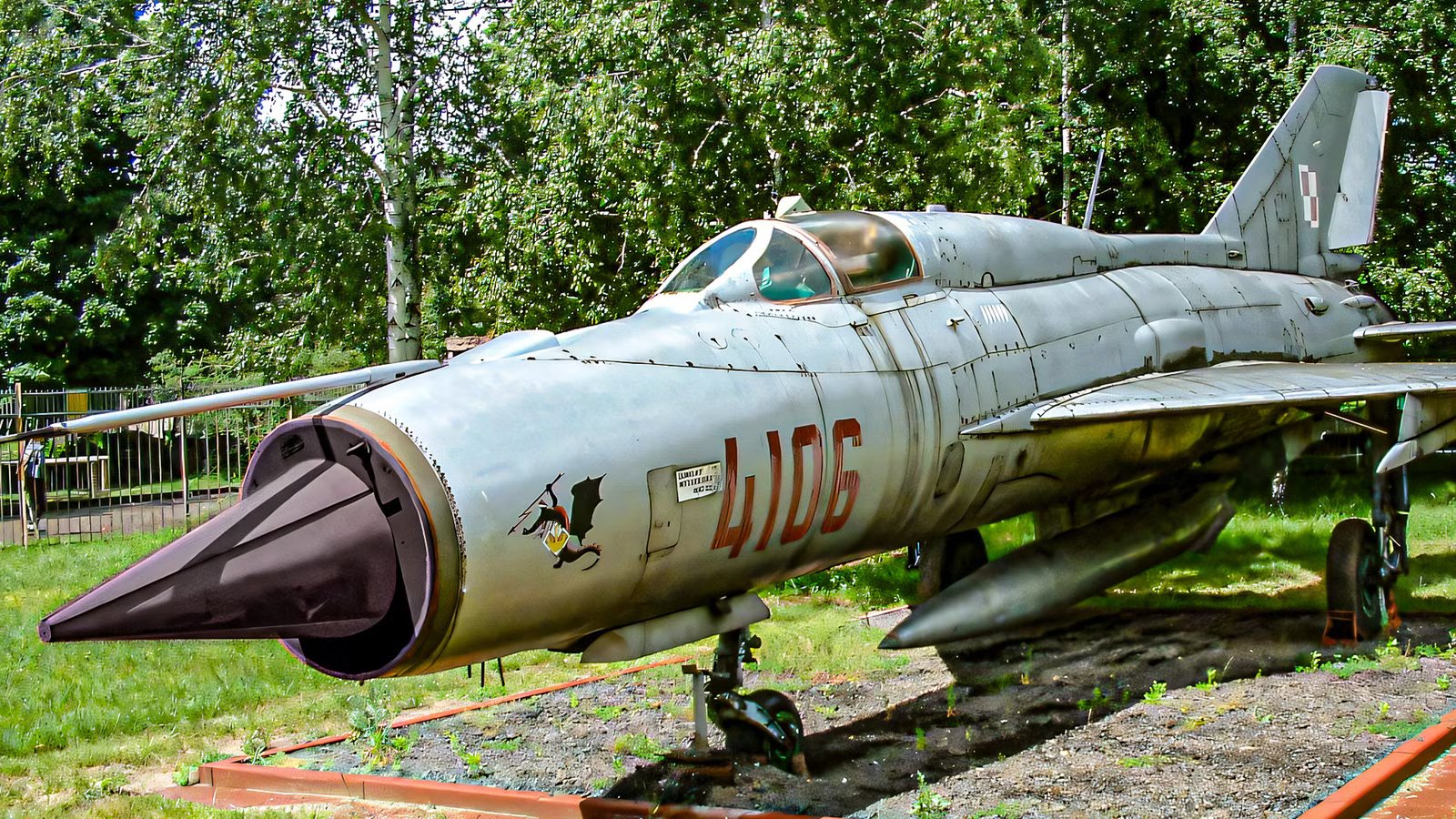
Few combat aircraft have been produced in numbers comparable to the Mikoyan-Gurevich MiG-21. Conceived during the height of the Cold War, the MiG-21 was designed to be fast, simple, and affordable, allowing it to be built quickly and operated by a wide range of air forces. Its straightforward design and adaptability led to continuous production across multiple decades, with numerous variants tailored to different missions, climates, and levels of technological sophistication.
The scale of MiG-21 production reflects both the Soviet military strategy and the aircraft’s global appeal. Built not only in the Soviet Union but also under license in several other countries, the MiG-21 became a common sight across Europe, Asia, Africa, and the Middle East. Understanding how many were built, and where, offers insight into why the MiG-21 became the most widely produced supersonic fighter in history and how it shaped air combat for more than half a century.
An Overview Of The MiG-21

The Mikoyan-Gurevich MiG-21 is a Soviet-designed supersonic fighter aircraft that first entered service in 1959 and became the most widely produced jet fighter in history. Designed as a lightweight, fast interceptor, it is instantly recognizable by its delta wing and nose-mounted air intake. The MiG-21 was built for speed, simplicity, and mass production, allowing it to be deployed by more than 60 countries across Eastern Europe, Asia, Africa, and the Middle East during the Cold War and beyond.
In terms of performance, the MiG-21 was capable of reaching speeds over Mach 2 and operating at high altitudes, making it effective against enemy bombers and reconnaissance aircraft. Early variants were relatively limited in avionics and relied heavily on ground-controlled interception, but later versions incorporated improved radar, missiles, and navigation systems. While its delta wing provided excellent high-speed performance, it also resulted in higher landing speeds and reduced maneuverability at low speeds compared to some Western contemporaries.
Operationally, the MiG-21 saw extensive combat use in conflicts, where it earned a mixed but notable reputation. In skilled hands, it proved capable against more technologically advanced opponents, particularly in close-range dogfights. Despite being largely retired from frontline service, upgraded variants of the MiG-21 continue to fly in a few air forces today, cementing its legacy as an iconic and influential fighter aircraft in aviation history.
Who Is Mikoyan-Gurevich?

Mikoyan-Gurevich, commonly known as MiG, was a prominent Soviet aircraft design bureau founded in 1939 by Artem Mikoyan and Mikhail Gurevich. Established during a period of rapid military aviation development, the bureau quickly became one of the USSR’s most important producers of fighter aircraft. MiG’s mission focused on designing high-performance, front-line interceptors capable of defending Soviet airspace, a role that strongly shaped its engineering philosophy throughout the Cold War.
The bureau gained international recognition after World War II with the introduction of jet-powered fighters such as the MiG-15, which proved highly effective during the Korean War. This success was followed by a series of influential designs, including the MiG-17, MiG-19, MiG-21, MiG-23, and MiG-29. MiG aircraft were typically characterized by rugged construction, high speed, and relatively simple maintenance, making them well-suited for mass production and operation by allied nations with varying levels of infrastructure and pilot training.
Following the collapse of the Soviet Union, Mikoyan-Gurevich faced significant financial and organizational challenges as defense budgets shrank and competition increased. The bureau was eventually consolidated into the United Aircraft Corporation of Russia, though the MiG name remains active. While its modern designs have seen more limited adoption compared to earlier decades, Mikoyan-Gurevich’s legacy endures through its major contributions to military aviation and its lasting impact on fighter aircraft design worldwide.

How Many MiG-21s Are Left?
The Fishbed is going extinct, find out how many are still flying.
How Many MiG-21s Were Produced?

The Mikoyan-Gurevich MiG-21 holds a remarkable production record among military jet aircraft. Built over several decades, from the late 1950s into the 1980s, it became the most-produced supersonic jet fighter in history, with more than 11,000 aircraft constructed worldwide. This achievement is recognized by Guinness World Records, which lists the MiG-21 as the most-produced jet-powered military aircraft of all time, noting its extensive production and service life spanning many variants and operators.
The bulk of this output, 10,645 aircraft, came from production lines within the Soviet Union, where three major factories in Moscow, Gorky, and Tbilisi turned out numerous versions for both domestic use and export. Licensed production contributed additional examples abroad: 194 MiG-21F-13s were built in Czechoslovakia, and 657 MiG-21FL, MiG-21M, and MiG-21bis models were assembled in India by Hindustan Aeronautics Ltd. (HAL). When these licensed builds are included, the commonly cited production total reaches around 11,496 aircraft.
The sheer scale of MiG-21 production helped the type achieve a widespread global footprint. Across its production history, MiG-21s served with around 50–60 air forces on four continents, from Eastern Europe and Asia to Africa and the Middle East. Its combination of high speed, relative simplicity, and adaptability made it attractive for many countries during the Cold War and beyond, ensuring that it remained a staple of air forces long after production ended.
How Many MiG-21s Are Still Operating?

As of early 2026, MiG-21 remains in Cuba (12 aircraft), though most other operators have retired them. One of the last European operators, the Croatian Air Force, withdrew its remaining MiG-21s from active duty by 2024, closing the final chapter of routine MiG-21 operations in Europe as the country transitioned to more modern Western fighters. This retirement symbolized a broader global shift away from Cold War–era aircraft.
In South Asia, the Indian Air Force, historically one of the MiG-21’s largest and longest-serving users, completed the type’s withdrawal from service in 2025 after more than six decades of continuous operation. The final squadrons were formally decommissioned following ceremonial farewell flights, bringing to an end one of the most extensive MiG-21 service records anywhere in the world. Other former operators, including Romania and several African and Middle Eastern states, had already retired the aircraft years earlier as maintenance demands and safety concerns increased.
Today, the MiG-21 survives primarily outside of combat roles. Numerous examples remain on static display in aviation museums, while a limited number continue to fly in private collections, heritage flights, or as test and training airframes. Although a few airframes may still exist in storage or have limited secondary use, there is no confirmed evidence of the MiG-21 remaining in active operational combat service anywhere in the world. Its continued visibility is now largely historical and commemorative rather than military.

Why the Romanian Air Force is Switching From Russian MiG-21s to US F-16s and F-35s
Romania is modernizing her jet fighter fleet. Simple Flying was able to gain additional insights from Romanian defense experts on this transition.
The Numbers Behind The MiG-21

The MiG-21 PFM, one of the early production variants of the Mikoyan-Gurevich MiG-21, was built as a lightweight, supersonic interceptor. It could reach a maximum speed of about Mach 2.05 at altitude (roughly 1,355 mph/2,180 km/h) and about Mach 1.05 at sea level, reflecting its emphasis on high-speed performance. The aircraft’s service ceiling, the highest altitude at which it could sustain level flight, was around 57,400 ft (17,500 m), and its initial climb rate was extremely strong at around 58,000 ft/min.
In terms of operational range and basic dimensions, the MiG-21 PFM had a combat radius of approximately 585 nautical miles (1,080 km), on internal fuel. However, the actual range varied depending on the mission profile and the use of external tanks. The aircraft’s compact airframe measured approximately 40 feet 4 inches (12.3 m) in length with a wingspan of about 23 feet 5 inches (7.15 m), and a height of around 13 feet 5 inches (4.1 m). The empty weight was listed at approximately 12,600 lb (5,715 kg), with a maximum takeoff weight of 22,925 lb (10,400 kg).
Specification | Value (Heritage Flight Museum) |
|---|---|
Maximum Speed | Mach 2.05 at altitude (1,355 mph/2,180 km/h) |
Initial Climb Rate | 58,000 ft/min (295 m/s) |
Range | 585 nmi (1,083 km) |
Service Ceiling | 57,400 ft (17,500 m) |
Wingspan | 23 feet 5 inches (7.15 m) |
Length | 40 feet 4 inches (12.3 m) |
Height | 13 feet 5 inches (4.1 m) |
Empty Weight | 12,600 lb (5,715 kg) |
Maximum Takeoff Weight | 22,925 lb (10,400 kg) |
Maximum Payload | 3,310 lb (1,500 kg) |
The MiG-21 was powered by a single Tumansky R-25-300 turbojet engine, producing around 15,535 lb of thrust with afterburner, providing the jet’s characteristic blend of speed and climb capability. Armament typically included a 23 mm GSh-23L cannon and provisions for air-to-air missiles such as the K-13/AA-2 Atoll, plus optional stores like rockets or bombs on underwing hardpoints. Although later MiG-21 variants improved radar, avionics, and weapons loadout, the performance fundamentals of speed, altitude, and climb defined its role as one of the most iconic Cold War fighters ever built.
The MiG-21’s Enduring Legacy

The Mikoyan-Gurevich MiG-21 remains one of the most significant fighter aircraft in aviation history, defined by its simplicity, speed, and adaptability rather than technological complexity. Designed during the Cold War as a lightweight interceptor, it reflected a philosophy that prioritized mass production and ease of operation. This approach allowed the MiG-21 to be produced in enormous numbers and fielded by a wide range of air forces around the world.
Its impact was felt across decades of global conflict and deterrence. The MiG-21 served as the primary fighter for many nations, taking part in wars in Asia, the Middle East, and Africa. In capable hands, it proved effective despite its relatively basic systems, and it became the first supersonic aircraft flown by many pilots outside the major powers. This widespread use helped shape air combat doctrine and pilot training across much of the developing world.
Although the MiG-21 has now largely left active service, its legacy endures. It is remembered as the most widely produced supersonic fighter ever built and as a symbol of Cold War-era aviation design. Preserved in museums and flown at heritage events, the MiG-21 continues to represent an era when speed, numbers, and reliability defined air power.