dailynewsnblog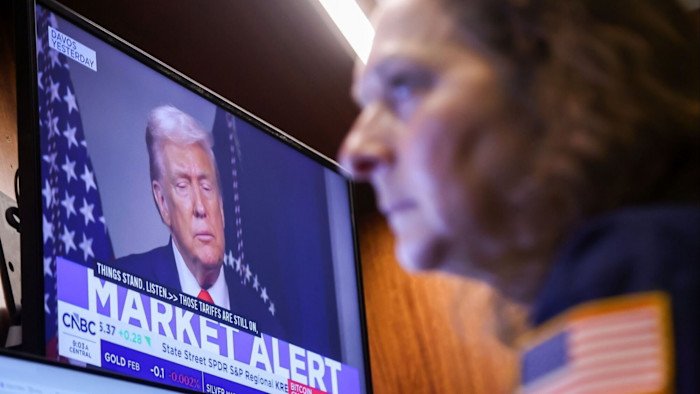
This article is an on-site version of our Trade Secrets newsletter. Premium subscribers can sign up here to get the newsletter delivered every Monday. Standard subscribers can upgrade to Premium here, or explore all FT newsletters
Welcome to Trade Secrets. Before we get on with the newsletter, which discusses how businesses are coping with geopolitics and last week’s US-India deal, here’s one thing that just caught my eye.
Remember the great olive oil crisis a couple of years ago, when shortages pushed the price of Italian extra virgin sky-high and the fragility-of-globalisation crowd were out in force wailing and rending their garments and everything was just awful? Guess what happened next? High prices incentivised the production of more olive oil supply elsewhere (specifically in Tunisia), imports rose and now prices have collapsed. This is how markets work. This is how trade survives.
Charted Waters, where we look at the data behind world trade, is on US electric vehicle sales.
Get in touch. Email me at alan.beattie@ft.com
Navigating the geoeconomic jungle
In last week’s column I treated readers to one of my perennial blasts of optimism about globalisation. I concentrated on trade in goods and services, but in fact foreign direct investment, capital and data flows and so on all seem to be doing OK. President Donald Trump causes occasional financial market panic when he goes particularly nuts on tariff threats. But that hasn’t caused a general freeze-up in cross-border activity so far.
I continue to salute the true heroes of globalisation: business types who bypass barriers and keep trade going. But to the extent that we are now in a geopoliticised era of trade — and certainly Trump isn’t the only one creating that situation — that game is changing.

Trade tensions arising from security issues have become a major threat to businesses’ balance sheets in a way no one can remember before. Jackson Wood of trade and supply chain consultancy Descartes says: “Trade compliance departments are getting calls from the CEO for the first time, and even if the company has a chief supply chain officer the decisions are increasingly taken at the highest level.”
So what does it look like down there in the engine room? How do you plan for geopolitical risk, especially given the unpredictable and illogical antics of someone like Trump? It’s a difficult thing to get hard numbers on, but one attempt to do structured qualitative analysis concludes that companies’ efforts to adapt themselves to a geopolitical tariff-ridden world are actually quite undeveloped.
Simon Evenett from the Global Trade Alert research project interviewed more than 50 executives from a wide range of sectors for a recent report. He says many companies have so far used easy-to-reach mitigation strategies, such as frontloading orders, to beat incoming Trump tariffs. There has also been a rush of companies registering their sales under preferential trade agreements, such as the US-Mexico-Canada (USMCA) trade deal, to benefit from loopholes.
Evenett found that companies have tried to build up their ability to assess geopolitical risk — also spurred by the Covid-19 pandemic and Russia’s invasion of Ukraine — in various ways. Some have located that analysis inside their government and public affairs functions, others via dedicated task forces or senior advisers.
But his biggest conclusion was that most have not fully institutionalised geopolitical risk into decision-making. “Companies are still struggling with ‘deep uncertainty’, where they can’t assess probabilities of events happening or even what those events might be,” Evenett told me.
In other words, the relatively benign outcome for trade we have seen so far might largely be luck. Trump has “chickened out” of enough of his tariffs that the inability to predict and prepare for what he’s up to hasn’t yet become a defining problem. Companies are worried about geopolitical risk — they are right to be — but that doesn’t mean they yet know how to spot it.
Trump’s weak trade deal à la Modi
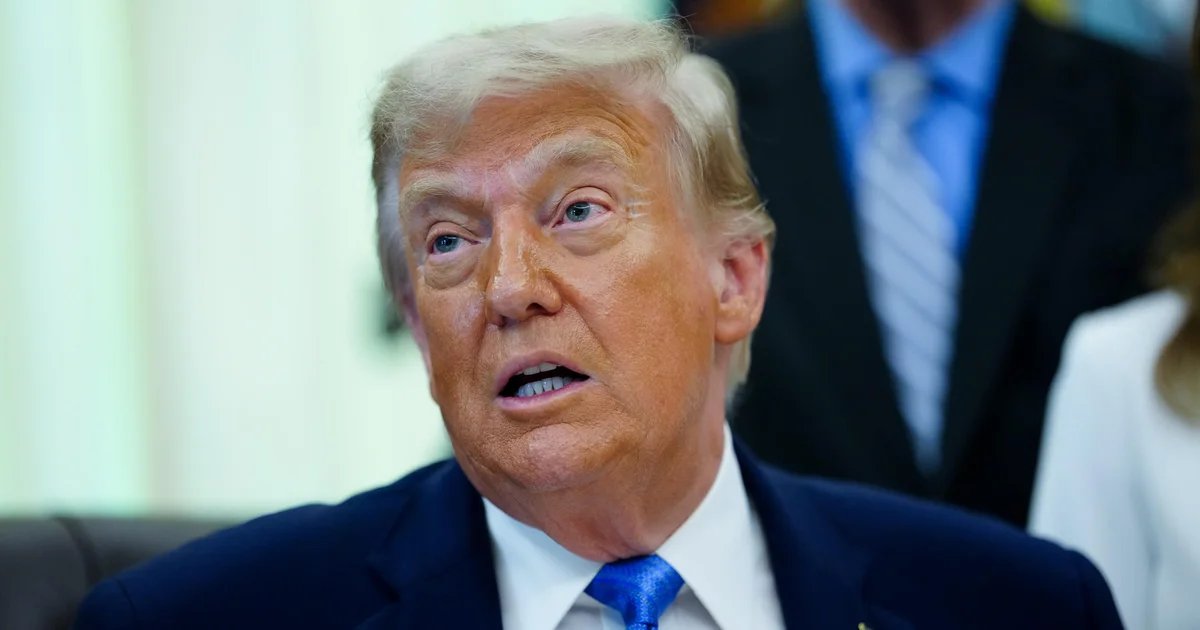
As I noted in last week’s column, Trump last Monday did what even for him was quite weird: a unilateral announcement of a trade deal. Out of the blue in a Truth Social post, the US president claimed that India had agreed to stop using Russian oil, for which he had hitherto been dinging the country with a punitive 25 per cent duty. He also claimed India would buy $500bn of imports from the US. In return, Trump would cut tariffs from a total of 50 per cent to 18 per cent.
Here’s the funny bit (both as in odd and entertaining): Indian Prime Minister Narendra Modi said nothing at all at the time, giving only a bland welcome to the tariff cuts the next day and waiting until the end of the week before sort of confirming the details on oil and import purchases.
It’s hard not to conclude from the tenor, timing and supposed substance of this deal what I posited in last week’s newsletter. The agreement means more to Trump than to Modi.
Modi gets what he wants immediately: visible, quantifiable relief from US tariffs, which are badly hurting Indian exporters of textiles and other low-value goods. Trump, in return, gets the pledge of an aspiration towards meeting an implausible target spread over five years. India’s current annual imports from the US are about $40bn. At what point are we supposed to judge that the promise isn’t being kept? As for the commitment not to buy Russian oil, the Indian government might wave its hands around in a vague way and talk about diversification. But it insists that actual purchases are commercial decisions, which the trade deal does not determine.
To me, this all makes Trump look quite weak. Tariffs aren’t popular at home, and there will be a high bar to reimposing them — even if India is seen to renege. I’ve said before that I’m not exactly bowled over by the deal that the EU struck with India, but it looks a lot more substantive and durable than Trump’s.
Charted waters
The US’s ceding of the EV market to China has been reflected in a sharp drop in sales at home.

Trade links
The FT looks at the highly controversial push for “Buy European” public procurement rules in the EU.
The Wall Street Journal reports on how the US car industry is responding to an official ban on Chinese software by replacing the Chinese-written code in its connected vehicles.
Trade Secrets favourite Karthik Sankaran says in a piece for the Quincy Institute that Canada seems to be preparing for the USMCA preferential trade deal to collapse.
Robin Brooks of the Brookings Institution says that the US inflation arising from Trump’s tariffs will be considerably less than that during the supply-chain disruptions of the Covid-19 pandemic. Moreover, the tariffs seem to be putting downward pressure on prices in the Eurozone and China.
Following various cases, including its investigation into the BYD plant in Hungary, the EU is continuing to risk Beijing’s ire by looking into whether Chinese operations in the EU have received distorting subsidies. Last week the bloc announced a probe into wind turbine maker Goldwind.
The FT’s Martin Sandbu looks at how the EU can make the euro a global currency with geopolitical clout.
Trade Secrets is edited by Harvey Nriapia
Recommended newsletters for you
The AI Shift — John Burn-Murdoch and Sarah O’Connor dive into how AI is transforming the world of work. Sign up here
FT Swamp Notes — Expert insight on the intersection of money and power in US politics. Sign up here