dailynewsnblog
The Lockheed L-188 Electra, a turboprop airliner, was the last American commercial airliner without an autopilot when it left the factory doors. It featured some early automation but did not have the true autopilot systems found on modern jetliners. The Electra was used by airlines in the United States from the late 1950s until the early 1970s, and a few examples are still in service today.
Autopilot has evolved from simple devices holding constant heading and altitude to complex systems managing the entire flight, from takeoff to landing. Early autopilots relied on mechanical equipment like gyroscopes and pneumatics, but they had limited capacity. Today, we have airliners that can perform entire flight sequences with no intervention and military aircraft that have no cockpit at all – unmanned aerial systems (UAS).
Lockheed’s Turboprop Airliner

The Electra L-188 was the first widely used turboprop airliner constructed in the USA, making its inaugural flight in 1957. In terms of raw performance, few jet transport aircraft can match the Electra’s short-field performance even today. It excelled on short runways and high altitude airfields, thanks to its high-powered, four-engined design with large Fowler flaps that greatly increased effective wing area when extended. It had large propellers, and very short wings that resulted in propwash covering most of the wingspan and boosting lift.
The Lockheed Electra launch customer was  American Airlines in 1959, followed by Eastern Air Lines, Braniff Airways, and Northwest Airlines. The aircraft had issues with noise in the cabin forward of the wings due to propeller resonance, leading to the redesign of the engine nacelles. However, three aircraft were lost in fatal accidents between February 1959 and March 1960.
The company implemented an expensive modification program (the Lockheed Electra Achievement Program, LEAP) to strengthen engine mounts and wing structures; some of the wing skins were replaced with thicker material.
The L-188 freighter specifications per Air Charter:
|
Spec |
Lockheed L-188 Electra |
|---|---|
|
Cruise speed |
592 KM/H / 367 MPH |
|
Payload |
15000 KG / 33069 lbs |
|
Hold size (LxWxH) |
2200x274x210 CM / 866″x107″x82″ |
|
Door size (WxH) |
355×198 CM / 139″x77″ |
|
Total load volume |
91 m³ / 3213’³ |
|
Maximum range |
2037 KM / 1265 Miles |
The changes were incorporated in later aircraft as they were built. However, the damage had been done, and the general public lost confidence in the plane. This turn of events and smaller jets emerging in the market eventually relegated Electras to only small airlines. Production ended in 1961 after 170 had been built, with losses to Lockheed estimated as high as $57 million, not counting penalties from lawsuits.
Several US airlines flew Electras, but the only European airline to order the type from Lockheed was KLM. In the Asia-Pacific, Air New Zealand flew the Electra on trans-Tasman flights. Trans Australia Airlines (TAA) and Ansett operated three Electras to fly between the Australian state capital cities, and later to Port Moresby. Qantas also operated four Electras on its routes to Hong Kong and Japan, for a time. Today, the last example can be found flying cargo to the bush in Canada and northern wilderness areas of the US.
The Modern Era Of Jetliners

Propeller and early turboprop aircraft had simpler systems; the novel automation systems on the Electra are not comparable to the advanced autopilots used in jetliners now. The simple devices primarily assisted with basic functions like altitude and heading hold. The Lockheed L-188 Electra was retired from virtually all US commercial service by the early 1970s, predating the full-scale implementation of autopilot systems among US airlines.
Today, only small commercial aircraft with fewer than 20 seats (think Cessna Caravan) would not be equipped like the Electra was. Even those are likely to have better systems than the L-188 for the sake of safety and convenience in the digital era. That being said, over-reliance on autopilot has been seen as an issue in recent years. Over a decade ago, the National Business Aviation Association covered a safety alert for operators (SAFO) issued by the FAA that cautioned against skill attrition due to complacency:
“Autoflight systems are useful tools for pilots and have improved safety and workload management, and thus enabled more precise operations. However, continuous use of autoflight systems could lead to degradation of the pilot’s ability to quickly recover the aircraft from an undesired state.”
This was years before the tragic crashes of the Lion Air and Ethiopian Airlines 737 MAX which were a result of faulty autopilot systems. In 2018, Lion Air Flight 610 and Ethiopian Airlines Flight 302 caused 346 deaths in two similar crashes. The Federal Aviation Administration (FAA) almost immediately decided to ground the aircraft after the second crash, less than six months after the first.
Technically Advanced Aircraft

Technically, autopilot is not actually mandatory under the letter of the law. However, certain airspace and operating conditions require it, which essentially makes it required. If you are planning to fly a modern commercial aircraft and make money, you will need to have an autopilot to fly in compliance with all the routes and airspaces encountered along the way.
The Federal Aviation Administration (FAA) does not officially mandate autopilots for all aircraft. Certain categories of passenger and cargo transports, as well as those with advanced avionics, known as Technically Advanced Airplanes (TAA), often include or are required to have them as part of other criteria. Large commercial airplanes, like those used for airlines, are certified under Part 25 regulations, which outlines the regulations for autopilot systems.
TAAs are general aviation aircraft that incorporate advanced avionics, including autopilots integrated with navigation and heading guidance systems, according to the AOPA. Smaller general aviation aircraft may not be required to have autopilots, but many newer models are being equipped with autopilots. The FAA regulates the operation of different types of aircraft under the Code of Federal Regulations (CFR) Parts 121, 125, and 135, which deal with air carriers, large aircraft operations, and air taxi operations. FAA regulations are concerned with the safety and reliability of autopilots and the agency is currently considering changes to regulate software updates.
The Future Of Automation in Flying

Automated approaches and landings began testing in 1947, including an autopilot-controlled transatlantic flight by the US Air Force. Modern autopilots replaced mechanical components with digital computers, bringing greater precision, reliability, and the capacity to handle more complex tasks. Now they can manage the entire flight envelope, including navigation, altitude control, and speed. Modern functionalities include vertical and lateral navigation, as well as integration with GPS and INS.
Autopilots are integrated with other aircraft systems like weather, traffic avoidance, and performance sensors, allowing for real-time adjustments and flight path corrections. Future trends include increased autonomy through artificial intelligence and machine learning integration to enhance decision-making capabilities and adaptive flight control and enhanced safety and efficiency through further automation.
AI is hoped to enhance decision-making through predictive modeling. It would use real-time data as well as historical trends to predict potential hazards, traffic patterns, and optimal routes. It should theoretically quickly assess complex situations and make quick, informed decisions for safety and efficiency. AI-powered sensors and cameras would detect and classify objects, enabling the autopilot to avoid collisions. AI would also identify potential hazards and take preventative measures to minimize risk.
Increased efficiency would be one of the primary purposes through route optimization, adaptive cruise speed, and smooth transitions between phases of flight. In essence, AI would act as the brain of the autopilot system, enabling it to perceive, understand, and react to the flying environment in a way that mimics human intelligence. As with the ongoing development of military applications in this field, the goal is faster responses with perfect accuracy and reliability.
Artificial Intelligence In The Cockpit

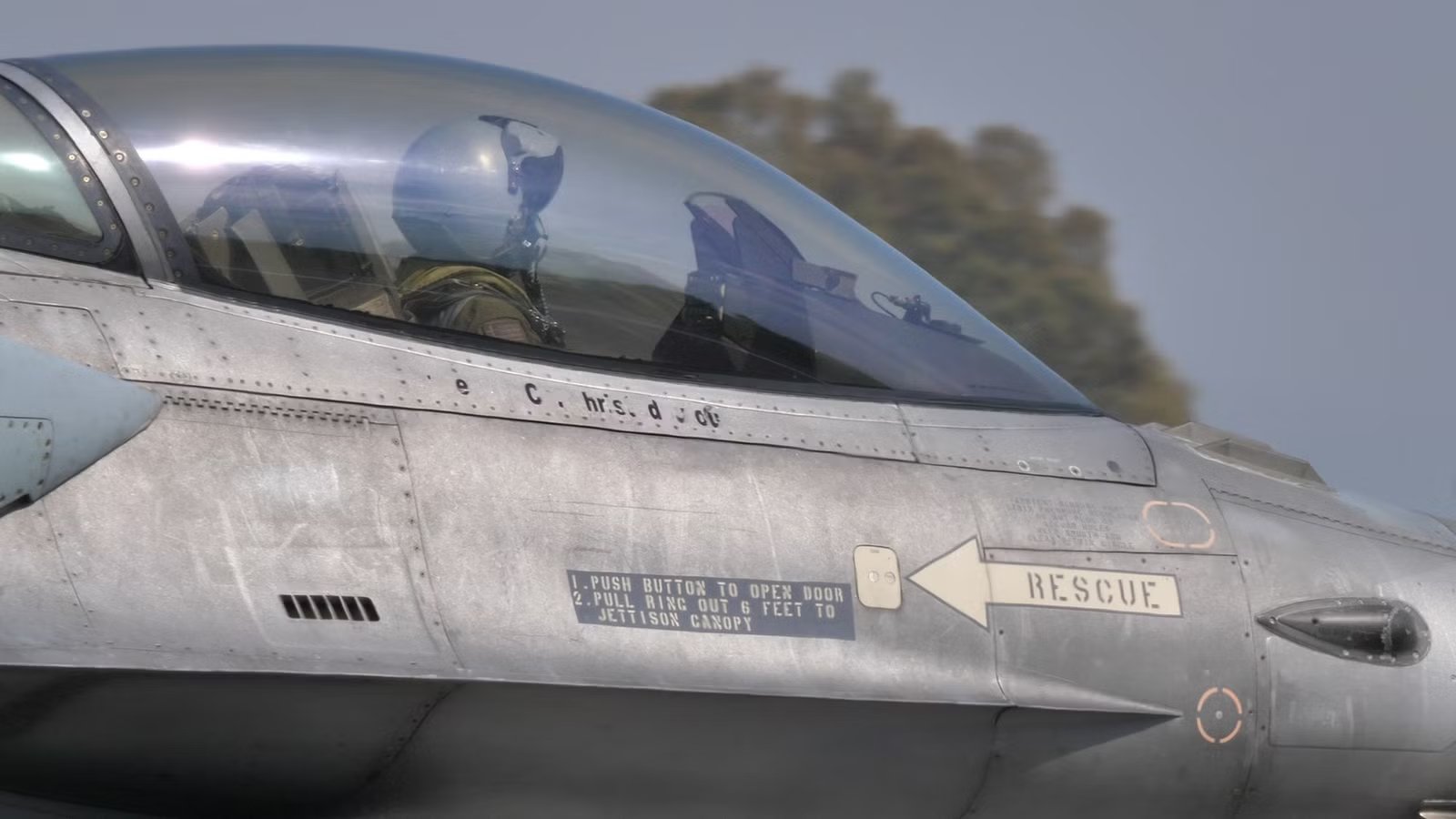
The US Air Force is has integrated AI into fighter jets through programs like the Collaborative Combat Aircraft (CCA) and Project VENOM, also known as X-62 VISTA. Project VENOM (Viper Experimentation and Next-gen Operations Model) installed AI software and hardware into an F-16 ‘Viper’ to control aircraft thrust and perform complex maneuvers.
General Dynamics modified an F-16 Fighting Falcon called X-62 VISTA (Variable Stability In-flight Simulator Test Aircraft), the testbed of the ongoing VENOM program. The goal is to evaluate the AI’s performance, develop new combat tactics, and assess the potential of converting manned fighters into fully autonomous platforms.
The CCA program is also developing unmanned combat aerial vehicles (UCAVs), like Anduril’s YFQ-44A (Fury) and Northrop Grumman’s naval X-47B. These are designed to fly alongside manned fighters as AI-piloted ‘loyal wingmen.’ These drones use specialized AI software to allow a single operator to control multiple drones simultaneously. The CCA program aims to produce 1,000 drone fighters, pairing them with fifth and sixth-generation fighters.
Key objectives of AI-piloted aircraft is to perform maneuvers and execute tasks with greater speed, precision, and risk tolerance than human pilots. These drones would give the US a significant advantage in air combat in any scenario. AI-piloted aircraft would be rapidly updated with new software and tactics, allowing them to adapt to changing threats and conditions. The integration of AI into fighter aircraft is considered a major transformative shift in air warfare, reshaping tactics, strategies, and the nature of aerial combat as we know it.