dailynewsnblog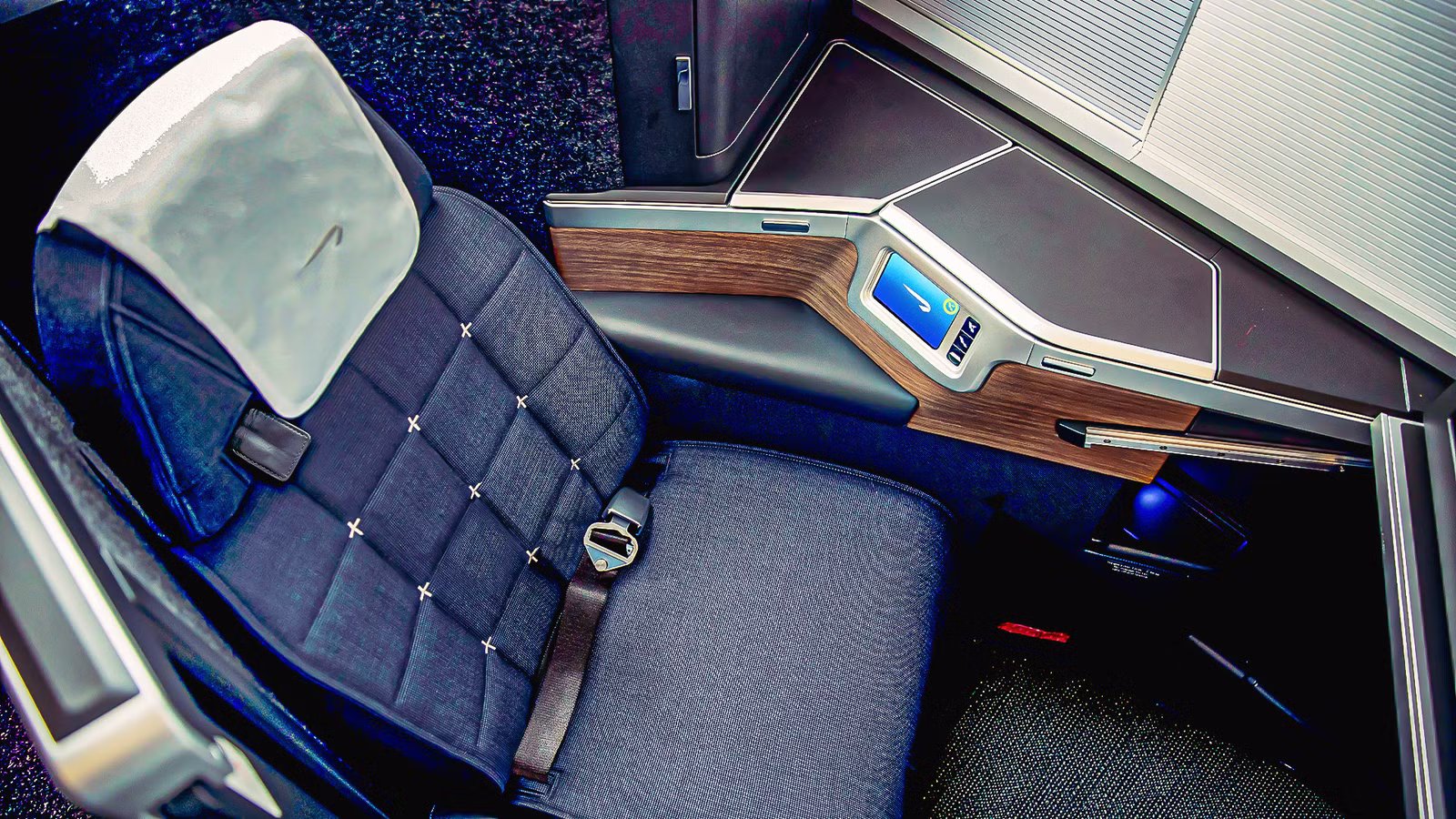
British Airways’ Club World is the airline’s business class for long-haul flights, while Club Europe is the business class for short-haul flights to destinations in the UK and Europe; essentially is the counterpart to US Airlines’ domestic business class. Flying Club World is expensive, with transatlantic fares routinely over $5,000. For many, premium economy (World Traveller Plus) is the happy medium between the affordability of economy and the expense of business.
However, one way to save money on business is to purchase premium economy first and then upgrade with Avios and/or cash payments to business class later. This is not a guarantee to save money, but it often works. That said, passengers are taking a risk as business class may sell out, or the algorithm could assess that it will sell out and so decline to issue discounts. Here are some things to know about the cost to upgrade to  British Airways’ Club World.
Upgrading With Avios Points

It is possible to upgrade cash bookings with Avios either at the time of the booking or later on. This is, of course, contingent on availability, and there must be Reward Flight availability in the next cabin for the passenger to upgrade using Avios. Passengers can’t upgrade with Avios at the airport or once onboard the aircraft. Passengers can upgrade with Avios by logging in and going to Manage My Booking and selecting the “Upgrade this flight with Avios” function.
Additionally, the lowest categories of economy class can’t be upgraded with Avios. British Airways says, “Only the lowest economy (World Traveller) fares (Q, O and G) cannot be upgraded with Avios at any time.” Note that Avios upgrades are always to the next cabin. On short-haul flights, passengers can upgrade from economy (Euro Traveller) to business (Club Europe). On long-haul flights, passengers can upgrade from economy (World Traveller) to premium economy (World Traveller Plus).
Those with premium economy tickets can upgrade to business (Club World). Likewise, those flying business can upgrade to first class if it is an aircraft that offers first class. So, for upgrading to British Airways’ long-haul business class, the question is not “how much does it cost to upgrade from economy class to business class?” The question is “how much does it cost to upgrade from premium economy class to business class?” Given that all British Airways’ widebody fleet is now configured with premium economy, there are no exceptions. There are no widebody aircraft where business is the next cabin after economy.
More Things To Know About Upgrading With Avios

BA says the formula for upgrading with Avios is “Avios for the cabin you wish to upgrade to – Avios for the cabin you make your booking in = Avios required to upgrade one way.” Those without enough Avios points can make up the difference with cash payments. It’s also worth noting that having Elite Status typically entitles passengers to upgrade priority over other people, but not always.
Additionally, as members hit certain tier thresholds, they earn milestone rewards. 5,500 tier points equals 2,500 bonus Avios, 11,000 tier points equals 4,000 bonus Avios, and 16,000 tier points equals 5,000 bonus Avios. Unlike some US-based carriers, having a British Airways Visa card does not offer any additional upgrade options. As implied above, it is only possible to upgrade cash bookings with Avios; bookings made with Avios cannot be upgraded with Avios.
A strategy to get the most out of Avios is to purchase an upgradable, cheap premium economy seat and upgrade with Avios later. Doing it this way can help bypass paying a portion of the taxes and fees that come with business class. When upgrading with Avios, British Airways will still charge extra taxes and fees, but they are typically less than purchasing a business class seat outright.

The Airlines That Offer Plenty Of Premium Economy Seats On US Flights To Europe
While premium economy isn’t everyone’s cup of tea, it certainly represents an important market on the transatlantic corridor.
BA’s Premium Economy Vs Business Class Logic

British Airways’ premium economy is intended to be a step up from economy as a completely new class offering more legroom, wider seats, a dedicated cabin, and better meals and other services. However, these fares lack lie-flat seats and lounge access. Premium economy is positioned between economy and business. They are typically priced between 150% and 300% the price of economy class seats.
British Airways’ business class is intended to offer a full-service experience with lie-flat seats, lounge access, premium meals, and more. Business class seats are priced well above premium, but the price varies significantly depending on demand, season, and other factors. Whereas a representative transatlantic return-trip economy class fare can be expected to cost in the range of $400 to over $900, a representative range for premium is $800 to over $2,000. Return business class transatlantic fare range is $3,000 to over $6,000.
It’s worth noting that British Airways, like other European carriers, treats premium economy as a true fourth cabin and not just an upgraded economy. US-based airlines fundamentally see and price it differently. Asia-based airlines are typically more like European carriers in their premium classes than they are to US-based airlines.
Premium Vs Business Fares Seattle To London

For those making a cash payment, it can be useful to look at representative fares on popular long-haul routes. These fares will be for March 5th, as that is a month out from the time of writing and avoids holidays and weekends. For one-way fares from Seattle to Heathrow, British Airways is offering economy class fares starting from $515 for economy class, $2,137 for premium economy, and $8,544 for business class.
Within premium, the highest subclass is Premium Economy Fully-Flex, and that fare is priced at $5,147, considerably narrowing the range to the lowest business class fare. Meanwhile, business fares rise to $11,494 for Business Fully-Flex. The main difference between the basic business fare and Fully-Flex is that Fully-Flex is fully refundable.
|
Select BA fares (starting price per British Airways) |
Seattle to Heathrow |
NY-JFK to Heathrow |
Houston to Heathrow |
|---|---|---|---|
|
Outbound premium fare (Mar 5th) |
$2,137 |
$1,545 |
$2,251 |
|
Round-trip premium fare (Mar 5-19th) |
$2,987 |
$1,872 |
$2,913 |
|
Outbound business fare (Mar 5th) |
$8,544 |
$8,294 |
$9,346 |
|
Round-trip business fare (Ma 5-19th) |
$10,075 |
$5,845 |
$8,845 |
When changing the flight to a return flight (on March 19th), the outbound premium economy fare from Seattle falls to a starting price of $1,344, while the lowest business fare is listed as $4,949. With the return flight, the premium economy fare is from $2,987, while the return business class fare is from $10,075. The Seattle to London-Heathrow route is direct and is scheduled for nine hours and 30 minutes, and over ten hours return.

What Are The Benefits Of British Airways’ World Traveller Plus Premium Economy?
World Traveller Plus, the premium economy option from British Airways, provides a wide range of benefits.
Premium Vs Business Fares New York-JFK To London

Going to British Airways’ popular and most lucrative route, New York-JFK to London-Heathrow, for March 5th, economy class one-way on the 08:05 flight fares start at $285, premium at $3,827, and business at $8,294. On this day, BA’s advertised premium fares are a whopping 13x that of basic economy. That said, most BA premium fares start at around $1,545, although business class fares do not decrease; on one flight, the business class fares start at over $11,000 one-way.
Looking at return flights (returning March 19th), the 08.05 flight’s premium economy fare remains high at $2,654, but most direct BA-operated flights have premium economy fares starting at $929 for the outbound flight. The lowest return flight with BA on the 19th for premium is $944, giving a return flight cost of $1,872.
Interestingly, by a considerable margin, the lowest outbound business fare for March 5th listed by BA is with partner American Airlines at $2,084, but that is outside the scope of this article. The lowest BA-operated outbound business class fare is $3,584, the lowest inbound flight on the 19th is $2,262, which incidentally, is the same as some inbound American Airlines business fares offered by BA. The return business class fare is $5,845.
Premium Vs Business Fares Houston-Intercontinental To London

Selecting Texas’s Houston George Bush Intercontinental Airport as a third destination to compare British Airways’ premium and business class fares, one-way premium fares begin at $2,251 for BA-operated flights. Business class fares start at $9,346 for one-way fares to London-Heathrow. For return flights, outbound premium flights start at $1,308, and return flights start at $1,606 for a total of $2,913 for a return premium economy fare.
Outbound business class fares start at $4,334 with inbound flights starting at $4,512 for a total of $8,845 round-trip ticket. On both the New York and Houston flights searched, return business class fares were cheaper than one-way fares, while premium return fares were marginally higher than one-way fares. Before considering the cost of upgrading, the biggest hack is to purchase the tickets as return fares, not purchase them individually. On all three of these routes, return business class fares were priced around three times higher than return premium economy fares.
Airlines like British Airways use complex and dynamic algorithms when pricing tickets. These aren’t tied to the cost, but to willingness-to-pay and inventory management. Algorithms see one-way fares as a proxy for urgency or flexibility, and business-class travelers searching for one-way flights are deemed to be less price-sensitive. As stated earlier, it can be cheaper to book a premium economy class fare first and then look for offers to upgrade to business class.