dailynewsnblog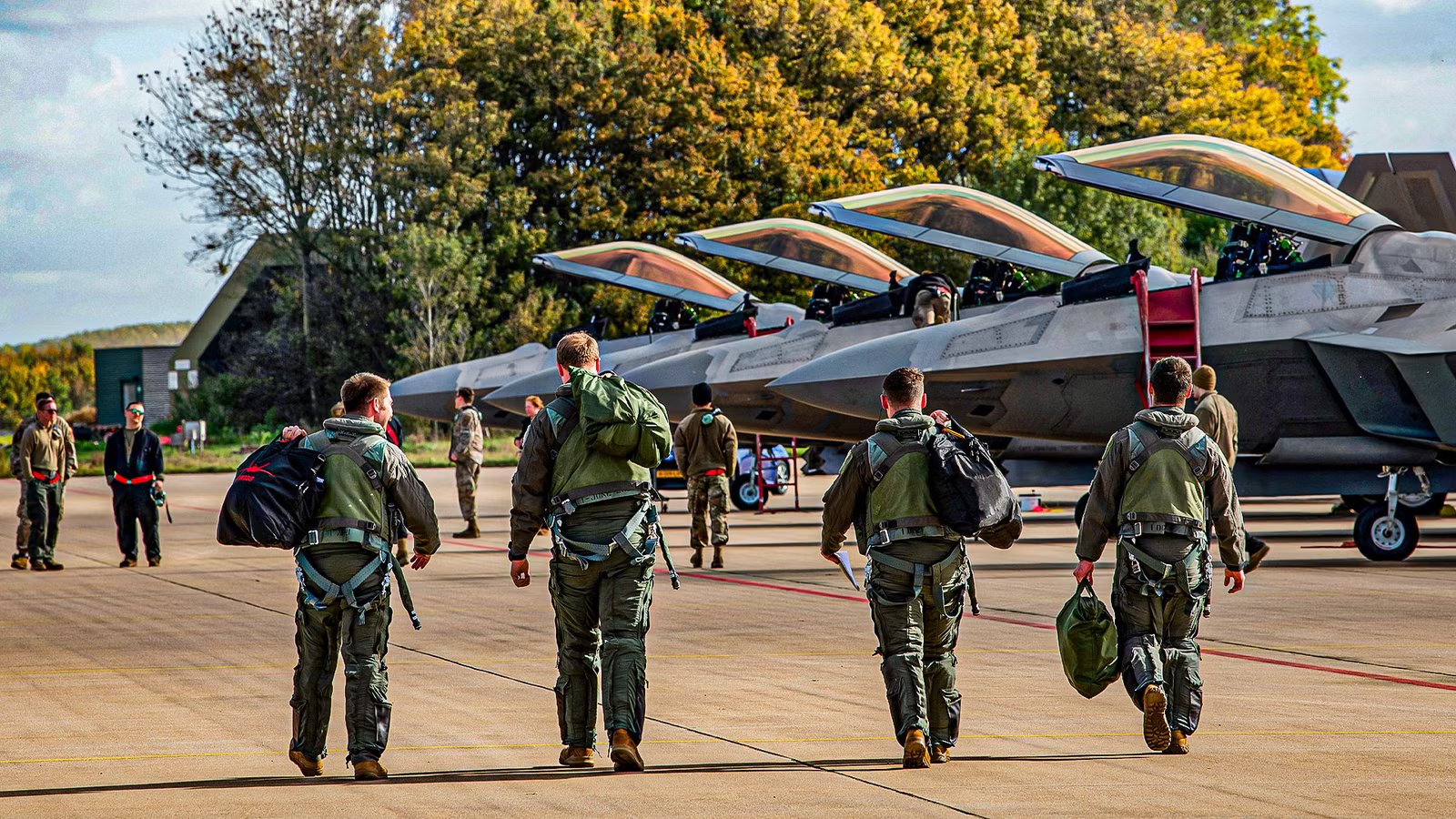
Becoming a fighter pilot in the United States Air Force (USAF) is one of the most demanding and rewarding careers in the military. While the role offers unique thrills, such as flying advanced aircraft like the F-35 Lightning II or F-16 Fighting Falcon, the compensation is multifaceted. The fighter pilot role is among the most elite and demanding in the military, requiring years of intense training, exceptional physical and mental fitness, and a willingness to accept significant risks in defense of national interests. At the same time, the civilian airline industry aggressively recruits experienced military pilots, offering potentially higher salaries with more predictable schedules and less danger. Understanding the full compensation package helps explain why the Air Force can retain talent despite these competing opportunities, and it highlights how military pay is structured to reward specialization, longevity, and performance in a unique profession.
Fighter pilot pay in the world’s second-largest Air Force by active personnel is not a straightforward annual salary like in most civilian jobs. Instead, it combines base pay (determined by rank and years of service), special and incentive pay (particularly Aviation Career Incentive Pay, or ACIP, for flying duties), tax-free allowances (such as Basic Allowance for Housing and Basic Allowance for Subsistence), and additional benefits that provide long-term value. This article explores current USAF fighter pilot compensation structures based on officially published military pay tables and allowances, highlighting how earnings evolve over a career, the factors that shape earnings, perspectives from official sources, comparisons to Russian counterparts, potential drawbacks, and the broader takeaway for anyone weighing this career.
What Is the Salary Range for USAF Fighter Pilots in 2026?

In 2026, total compensation for US Air Force fighter pilots ranges from roughly $75,000 in the earliest career stages to over $200,000 for senior officers with extensive aviation service and allowances.
Entry-level fighter pilots, typically Second Lieutenants (O-1) or First Lieutenants (O-2) during initial training and early operational tours, start with base pay around $50,000 per year but see their effective take-home rise significantly when aviation incentives, housing allowances, and other perks are added—often pushing first-year totals into the $75,000 to $95,000 range in high-cost areas. Mid-career Captains (O-3) commonly reach $100,000 to $140,000 total, while Majors (O-4), Lieutenant Colonels (O-5), and Colonels (O-6) in senior roles frequently exceed $150,000 and can approach or surpass $200,000 when factoring in maximum incentives and allowances.
This progression reflects the way the system rewards time invested in aviation service. Base pay provides the foundation and increases with promotions and longevity, while Aviation Career Incentive Pay (ACIP) scales with years of aviation service: $150/month (0–2 years), rising to $840–$1,000/month (14+ years), as reported by military sources.
ACIP begins at a relatively modest level early in a pilot’s aviation career and gradually rises, increasing steadily as pilots accumulate aviation service, reaching the high hundreds of dollars per month for experienced aviators. Exact ACIP rates vary by year and are governed by federal statute.
Tax-free allowances make a big difference: Basic Allowance for Housing (BAH) varies significantly by duty station, rank, and dependent status, commonly ranging from roughly $1,200 to well over $3,000 per month, while Basic Allowance for Subsistence (BAS) adds roughly $280 per month to offset food costs.
Over the course of a typical 20-year career, fighter pilots see steady growth. The first few years focus on building qualifications, so compensation emphasizes allowances and basic benefits. By the mid-career point, promotions to O-3 and O-4 combined with higher ACIP rates create a solid middle-class income bolstered by zero-cost healthcare, thrift savings plan matching, and education benefits. Senior officers often blend flying with leadership duties, maintaining high incentive pay while qualifying for retirement pensions that can provide 50% or more of base pay after 20 years of service.
What Factors Influence Fighter Pilot Pay?

The pay for USAF fighter pilots is influenced by a combination of fixed and variable elements designed to compensate for the unique demands of the job. Base pay is determined by the official military pay tables, which adjust annually (3.8% in 2026) and depend on pay grade (O-1 through O-6 for officers) and total years of service. Aviation Career Incentive Pay is separate and tied specifically to years of aviation service, not total time in uniform, creating a dual-track system that rewards flying experience.
Other major factors include duty location and personal circumstances. BAH rates are recalculated each year based on local rental market data and can vary dramatically—for example, a pilot at Edwards Air Force Base in California might receive $2,800–$3,500 monthly with dependents, while one at a lower-cost base in the Midwest might get $1,200–$1,800. Dependents (spouse and children) increase BAH rates, and overseas assignments may include Cost of Living Allowances (COLA) or Overseas Housing Allowances (OHA). Deployments add temporary boosts through Family Separation Allowance, Hardship Duty Pay, or per diem, though these are not guaranteed.
Monthly base pay is determined by rank and years of service and is published annually by the Defense Finance and Accounting Service (DFAS). Because these figures change yearly and vary according to individual circumstances, readers should consult the official DFAS Commissioned Officer pay tables for exact amounts and personalized calculators.
Additional variables include special pay during shortages (such as retention bonuses up to $35,000 annually or $33,781 for fighter pilots in 2026 programs), hazardous duty incentives if applicable, and performance-based bonuses. The structure encourages long-term commitment: pilots must meet flight-hour minimums to maintain ACIP eligibility, and failing to do so can reduce earnings.

How Many F-35s Does The United States Air Force Operate?
The F-35A is rapidly becoming the heart of the US Air Force, reshaping its fighter fleet and modernizing squadrons nationwide.
What Do Official Sources Say About USAF Pilot Compensation?

Official sources, including the Department of Defense, Defense Finance and Accounting Service (DFAS), and Air Force leadership, emphasize that fighter pilot pay is part of a comprehensive package. DFAS publishes transparent pay tables annually, and the DoD highlights how base pay, special pay, and allowances combine to provide competitive compensation when tax advantages and benefits are considered. Aviation Career Incentive Pay is described as a key tool to retain rated officers in flying billets, with rates set by federal law to reward sustained aviation service.
Air Force recruiting and retention briefings often point out that the total value, including full healthcare (TRICARE), low-cost life insurance, tuition assistance via the GI Bill, and a defined pension, all add tens of thousands in equivalent civilian value. During periods of pilot shortages, officials have noted the use of targeted bonuses and incentive programs to keep experienced aviators in uniform. The focus remains on the mission: compensation supports the ability to attract and retain people capable of operating America’s most expensive fighter jets like the F-35 and the F-22 Raptor.
Military pay has historically lagged behind private-sector equivalents for senior roles but compensates with free flight training, stability, early retirement eligibility, and non-monetary rewards like prestige and purpose.
How To Compare USAF Salary To That Of Russian Air Force?

Compared to their Western counterparts, Russian Air Force pilots tend to earn considerably less in peacetime. According to available salary surveys, the average gross pay for an Air Force pilot in the Russian Federation is roughly 2.6–2.9 million RUB per year (about $30,000–$35,000 USD at current exchange rates), with senior pilots earning toward the upper end of that range based on experience and region.
In active conflict zones under special contracts, pay can surge with bonuses up to $30,000 signing incentives, monthly stipends of $2,000–$4,000+, and extras like land grants, but this reflects higher risks, shorter life expectancy in combat roles, and fewer benefits like healthcare or retirement security.
By comparison, USAF pilots benefit from a structured military pay grade that increases with rank and time in service, along with comprehensive benefits such as retirement pensions, full healthcare coverage, housing allowances, and education support — long-term protections typically stronger than those available to Russian military flyers.

How The F-35 Lightning II Stacks Up Against The Sukhoi Su-57 Felon In 2025
Stealth, speed, and strategy: Unraveling the secrets of the F-35 and Su-57 showdown.
Are There Exceptions, Risks, or Drawbacks?

Exceptions abound. Not every pilot maximizes ACIP if flight hours drop due to non-flying assignments, medical issues, or career broadening. BAH decreases in low-cost areas or without dependents, and overseas tours may offer lower allowances despite COLA. Deployment pay can boost income temporarily, but often comes with family separation, extended hours, and stress.
The biggest drawbacks are the inherent risks: fighter flying has higher accident rates than commercial aviation, and the job demands frequent relocations — even in the world’s most remote airbases — long hours, and intense pressure. Physical tolls (G-forces, ejection risks) can lead to medical disqualifications, cutting careers short. Civilian transitions promise higher pay but require rebuilding seniority and losing military benefits.
|
Area |
Upside |
Limitation |
|---|---|---|
|
Incentive Pay |
Rewards sustained flying service |
Reduced or lost during non-flying assignments |
|
Allowances |
Can significantly boost take-home pay |
Highly location and family-dependent |
|
Deployments |
Temporary pay increases |
Family separation, stress, fatigue |
|
Flying Career |
Prestige, skill, mission impact |
Higher physical and operational risk |
|
Civilian Transition |
Higher peak earnings possible |
Loss of seniority, benefits, and stability |
Taken together, these factors explain why fighter pilot compensation cannot be evaluated purely in dollar terms. The role offers exceptional professional experiences and long-term benefits for those who remain healthy and competitive, but it also carries real risks, lifestyle constraints, and career uncertainties that prospective pilots should weigh carefully.
Bottom Line: Is It Worth It?

Fighter pilot compensation in the USAF grows impressively with experience, often reaching six figures by mid-career and continuing upward. Although many civilian roles may offer higher peak earnings, they lack the mission intensity, camaraderie, and prestige of military aviation, and most importantly, a fast-track, free of charge entry into a pilot career.
Many pilots pursue the dream of fulfillment and excitement rather than money alone, and the skills gained during service within the Air Force later open doors to high-level civilian careers in aviation, business, or even public service. So, if you want to become a pilot and try the best of both worlds – highly aerobatic and supersonic jets, and then flying with comfort a huge widebody around the world, you can first try military, and then move to commercial aviation.
Ultimately, the appeal goes beyond money. The opportunity to fly the world’s most advanced fighters, serve a higher purpose, and belong to a tight-knit community often outweighs raw dollars. For those driven by passion for aviation and service, the total rewards make it one of the most fulfilling careers available.