dailynewsnblog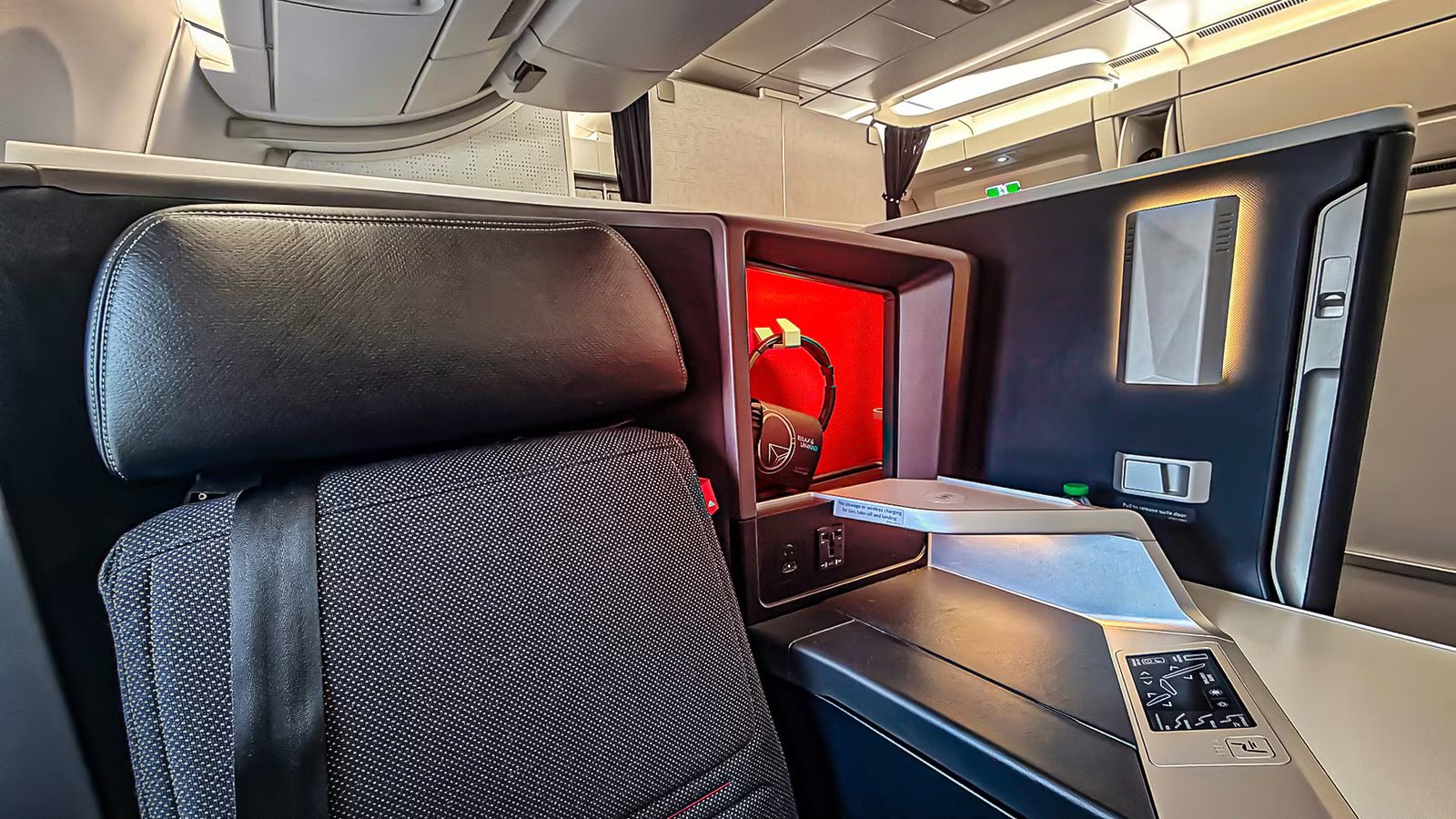
Ultra-long nonstop routes push airline economics into their most exposed form. Flights lasting 14 hours or more concentrate fuel consumption, crew complexity, maintenance exposure, and schedule risk into a single departure, leaving little margin for error. Aircraft operate close to performance limits, crews must be augmented to meet duty-time rules, and even minor disruptions can ripple through an entire rotation. Despite those constraints, airlines continue to launch, and in some cases expand, ultra-long nonstop services because these routes offer strategic value that conventional long-haul flying does not. A nonstop link between distant global cities can command pricing power, anchor corporate demand, and reinforce an airline’s position in high-yield markets, even when operating margins are thin.
This article examines how airlines make that trade-off work. It focuses on the commercial mechanics behind ultra-long nonstop routes: how pricing is structured to protect yield, why premium cabins carry disproportionate weight, which passengers ultimately determine success, and how aircraft choice and network integration shape outcomes. We will explain these commercial decisions — ones that succeed only when revenue strategy and cost discipline are tightly aligned.
Why Ultra-Long Nonstop Routes Are Commercially Risky And Strategically Valuable

Ultra-long nonstop flights compress an airline’s cost structure into a single departure. Fuel dominates variable costs, with aircraft often departing at or near maximum takeoff weight, reducing payload flexibility and raising sensitivity to weather and routing changes.
Crew costs rise sharply because regulations require augmented flight decks and extended duty periods, triggering additional staffing and hotel requirements. Maintenance exposure increases as long flight cycles accelerate engine and component wear without the relief of intermediate ground checks.
The risks are balanced by strategic value. A nonstop flight between two distant global cities removes connection risk entirely and shortens total journey time by several hours. For time-sensitive travelers, especially those moving between financial or political centers, that time saving has a clear monetary value. Airlines can monetize it through higher fares and stricter fare rules.
Qantas’ decision to operate nonstop services from Perth to London and Paris illustrates this logic. Rather than compete on price with one-stop alternatives via Asia or the Middle East, these flights targeted travelers willing to pay a premium for convenience and schedule certainty. Even when early profitability was marginal, the routes reinforced Qantas’ position in the Australia–Europe market and strengthened its appeal to corporate accounts.
From a network perspective, ultra-long routes anchor hub relevance. A carrier offering nonstop access between major business centers forces competitors into one-stop itineraries, often through less convenient hubs. Even when margins are thin in the early years, the route can protect corporate contracts, support alliance flows, and reinforce the airline’s position in high-yield markets. That strategic effect explains why airlines sometimes tolerate weaker initial returns on ultra-long routes that they would never accept on short-haul flying.
How Airlines Price Ultra-Long Flights Differently

Ultra-long nonstop routes are priced to protect yield. Airlines focus on revenue per passenger over volume rather than load factor, accepting empty seats if the remaining inventory sells at the right price. Revenue management systems treat these routes conservatively. Early in the booking curve, airlines release limited low-fare inventory to stimulate baseline demand, particularly from leisure travelers planning far in advance. As departure approaches, pricing shifts decisively toward yield protection. Seats are held back for late-booking passengers, who are statistically more likely to be corporate travelers or premium leisure customers with fixed travel dates.
|
Booking Window |
Economy Pricing |
Premium Cabin Pricing |
|
6+ months |
Promotional |
Controlled |
|
3–6 months |
Rising |
Firm |
|
1–3 months |
High |
Very high |
|
Peak |
Maximum yield |
Unlike short-haul markets, airlines are less concerned about stimulating demand with deep discounts close to departure. A lightly filled ultra-long flight can still be commercially acceptable if premium cabins perform well. This pricing discipline reflects a broader shift in airline economics: profitability now depends less on volume and more on extracting maximum value from a smaller group of high-yield passengers.

The World’s Most Comfortable Long-Haul Premium Economy Seats You Can Book Today
Find your best option to experience the comfort at 40,000 feet.
Premium Cabins: The Core Revenue Engine Of Ultra-Long Routes

On the longest nonstop flights, seat mix matters more than seat count. Airlines quickly discover that filling every economy seat does not guarantee a viable route. What determines financial performance is how much revenue each departure generates, not how many passengers it carries.
That reality pushes premium cabins to the center of the economics. Business class and premium economy represent a minority of seats, yet they account for a large share of total route revenue. Fares in these cabins are significantly higher than economy, reflecting both product differentiation and the higher willingness to pay among time-sensitive travelers. Premium economy, in particular, has become a crucial bridge: it attracts passengers priced out of business class while still delivering a meaningfully higher yield than standard economy.
Aircraft assigned to ultra-long routes are therefore configured with fewer economy seats and expanded premium sections compared to conventional long-haul services. Economy cabins are often smaller, seat density is reduced, and premium sections take up more floor space. Airlines accept lower total seat counts because the revenue generated per departure is higher and more predictable.
United Airlines’ longest Pacific services illustrate this approach. Instead of pursuing maximum density, United has emphasized premium cabin availability and onboard product upgrades on routes linking the US mainland with distant Asia-Pacific markets. The objective is not to chase leisure volume, but to attract corporate travelers and alliance-connected traffic that values nonstop access and schedule reliability.
This strategy is highly route-specific. It works only where premium demand is deep enough to sustain it — typically between global business centers or regions with strong corporate and institutional ties. Where that demand weakens, ultra-long routes quickly become difficult to justify, regardless of aircraft capability.
Business Travelers And The Value Of Time

Industry analysis consistently shows that business travelers account for a minority of long-haul passengers but a disproportionate share of revenue. On ultra-long nonstop routes, airlines place even greater emphasis on this segment, designing services around time savings and schedule advantage rather than price competition.
For corporate travelers, eliminating a connection changes the shape of a trip. A nonstop flight can mean arriving on the same calendar day instead of overnight, avoiding missed onward connections, and reducing the risk of disruption on tightly scheduled itineraries. Companies routinely pay for that reliability, especially on intercontinental travel involving senior executives, specialist teams, or government and institutional travelers; that reliability often outweighs fare differences.
Airlines know this and design ultra-long routes around those priorities. This is why ultra-long routes are scheduled to maximize usefulness rather than volume. Departure times are often aligned with business-day arrivals, premium cabins are prioritized, and frequencies are limited to protect pricing power. Airlines invest heavily in features that matter to corporate travelers — consistent on-time performance, lounge access, flexible ticket rules, and onboard connectivity that allows work to continue in flight.
 Singapore Airlines’ nonstop services between Singapore and North America illustrate this clearly. Flights such as Singapore–New York were designed explicitly around premium demand, with aircraft configured to emphasize business and premium economy seating only. The airline has been explicit in positioning these routes toward financial, technology, and government traffic moving between major commercial centers, rather than competing for price-sensitive leisure passengers willing to connect through intermediate hubs.
|
Passenger Segment |
Share of Passengers |
Share of Revenue |
|
Leisure |
~85% |
~55–60% |
|
Business |
~15% |
~40–45% |
A similar logic underpins Qantas’ ultra-long European services from Perth. These flights primarily serve business, government, and resource-sector travelers moving between Australia and Europe, for whom reducing travel time and avoiding transfers is a material advantage. The routes reinforce corporate contracts and network relevance, even though they operate with limited frequency and high operating costs.
In each case, the commercial logic is the same: ultra-long nonstop routes succeed when airlines attract passengers who value time, reliability, and flexibility more than the lowest possible fare. Business travelers may not fill the aircraft, but they determine whether the route makes financial sense.

Up To 18 Hours: The World’s 7 Longest Airbus A350 Flights
From New York–Singapore to Shenzhen–Mexico City, these seven Airbus A350 flights push commercial aviation to nearly 18 hours nonstop.
Ancillary Revenue On Ultra-Long Flights

Ancillary revenue is not the primary profit engine on ultra-long nonstop routes, but it plays a meaningful supporting role. Passengers spending 15 hours or more onboard are more likely to pay for products that improve comfort, flexibility, or continuity of travel, especially when those services are positioned as optional rather than bundled.
On these flights, ancillaries tend to cluster around comfort and control rather than necessities. Preferred seating and extra-legroom rows allow airlines to monetize cabin geography without altering aircraft configuration. Onboard connectivity is another key product: ultra-long flights create a sustained demand for Wi-Fi among both business and premium leisure travelers who want to work, communicate, or access entertainment continuously.
|
Ancillary category |
How airlines apply it on ultra-long routes |
Why it works on these flights |
|
Preferred & extra-legroom seating |
Forward-zone economy seating, exit rows, bulkheads sold separately |
Long flight duration amplifies comfort differences |
|
Premium economy seat selection monetized independently of fare |
Allows yield capture without upgrading cabin |
|
|
Lounge & priority services |
Paid lounge access for long layovers or early arrivals |
Time-sensitive travelers value ground comfort |
|
Wi-Fi & connectivity |
Priority security and boarding bundles |
Reduces end-to-end journey stress |
|
Tiered connectivity passes by duration or speed |
Long flights create sustained usage demand |
|
|
Messaging-only or work-focused packages |
Targets business travelers without full bundle |
|
|
Upgrade mechanisms |
Cash or mileage-based upgrade offers pre-departure |
Fills premium seats without public discounting |
|
Bid-based upgrade systems |
Protects premium fare integrity |
|
|
Additional baggage |
Higher baggage tiers on intercontinental sectors |
Long-haul travelers often carry more |
Even traditionally full-service airlines have increasingly unbundled these elements. This approach allows carriers to extract incremental revenue from passengers already inclined to spend, while preserving pricing discipline in premium cabins. On ultra-long routes, ancillaries are less about stimulating demand and more about capturing value from passengers who prioritize comfort and reliability over price.
Singapore Airlines’ handling of seat selection and connectivity on its longest services reflects this approach. While the airline maintains a premium brand position, it still monetizes specific onboard choices separately, allowing high-value passengers to tailor their experience without diluting headline fares.
Cost Control And Aircraft Strategy

The economics of these flights leave little room for inefficiency. Fuel exposure is high, crews are complex, and disruptions are costly. Airlines that succeed on ultra-long routes tend to share one trait: they design the operation around the aircraft and the network, not the route in isolation.
Aircraft choice sits at the center of that logic. New-generation widebodies suitable for intercontinental flights, such as the Airbus A350 and Boeing 787, reshaped what airlines could risk commercially. Their combination of efficiency, range, and reliability allows carriers to operate ultra-long missions without structural payload penalties that would have undermined earlier attempts.
Crew planning reinforces this discipline. Ultra-long flights require augmented crews and carefully sequenced duty periods. Airlines that struggle on these routes often do so not because of demand, but because crew rotations spill inefficiencies into the wider network. Those that succeed integrate ultra-long services cleanly into existing crew bases and scheduling flows.
Ultimately, utilization determines whether the strategy holds together. Aircraft assigned to ultra-long routes must earn their keep across the week, not just on a single day. Ground time, departure timing, and rotation design matter as much as cabin mix or pricing strategy.