dailynewsnblog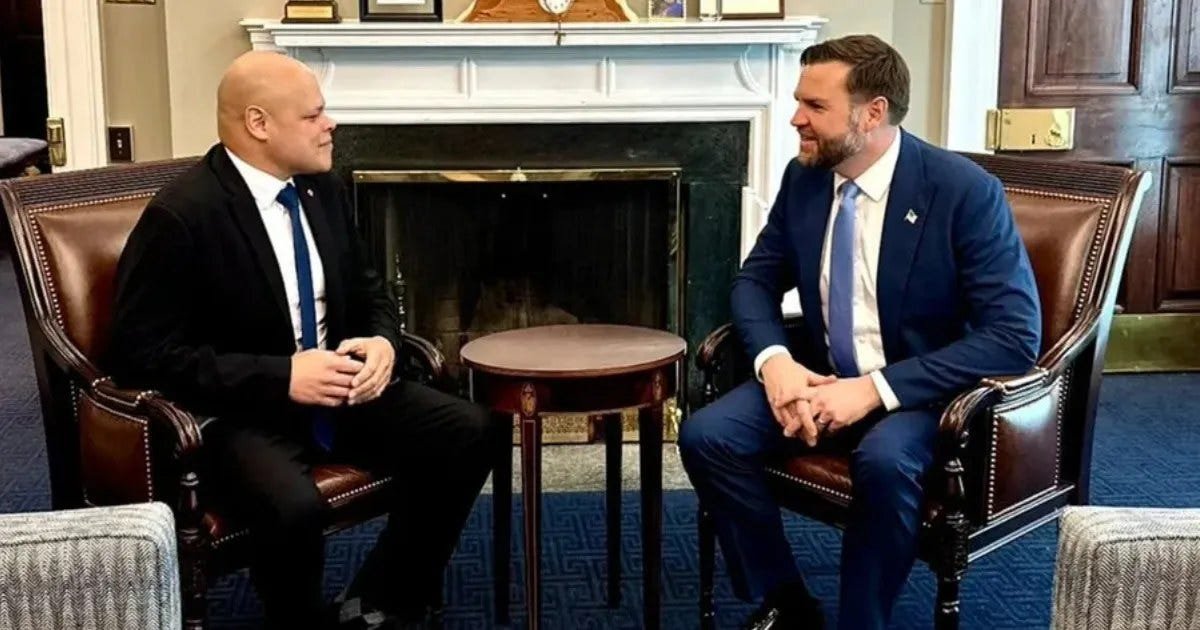
While we listen to former Prime Minister Stephen Harper call on Canadians to “‘make any sacrifice necessary’ to protect Canada’s independence and unity,” we need only remember the letter he published in the Wall Street Journal attacking Jean Chrétien for keeping us out of the US-led war in Iraq.
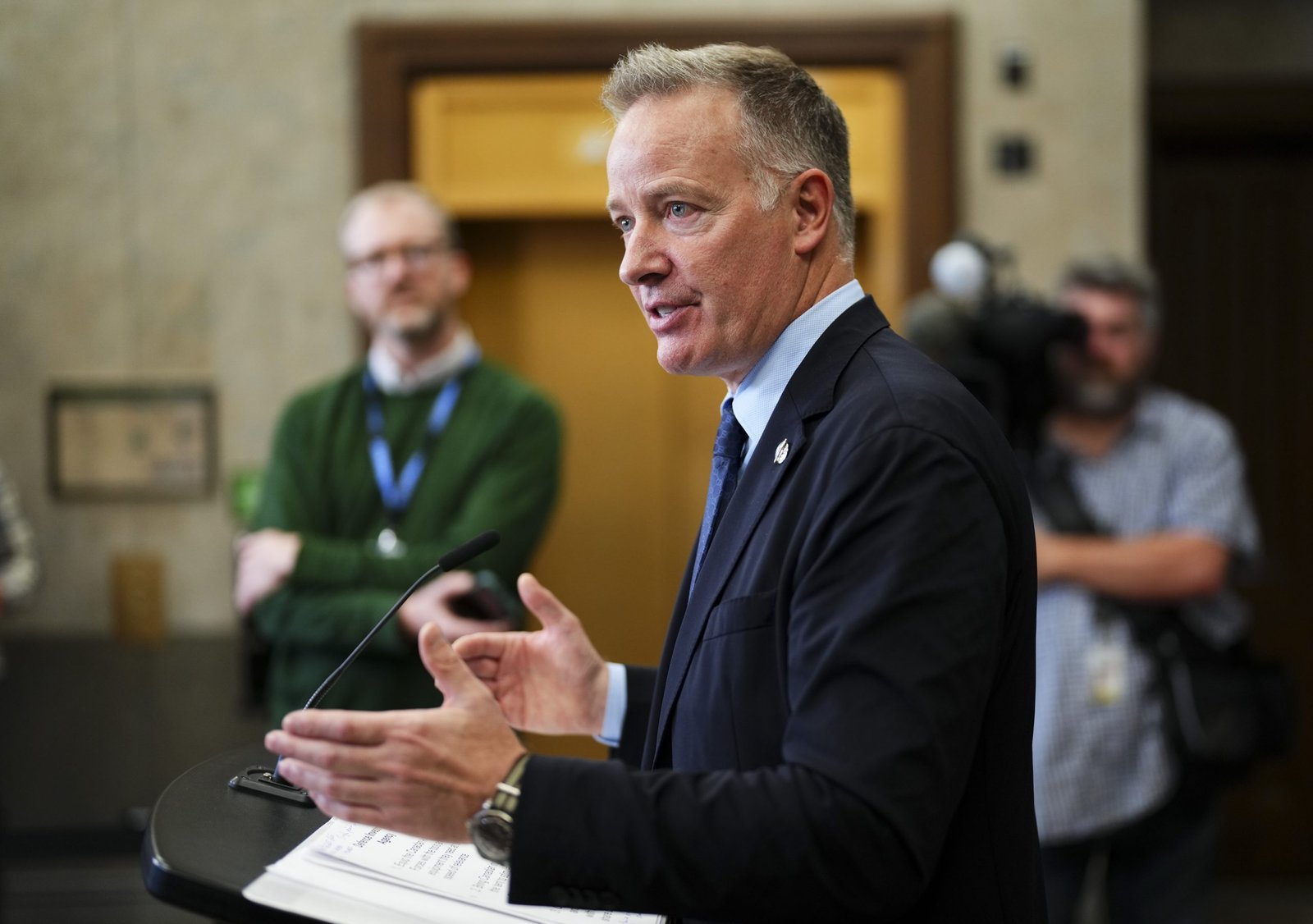
As Conservative MP Jamil Jivani parades himself around Washington as the saviour of Canada-US relations, emulating Harper’s letter and subsequent Fox News tour, we are reminded that their party is the party of American hegemony, not that of Canadian sovereignty.
The effect of Harper’s 2003 letter and Jivani’s 2026 visit is the same: it is to tell Americans that they represent elements in Canada who would sell out our country to American interests. It is an open invitation to interfere in our democratic process to help put themselves in power, to the benefit of the United States.
It is acceptable, appropriate, and encouraged for opposition parties to challenge and debate the government’s position domestically. To go internationally for the simple act of fact-finding, becoming known, or learning of issues from the perspective of other countries is fair game, provided there is no assertion of a role they do not have. The line is drawn when an opposition MP portrays himself as negotiating on behalf of the country, without any such mandate. Worse still if that person undermines the position of the government, especially at a critical moment in those bilateral relations.
In the present example, Jivani’s only meaningful takeaway is that, like an abusive spouse trying to keep their battered partner from leaving, he says Trump told him to “tell the Canadians I love them.” In what context was this said? What message is this intended to send? To whose benefit?

Jamil Jivani@jamiljivani
Productive meetings today with the White House and State Department. The President asked me to pass along a message: “Tell the Canadians I love them.” I’ll have much more to say later. More meetings with Senators, GM, and others this week.
12:16 AM · Feb 5, 2026 · 677K Views
2.04K Replies · 1.67K Reposts · 9.25K Likes
Conservative leader Pierre Poilievre still does not have a security clearance. He is not aware — he cannot be aware — of the depth and detail of the risks posed by chumming up to the authoritarian American administration. Canada’s security establishment has information and analysis that could be shared with him to inform his understanding of the situation. But they are unable to do so, leaving him to ad hoc his entire approach to a key international relationship. He does not even know what it is he does not know, and as a result he is not in a position to understand the risks of a member of his caucus freelancing at the White House, which would not be happening without his approval.
Prime Minister Mark Carney made Canada’s position clear in Davos just two weeks ago. Using his understanding of international relations and the interaction of economies, and the intelligence available to him, he clearly warned of the risks of trusting or relying on the United States, speaking plainly of a “rupture in the world order.” For Jivani, identifying himself as a representative of Canada to “assist” in our negotiations while contradicting the Prime Minister is not to help, but to directly undermine our national interest.
In an environment where the United States is actively supporting a separatist movement in Alberta and openly mulling the annexation of our country, rushing to the White House is to offer aid and comfort to our enemies. In normal times, his trip would be merely inappropriate. Against the current backdrop, Jivani’s Washington road show borders on treason.
Back, then, to Stephen Harper. In March, 2003, then-Prime Minister Jean Chrétien announced that Canada would not be participating in George W Bush’s invasion of Iraq.
Harper, then the fresh new leader of the Canadian Alliance, and his predecessor, young-earth creationist Stockwell Day, reacted in horror to the idea that we would not jump onto whatever bandwagon the Americans were driving. They immediately hit the American media circuit, publishing the op-ed in the Washington Post critical of Chrétien’s decision, with Harper then going on Fox News to spread the same message. His letter’s factual inaccuracy that “for the first time in history, the Canadian government has not stood beside its key British and American allies in their time of need” conveniently missed that Canada had only a generation earlier declined to militarily participate in the war in Vietnam. One wonders what would have happened had he been Prime Minister in the 1960s.
The effect of the Canadian Alliance leadership’s American media tour was not to promote Canadian unity in a time of crisis, but to publicly choose George W Bush and American imperialism over Canada’s own values and stated international policies.
It is easy to forget in the 17 years of whitewashing since Bush left office that, under his watch, America’s reputation was in tatters. Barack Obama’s 2009 Nobel Peace Prize, awarded after less than a year in office and prior to any significant accomplishments, was seen by many at the time as the international community expressing relief at Bush’s departure. Time Magazine referred to it as the “Nobel Prize for Not Being George W. Bush.” One can only imagine the international accolades the first post-MAGA president will gather.
Far from the image of unity and Canadian sovereignty that Harper proclaims today without any irony, he was eager to defer to American leadership on the international stage through his time in office, raising Canadian military participation in American-led foreign wars while simultaneously lowering Canadian military spending to below 1% of GDP for the first time in our history. He strained the military, knee-capped Canada’s history and reputation as peacekeepers, cut veterans supports, and made Canada subservient to the United States to a level without precedent.
Like Bush, Harper’s record has largely been whitewashed in the decade since leaving office. He is nominally retired from politics, remaining active in one key area: as chairman of the International Democratic Union. The IDU is the international association of far-right parties across 60 countries, including Netanyahu’s Likud, Poilievre’s Conservatives, and Trump’s MAGA Republicans. Until recently, they also included Narendra Modi’s Bharatiya Janata and Viktor Orban’s Fidesz, although they appear to have been quietly delisted.

Having a security clearance is not essential when there is no coherent vision for what a sovereign Canada represents. Ensuring the message you are bringing to the United States is in line with the government’s current strategy is irrelevant if you do not believe Canada is entitled to its own democratic autonomy.
Regardless of this week’s conveniently patriotic rhetoric, the Harper and Poilievre Conservatives do not see Canada as a sovereign and independent country, but rather as a vassal of the United States and a key partner in the movement to undermine and destroy liberal democracy to the benefit of the oligarchs that Harper still chairs. To the extent they believe in our sovereignty, it is to protect our viability as a client state.
When Jamil Jivani roams the halls of American power offering an alternative alliance, this is the example that he is following and the vision he represents.