dailynewsnblog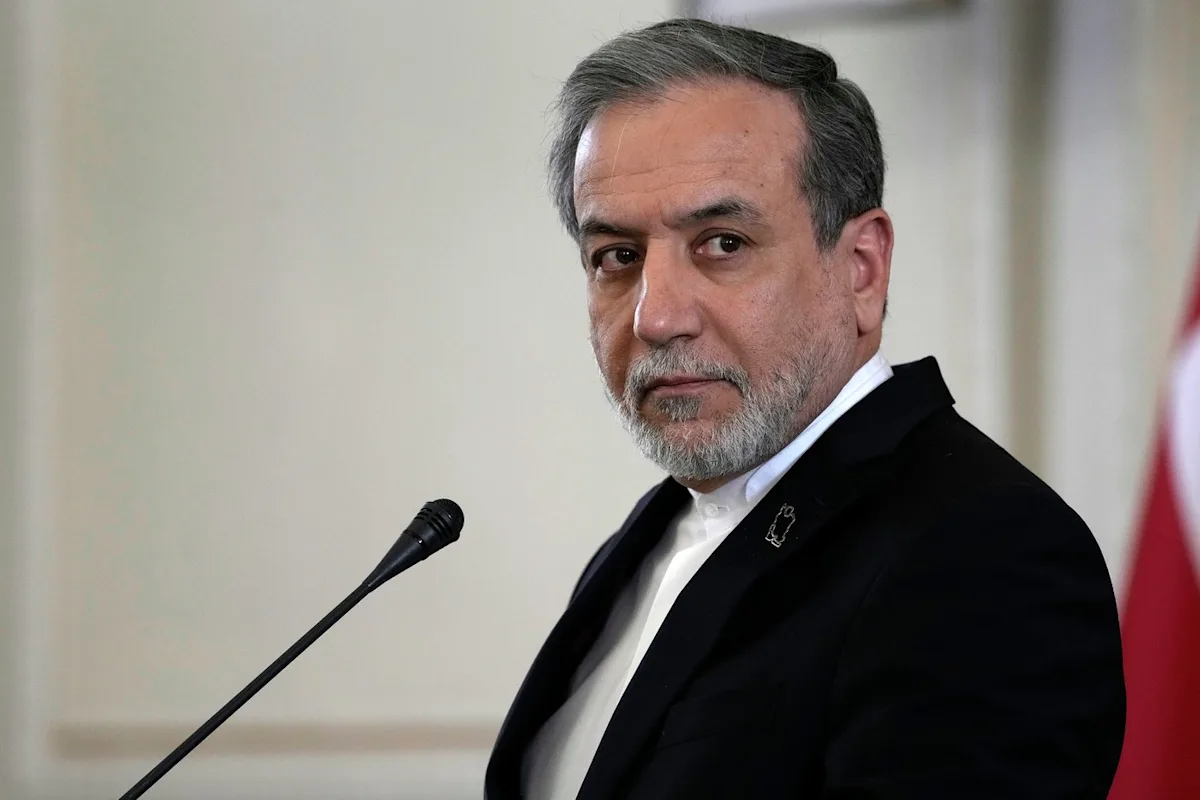
DUBAI, United Arab Emirates (AP) — Iran’s top diplomat insisted Sunday that Tehran’s strength came from its ability to “say no to the great powers,” striking a maximalist position just after negotiations with the United States over its nuclear program and in the wake of nationwide protests.
Foreign Minister Abbas Araghchi, speaking to diplomats at a summit in Tehran, signaled that Iran would stick to its position that it must be able to enrich uranium — a major point of contention with President Donald Trump, who bombed Iranian atomic sites in June during the 12-day Iran-Israel war.
While Iranian President Masoud Pezeshkian praised the talks Friday in Oman with the Americans as “a step forward,” Araghchi’s remarks show the challenge ahead. Already, the U.S. moved the aircraft carrier USS Abraham Lincoln, ships and warplanes to the Middle East to pressure Iran into an agreement and have the firepower necessary to strike the Islamic Republic should Trump choose to do so.
“I believe the secret of the Islamic Republic of Iran’s power lies in its ability to stand against bullying, domination and pressures from others,” Araghchi said. “They fear our atomic bomb, while we are not pursuing an atomic bomb. Our atomic bomb is the power to say no to the great powers. The secret of the Islamic Republic’s power is in the power to say no to the powers.”
‘Atomic bomb’ as rhetorical device
Araghchi’s choice to explicitly use an “atomic bomb” as a rhetorical device likely wasn’t accidental. While Iran has long maintained its nuclear program is peaceful, the West and the International Atomic Energy Agency say Tehran had an organized military program to seek the bomb up until 2003.
Iran had been enriching uranium up to 60% purity, a short, technical step to weapons-grade levels of 90%, the only non-weapons state to do so. Iranian officials in recent years had also been increasingly threatening that the Islamic Republic could seek the bomb, even while its diplomats have pointed to Iranian Supreme Leader Ayatollah Ali Khamenei’s preachings as a binding fatwa, or religious edict, that Iran wouldn’t build one.
Pezeshkian, who ordered Araghchi to pursue talks with the Americans after likely getting Khamenei’s blessing, also wrote on X on Sunday about the talks.
“The Iran-U.S. talks, held through the follow-up efforts of friendly governments in the region, were a step forward,” the president wrote. “Dialogue has always been our strategy for peaceful resolution. … The Iranian nation has always responded to respect with respect, but it does not tolerate the language of force.”