dailynewsnblog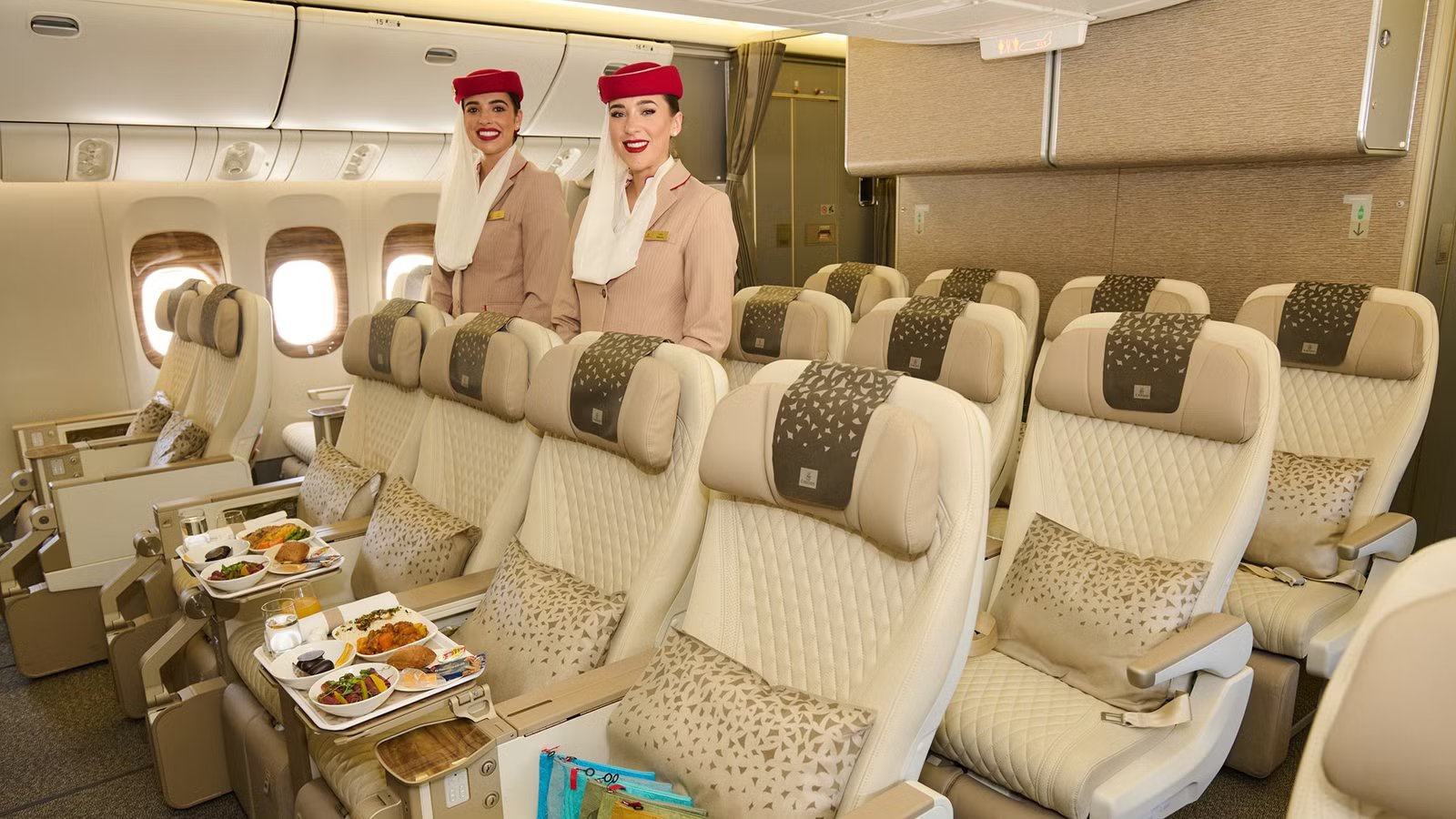
Around the world, premium economy class is growing, and it is typically growing at a faster rate than economy and business class tickets, and the premium economy development arc is much like the business class before it. Indeed, business was seen as a compromise between normal luxury tickets and ‘coach’ class tickets for frequent-flying businesspeople, while premium economy is a compromise between business and economy (including economy with extra legroom).
While there are many reasons for the rise of premium economy on long and ultra-long haul flights, much has to do with changing demographics and expectations of flying. More and more people either want to fly as cheaply as possible or comfortably, while also being affordable. The former category helps explain the rise of low-cost airlines, while the latter helps account for the rise of premium economy.
The Growing Premium Economy Market

The world is a complicated place, and, across the globe, low and ultra-low-cost carriers are growing and claiming an ever-increasing share of the market. However, this doesn’t mean that premium seating options are necessarily decreasing. On the contrary, premium economy is a growing trend in the airline industry, and demand is coming from both leisure travelers and former business travelers.
Many leisure travelers are willing to pay extra for premium economy’s added comfort and amenities, while some business travelers see it as a compromise to avoid the high costs of business class. For airlines, premium seating can be lucrative, and, consequently, carriers are increasing the number of premium economy seats offered on their aircraft.
According to Aviation Week, in 2024, North Atlantic capacity grew by 5.9% with premium economy growing by 8.0%, and, in 2025, premium economy is again expected to be the fastest-growing cabin class. Economy and business class seating has also been growing, but at lower rates. Significantly, first class seating is collapsing, and it is down around 40% compared to 2019.
The Fall Of First Class

Flying was initially the domain of the mega-rich. The hydrogen-filled Graf Zeppelin airship even came with a smoke room, and its transatlantic fares cost $400-450, but, after around 90 years of inflation, it is possible to buy economy class transatlantic tickets for less than that. For a while in the 1960s, most fares were intended for the wealthy, but then in the late 1970s, airlines started offering a lower business tier of ticket for business, but not necessarily wealthy, flyers.
Economy (or coach) class tickets had been around since the 1940s and 1950s, but they came into their own after the deregulation of the airline industry in the late 1970s. Once a staple of flights, first class is in decline, and carriers like Air New Zealand, Malaysian Airlines, South African Airways, Turkish Airlines, LATAM, Asiana Airlines, and others no longer offer it. Some only offer a very limited number of first class suites on select aircraft, like Qantas, which only offers it on its 10 A380s.
|
Big three US-based airlines |
Premium economy seats (widebody aircraft only) |
|---|---|
|
American Airlines |
Boeing 777 (24-44 seats), Boeing 787 (21-28 seats) |
|
Delta Air Lines |
Airbus A330 (21-24 seats), Airbus A350 (30-40 seats), Boeing 767 (26 to 36 seats) |
|
United Airlines |
Boeing 767 (30-46 seats), Boeing 777 (24 seats), Boeing 787 (21-35 seats) |
First class has all but disappeared from the United States. Only American Airlines is considered to still offer true first class with its Flagship First cabin, although it is currently phasing that out. Most of the world’s remaining first-class cabins are on routes between the world’s financial capitals and in the Gulf states. There are many reasons why this trend has occurred, and one factor is that business class has got better.
The Development Of Premium Economy

The emergence of premium economy was akin to the emergence of business class before it, and it sought to exploit a demand for a product and service between business and economy on long-haul flights. The cabin targeted passengers who were unwilling or unable to pay the considerable expense of business class, but would pay more to get out of the squishy economy class seats. Premium economy started to make its appearance on the scene in the 1990s.
Another factor, building on the point mentioned above, is that the days of flying being a wealthy person’s pastime are long gone, and no longer do people (at least generally) dress up to go to the airport. Societal expectations can have a significant impact on people’s spending habits, and, if in the past there was a social stigma associated with traveling in a lower class, that has arguably weakened now.
|
Dimensions |
Economy (per Forbes): |
Premium Economy |
Business Class |
|---|---|---|---|
|
Average seat pitch |
30-33 inches |
36-38 inches |
55-80 inches |
|
Average seat width |
17-18 inches |
18-20 inches |
20-22 inches |
|
Average recline |
2-4 inches |
7 -9 inches |
145 to lie flat |
In addition, people fly far more frequently than they used to in the past. This, coupled with the fact that ‘everyone does it,’ means that flying is not the big one-time event it once was for some. People once went into a travel agent’s office where the agent would try to upsell the ticket, but now flights are another product purchased online in minutes. Many people are more interested in getting a ticket that’s affordable and comfortable, and, for them, premium economy hits the spot.
Avoiding Higher Tax Rates

Another incentive for airlines to introduce premium economy seats is to avoid higher business class taxes. In October 2024 at the World Aviation Festival in Amsterdam, the Norse Atlantic CEO, Bjørn Tore Larsen, stated that the airline’s premium class is not premium, it’s business. He said that calling it premium economy is ‘misleading,’ adding that if they called it business, they would have to pay higher business class taxes at certain airports, like in London and Paris.
Larsen also stated it was stupid to think anything more than a small number of people would pay $8,000 for a normal business class transatlantic ticket to get four hours of better sleep on the 6-7-hour flight. At the time, Norse was selling premium tickets from London Gatwick to New York JFK for as low as $1,000, and the CEO quipped that the airline should “probably come up with a better name” for the premium economy seats.
The taxes airlines need to pay are exceptionally complicated and vary by country and airport. In the United Kingdom, the Air Passenger Duty (APD) for international flights of more than 5,500 miles (considered ultra-long haul) is £94 (approximately $122) for economy seats and £224 (approximately $292) for premium cabins. Rates are lower for seat classes with lower than 40 inches of seat pitch.
The Special Case Of Singapore Airlines Flights 21 & 23

One special case is the pair of the longest non-stop flights in the world from Singapore to New York JFK and Newark Liberty. To service this long route,  Singapore Airlines operates specially built Airbus A350-900ULR aircraft. This route targets business and well-to-do passengers willing to pay a premium to save a few hours getting between the two important financial capitals. In other words, this focuses on a very specific, relatively small, but sufficiently large segment of the market.
These A350-900ULR aircraft are configured with just 94 premium economy seats and 67 business class seats, completely lacking economy or first class seats. For reference, the maximum seating capacity of that aircraft is 440 seats, and its typical three-class capacity is 332 to 352 passengers. With a total of just 161 seats, flights SQ21 and SQ23 carry just 36% of the aircraft’s maximum seating capacity and 46-48% of its typical three-class seating capacity.
|
UK Rates for Air Passenger Duty Bands (distance from London) |
Reduced rate (lowest class of travel) |
Standard rate (1) (other than the lowest class of travel) |
Higher rate (2) |
|---|---|---|---|
|
Domestic band |
£7 (approx. $9.30) |
£14 (approx. $18.50) |
£84 (approximately $112) |
|
Band A (0-2,000 miles) |
£13 (approx. $17.30) |
£28 (approx. $37) |
£84 (approximately $112) |
|
Band B (2,001 to 5,500 miles) |
£90 (approx. $120) |
£216 (approx. $288) |
£647 (approximately $860) |
|
Band C (over 5,500 miles) |
£94 (approx. $122) |
£224 (approx. $292) |
£673 (approximately $895) |
By contrast, Qantas, with its upcoming Sydney to London and Sydney to New York Airbus A350-1000ULR flights, will have economy class seating. Other airlines, including Singapore Airlines, offer a combination of one-stop flights with economy class seating for those wanting to pay less, while taking longer. Notably, Singapore Airlines has flight options to New York, flying both eastwards (direct, or stopping over in LAX) and westwards (stopping over in Frankfurt).
A Winning Formula

Some airlines, like Emirates, are latecomers to the premium economy market, but have found it hugely successful. Emirates is spending billions on refurbishing the interiors of all its operational A380s and most of its Boeing 777s. The revamped interiors come with 56 premium economy seats on the A380 and 24 premium economy seats on the 777. Its new Airbus A350-900s are also being delivered with 21 premium economy seats (and no first-class seats).
Lufthansa is configuring its new Boeing 787s with 21 to 28 premium economy seats, although it is also having issues getting the FAA to certify some of its new Allegris business class seats. As such, it will now receive the first of these already-built Dreamliners with business seats blocked off. Lufthansa is an example where there can be significant unforeseen costs in providing new seating.
Overall, low-end economy class seating (with low-cost airlines) and premium class seating (mostly with legacy airlines) have continuously proven to be winning formulas. While there are various reasons driving these trends, one of the biggest is that flying is transitioning to become a regular standard mode of transportation. Even wealthier passengers may want to pay less per fare, as they may be flying more frequently than the generation before them.