dailynewsnblog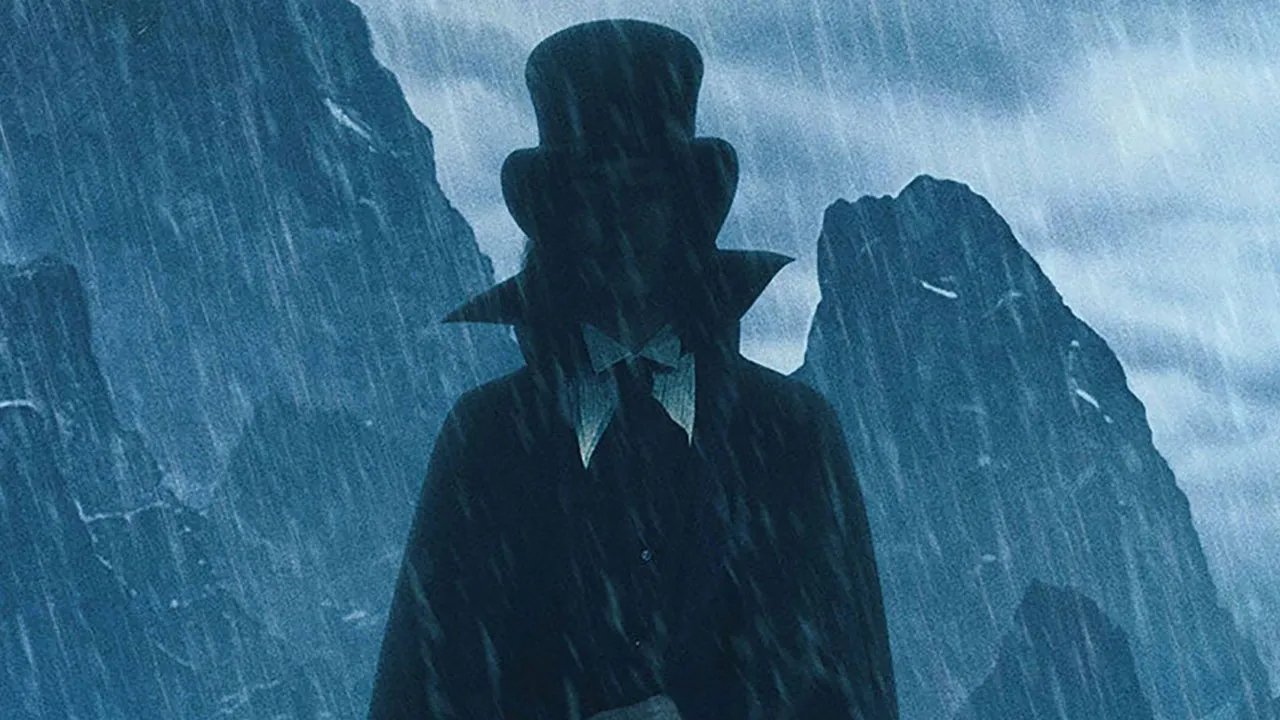
Spoilers follow for Luc Besson’s Dracula movie.
Dracula hit US theaters this weekend, after already opening in some parts of the world last year (titled Dracula: A Love Tale in some markets), the latest in a long line of film adaptations of Bram Stoker’s classic novel which go back over a century at this point.
Written and directed by Luc Besson, this version is rather blatantly heavily influenced by Francis Ford Coppola’s 1992 film, Bram Stoker’s Dracula. It similarly extrapolates beyond what Stoker wrote by adding in the idea that Dracula’s prey, Mina, is the reincarnation of the woman he lost long ago, before he became a vampire. Like in the 1992 film, this Mina (Zoë Bleu) is drawn to Dracula (Caleb Landy Jones) when she meets him, and she eventually both remembers her previous life with him and actually wants him to turn her into a vampire so they can be together forever. In the midst of this, Mina’s fiance, Jonathan Harker (Ewens Abid), and others try to stop the Count and free her, whether she wants them to or not.
However, there are many places in the Besson film where the specifics change from both the novel, Coppola’s film, and indeed most versions of Dracula. This is an often wacky, heightened and offbeat interpretation of the story, with some additions that are sometimes amusing, sometimes baffling, and sometimes a bit of both.
Here are four of the most notable differences in Besson’s Dracula, including the details of Dracula’s ultimate fate…
The Biggest Changes in Dracula 2026
Beware the Perfume of Dracula
The range of Dracula’s abilities, and the abilities of vampires in general, is often different depending on who’s telling the story, but he is frequently depicted as able to enthrall or hypnotize those he’s in close proximity to, often setting them up to be bitten by him. Besson’s Dracula goes in a wild direction with this concept though, not making it an innate power of the vampire at all, but rather something he eventually can accomplish with… a magic perfume?
Yes, thanks to the help of a world-class perfume maker in Italy – who actually proclaims “Mamma mia!” at one point – Dracula has a perfume that bewitches anyone nearby who smells it. He wants this because he wants to draw pretty much every woman possible to him so he can try to find the one who is the resurrection of his beloved Elisabeta, who he believes he’s fated to discover.
This perfume is heavily featured in the film, including in a dance-filled (!) montage sequence showing Dracula attending one fancy function after another where the women all swoon and then break into heavily choreographed group numbers, as he’s continually disappointed that none of them are Elisabeta.
The perfume becomes such a focal point of the movie for a time that it’s easy to assume that it might be an important factor in the final act in some way – whether it is thanks to Dracula using it one last time, or another character getting ahold of it. But that assumption would be wrong.
What’s in a Name?
Besides the title character, the Besson film includes two other major characters you’d expect in any Dracula adaptation, Mina and Jonathan Harker, who at least match the basic framework of their classic roles – Jonathan as a solicitor who travels to see Dracula on business, only to learn the truth about the Count, and Mina as Jonathan’s fiance, who Dracula sets his sights on.
Strangely though, every other supporting character is given a new name (or, in one noteworthy case, no name at all) even though it’s clear who they’re based upon or meant to be variations of. So basically, they pull a Half-Nosferatu. Most prominent in this regard is Christoph Waltz’s never-named “Priest,” a seen-it-all guy who’s got plenty of knowledge about vampires and is ready to hunt them. This is clearly the film’s version of the famous vampire slayer, Abraham Van Helsing, albeit with a career swap from professor to priest. Given his abundant screen time, the decision to never give him any name at all in the film is odd, though this Dracula’s got plenty of odd to go around.
Typically, Mina’s longtime best friend in the story, Lucy, is transformed into a vampire herself as the story progresses. In the new movie, Lucy’s replaced by Maria (Matilda De Angelis) in what is a more drastic change-up than others. Unlike the innocent Lucy, Maria is in fact already a longtime vampire, working for Dracula, who inserts herself into Mina’s life. Then, Maria is locked up in an asylum thanks to her unexplainable, violent and out of control behavior, as her Dracula-adoring ravings essentially turn her into a hybrid of Lucy and Dracula’s usual true believer, Renfield, who has no other corollary here.
Maria’s fiance, Henry Spencer (David Shields), meanwhile is a substitute for Lucy’s fiance, Arthur Holmwood, while Dumont (Guillaume de Tonquédec) swaps in for John Seward, though there’s no character taking the place of Quincey Morris, with this version dropping the idea of Lucy/Maria having three competing suitors before she ends up with Arthur/Henry. In the book and some film versions, Quincey plays a pretty big role in helping defeat Dracula, but as we’ll cover below, this version of the film goes in a different direction there, so he wasn’t needed…
Drac’s Little (Gargoyle) Buddies
In most versions of Dracula, if the Count isn’t alone in his castle as the story begins, he’s accompanied by his Brides, who are typically three beautiful vampire women who do his bidding (and usually make things difficult for Jonathan Harker during his stay there). Besson discards Dracula’s Brides, instead replacing them with another left-field choice in the form of a large group of diminutive gargoyles who are there to serve their master in any way he needs, whether it be serving food, helping trap his prisoners or, in the final act, battling a group of vampire hunters storming the castle with a skill set that seems Black Widow-adjacent in terms of martial arts prowess and spinning larger guys around with their legs.
During the course of the story, we never really get an explanation for who these guys are and how they connect to Dracula’s status as a vampire. But then, in the final moments, after Dracula dies, there is a visual reveal of their true identity, as they stumble out of the castle, now transformed into a group of bald little boys, which is presumably their original form.
Of course, this still doesn’t truly explain things. Were these kids transformed into gargoyles all at once or one at a time through the years? And why are they only children? Their transformation back to human occurring after Dracula dies implies he personally had the power to change people into gargoyles, so did it only work on kids? And hey, why are they all bald?
Seriously, what’s up with these little gargoyle dudes?!
Dracula Ending Explained: Dead and Hating It
Unless you’re going to change things up radically, an adaptation of Dracula is going to probably end with Dracula being defeated and dying (even if there’s eventually a sequel that somehow brings him back). This version doesn’t stray from that, albeit with its own spin on how it plays out, involving Dracula making his own decision that he should die.
In the original Bram Stoker novel, Dracula is killed at the hands of Jonathan Harker and Quincey Morris, while Universal’s iconic 1931 film version, starring Bela Lugosi, gave Van Helsing the honor of taking out the Count. However, Dracula simply allowing himself to be killed is not an entirely new idea, depending on how much the story leans into the tragic side of things for the character. In the Coppola film, Gary Oldman’s Dracula is very badly wounded – likely already fatally so – by Keanu Reeves’ Harker and Billy Campbell’s Quincey. So in the final scene, when he asks Winona Ryder’s Mina to “Give me peace,” and she tearfully obliges, it feels like he already wasn’t long(er) for this world.

Here, Dracula ends up having a big change of heart about turning Mina into a vampire and having her become one of the undead alongside him, having already been reluctant to do so when she asked him to bite her. When his castle is attacked by a whole platoon of soldiers gathered by Henry, Dracula efficiently wipes out anyone that he comes across. He spares Jonathan, though he does kill Henry, basically giving Henry the death Quincey has at this point in the original story, where he dies helping take out Dracula.
But when Dracula and Van Hels… Um, when he and Priest come face to face, Priest doesn’t attack him and they don’t battle. Instead, they simply talk. And basically Priest says, “Dude, come on, you should let me kill you” and Dracula goes, “You know what? Fair.”
Okay, it’s not quite that, but it’s not too far off. Essentially, Dracula comes to agree that his damned life is no damn life at all and he doesn’t want to condemn Mina to it too. His death will free her from completing the change into a vampire that she’s going through, and so he allows the Priest to stab him with a metal (not wooden) stake. This doesn’t immediately kill him, and in one more echo/twist on the Coppola film, he then spends his final moments with Mina.
In Coppola’s movie, he was looking like his old, decrepit version when he’s dying, only to transform into his younger self in his very last moments. Here, it’s basically the reverse, as he goes from youthful to becoming the visually older Dracula as he’s dying, even as Mina holds him and weeps for him. The Priest told Dracula he could redeem himself in God’s eyes through his sacrifice, and by saving Mina from a cursed fate, and he looks to be proven correct. Because after Dracula dies, he first turns to dust (a la Buffy the Vampire Slayer’s staked vamps) before his ashes fly up into the air, out the window and up into the sky.
In the midst of this, Jonathan walks in and sees Mina crying over the ashes and wisely leaves the room. Because when your fiance is crying over a dead vampire’s dusty remains, she’s probably not too focused on how you’re doing at the moment.
What do you think of the changes to this new version of Dracula? Let’s discuss in the comments, and vote in our poll too!