dailynewsnblog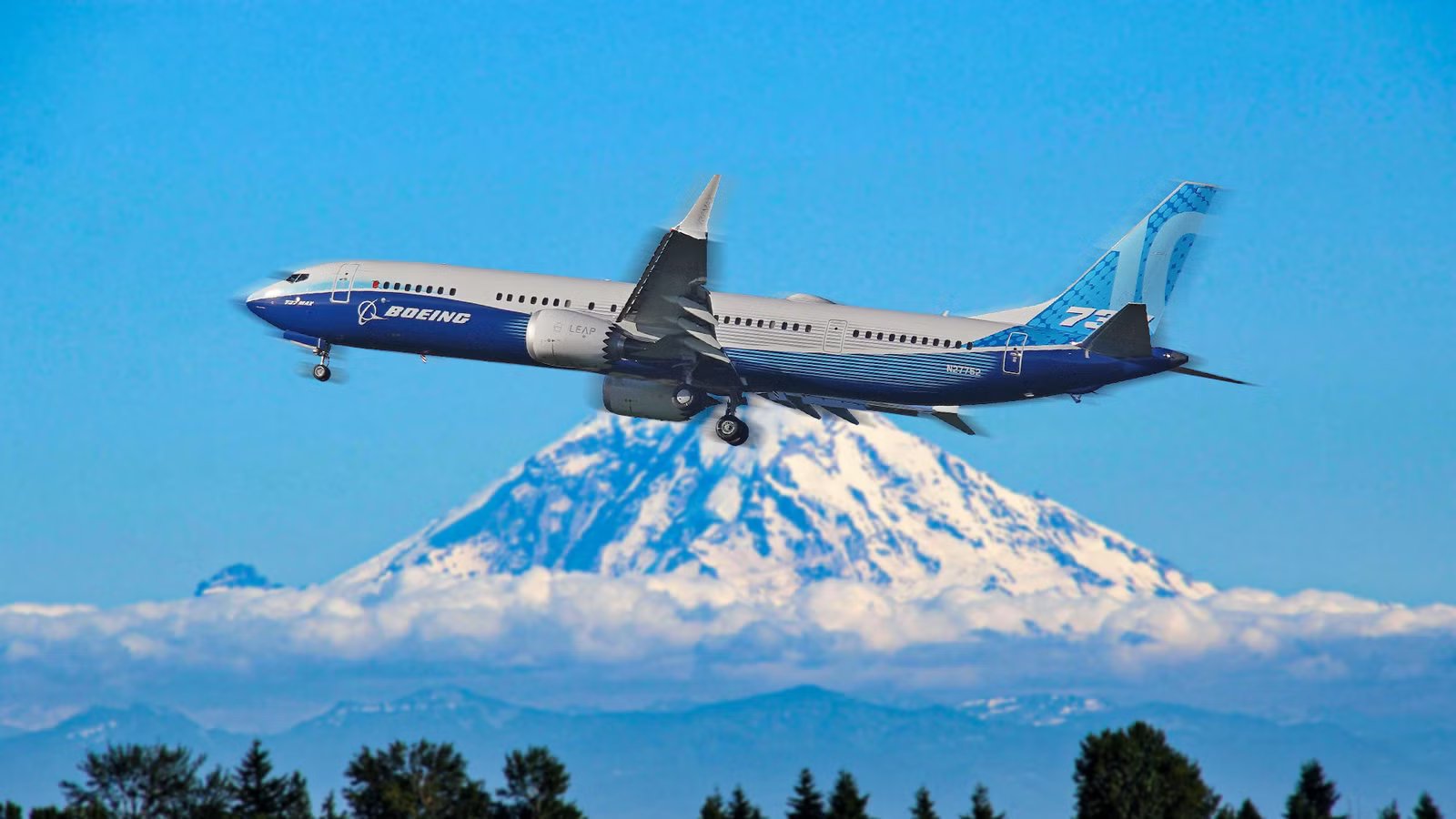
The 737 MAX 10 is slated to be  Boeing’s ultimate ‘hub buster’ as a narrowbody aircraft designed to carry a widebody passenger load. When the highly anticipated single-aisle twin jet, the largest of the latest iteration of the 737 series, finally debuts, it will be heralded as a game changer for high-density air routes. Airlines around the world eagerly anticipate the arrival of thousands of these aircraft for their most popular short and medium-haul routes.
737 MAX 10 will be the largest of the family ever made, with the capacity to seat as many as 230 passengers at a time. This not only significantly reduces the per-seat cost for every flight, improving operator bottom lines, but also maximizes the use of every schedule slot at busy hubs where the plane will be seen most. It is expected to become the new middle of the market (MoM) champion, and its popularity has led to over 1,400 orders confirmed despite years of delay and certification.

The 737 MAX 10 has become one of the strongest pillars of Boeing’s beleaguered flagship narrowbody program. Its disastrous debut, which saw the tragic loss of nearly 350 souls, crippled the family of what was once the most iconic jetliner produced. Since 2019, the 737 has faced the world’s largest-scale commercial aircraft grounding, and the Airbus A320 family has overtaken it as the best-selling single-aisle in commercial aviation history.
The 737 Max was initially expected to enter service in 2020, but that was delayed by quality concerns following the crashes of the Lion Air and Ethiopian Airlines 737 Max 8 in 2018 and 2019. Ongoing engineering concerns about the 737 Max have continued to stall certification of the MAX 10, as well as the smallest MAX 7. These design issues are supposedly being resolved in our anticipated production, allowing the final two variants to achieve production certification this year.
Boeing has seen some of its darkest days in the last decade since its founding in 1916, but the MAX 10 offers a light at the end of a long, difficult tunnel for the legendary planemaker. With the enormous backlog of orders, the 737 MAX 10 is anticipated to be one of the most important factors in Boeing’s return to profitable operations, and potentially, if production is not hampered, the 737 may once again retain its crown as the all-time king of the narrowbodies.
By The Numbers: 737 MAX 10 Orders

As of February 3, 2026, ch-aviation reports that the Boeing 737 MAX 10 has secured more than 1,400 firm orders. Despite significant certification delays, major airlines and lessors continue to add the high-capacity variant to their backlogs.
According to data from ch-aviation, below is a breakdown of the total number of 737 MAX 10 orders confirmed as of February 2026. The list is organized by operator:
|
Operator |
Total 737 MAX 10 Order Quantity |
|---|---|
|
Air India Express |
50 |
|
Akasa Air |
99 |
|
Alaska Airlines |
168 |
|
American Airlines |
115 |
|
Delta Air Lines |
100 |
|
Donghai Airlines |
10 |
|
El Al |
20 |
|
Flybondi |
10 |
|
GOL |
25 |
|
Iraqi Airways |
10 |
|
Lion Air |
50 |
|
Luxair |
2 |
|
Malaysia Airlines |
12 |
|
Okay Airways |
3 |
|
Pegasus Airlines |
100 |
|
Ryanair |
131 |
|
SkyUp Airlines |
3 |
|
Skymark Airlines |
4 |
|
SunExpress |
30 |
|
TUI Airways |
27 |
|
Unassigned |
130 |
|
United Airlines |
165 |
|
Virgin Australia |
10 |
|
Vueling Airlines |
25 |
|
WestJet |
107 |
|
Total |
1,406 |
The top customers are United Airlines and Ryanair, each with hundreds of optional orders, along with their firm counts shown above and the current backlog list. Aviation Capital Group, the lessor, increased its commitment recently with a total of 50 aircraft, making it the largest airliner leasing group on the waiting list. Air India bumped up its total at the Wings India 2026 event recently with 10 more MAX 10s as part of a 30-jet narrowbody expansion.

How Many New Aircraft Does Boeing Deliver Annually?
Where Boeing is now with its annual deliveries, and what its future production volumes will look like.
Roadmap To Full Rate Production

The certification of the Boeing 737 MAX 10 has reached a critical final phase, following years of setbacks that pushed its expected entry into service from 2020 to late 2026 or 2027. Delays have been primarily caused by redesigns of the engine anti-ice system and the implementation of a modern crew alerting system. Boeing CEO Kelly Ortberg maintains that certification is achievable by late 2026, though major customers like Ryanair and United have adjusted their plans to enter service in spring 2027.
A critical flaw in the 737 MAX jets was identified in 2023, where prolonged use of the engine anti-ice system in dry air could cause the carbon-composite engine inlets (nacelles) to overheat. This risked structural failure or debris entering the engine.
Boeing initially requested a temporary safety waiver but withdrew it in early 2024 following regulatory and political pressure. The company spent nearly two years maturing a permanent hardware redesign, which was recently completed and submitted to the FAA for final validation. Following the 737 MAX 8 crashes, Congress mandated that all new aircraft meet updated crew alerting standards.
While Boeing received a waiver to avoid a full flight deck redesign, it was required to implement enhanced safety features. Following the January 2024 midair door plug failure on a MAX 9, the FAA adopted a much more ‘hands-on’ approach. The FAA cleared the MAX 10 to enter Phase 2 flight testing under its Type Inspection Authorization (TIA), allowing expanded evaluations of avionics and propulsion.

The Complete Guide To The Boeing 737 MAX Family
Boeing has already built more than 1,700 aircraft from its next-generation narrowbody series.
Big Changes Ahead

Boeing is transitioning from a period of restricted output to a more aggressive manufacturing tempo. Production quotas have been raised over the past year, with Boeing finally getting approval to exceed 40 per month near the end of 2025. The company anticipates ramping up its output steadily, aiming to reach 47 aircraft per month by the middle of 2026 and possibly over 50 aircraft per month by the end of the year.
To achieve rates above 47 per month, Boeing is opening a fourth 737 final assembly line in its Everett, Washington, facility. This line will be critical for manufacturing the MAX 10. Looking ahead to 2027 and beyond, Boeing projects producing around 60 737 MAXs per month to fulfill its long-term backlog of nearly 5,000 aircraft on order.
Boeing aims to deliver a total of 500 737 family jets in 2026, a 12% increase over its 2025 totals. Further rate increases remain contingent on FAA approval. Boeing plans to request rate bumps in increments of five aircraft, with approximately six months of stability required between each step.

Is The Boeing 737 Truly Made In America?
A global supply chain is essential to the best-selling aircraft program.
Stepping Out Of The Shadows

Boeing has officially closed its ‘shadow factory’ at Grant County International Airport (MWH) in Moses Lake after delivering the last of its 250 stored 737 MAX 8 jets. The FAA and Boeing’s new leadership, including CEO Kelly Ortberg, agreed that Boeing cannot increase production safely while simultaneously managing a massive rework backlog. Closing Moses Lake proves the obstacle is finally gone.
The massive, makeshift operation was born of necessity during the 20-month global grounding of the MAX (2019 to 2020). Closing it is a massive financial and operational win for Boeing. This allows experienced mechanics to be reallocated to the main production lines in Renton and Everett.
When the MAX was grounded, Boeing kept the assembly lines running for months, eventually building a backlog of undeliverable jets. With no room in Seattle, they flew hundreds of jets to the high-desert climate of Moses Lake. At its peak, the site held roughly 250 to 300 aircraft. Each jet parked at Moses Lake represented roughly $50 to $120 million in trapped cash. By finally delivering the last stored aircraft in early 2026, Boeing has cleared billions in inventory off its balance sheet.
It wasn’t just a parking lot; it was a factory in reverse. To deliver these jets, Boeing had to perform Pick-Up and Delivery (PUD) work. It was essentially tearing into finished planes to install updated software, replace wiring, and address parts that had degraded while sitting idle. The shutdown of the Moses Lake operation marks the end of Boeing’s rework era and the start of a clean flow production era.
One Roof, One Team

Boeing completed its $4.7 billion acquisition of Spirit AeroSystems on December 8, 2025, a strategic move that fundamentally shifts the 737 MAX program back to a vertically integrated manufacturing model. It allows Boeing to manage quality assurance and production flow directly from nose-to-tail, as Spirit fabricates approximately 70% of 737 aerostructures.
The FAA cited Boeing’s direct oversight of its primary supply chain as a critical factor in lifting the 737 MAX production caps. Previously, Spirit would ship fuselages from Wichita to Renton with unfinished work or known defects, which Boeing mechanics would fix later in a practice called ‘traveled work’ that led to quality escapes.
This streamlined quality management system is essential for the MAX 10s Type Inspection Authorization (TIA), as it ensures that the test aircraft accurately represents the final, high-quality production standard the FAA demands before final certification. By reabsorbing Spirit, Boeing has implemented a clean flow where fuselages are not shipped until they are 100% compliant with design specifications.