dailynewsnblog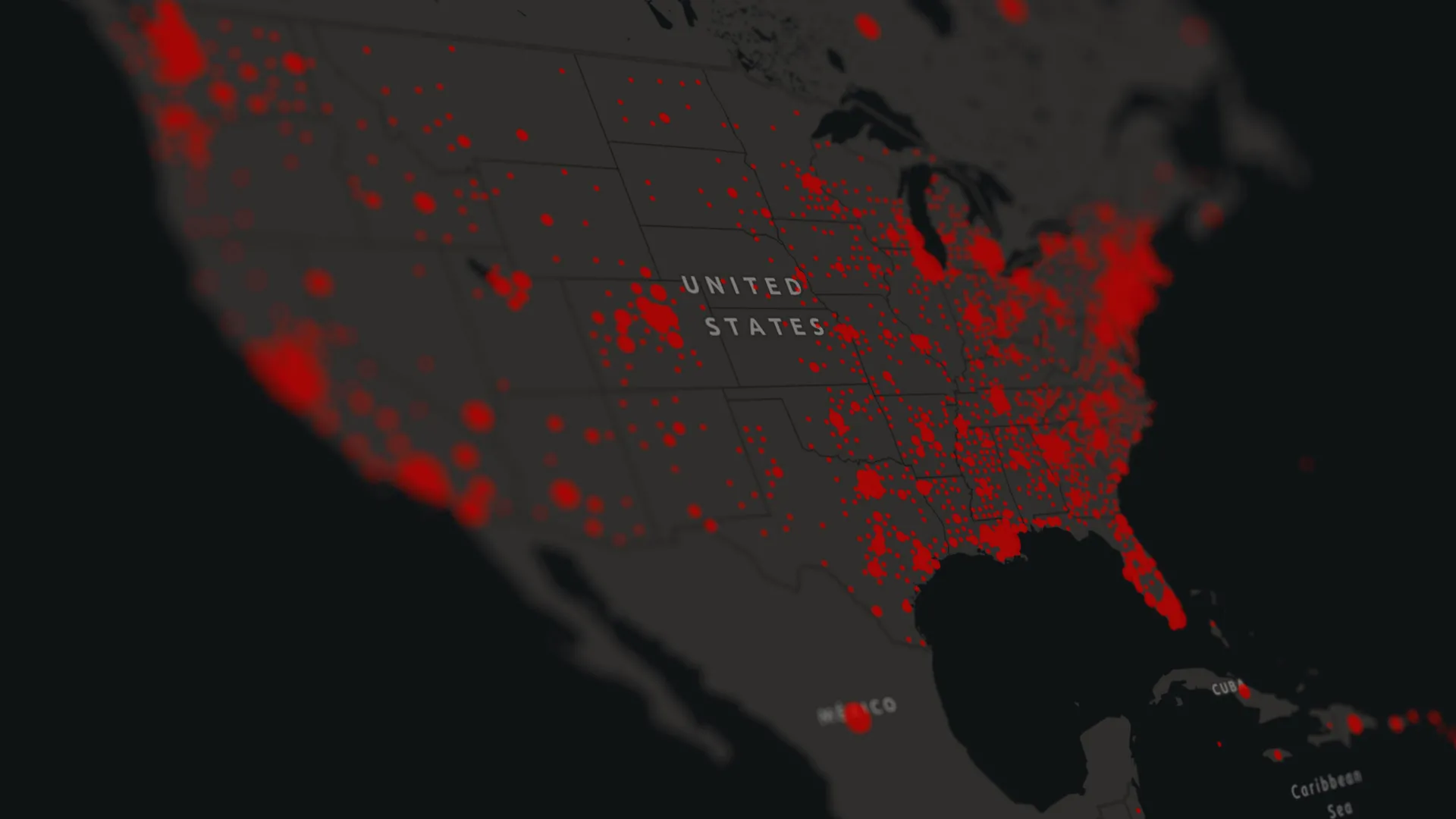
Public health scientists at the Columbia University Mailman School of Public Health used advanced computer simulations to trace how the 2009 H1N1 flu pandemic and the 2020 COVID-19 pandemic spread across the United States. Their results show how quickly respiratory pandemics can expand and why stopping them early is so challenging. Published in the journal Proceedings of the National Academy of Sciences, the research is the first to directly compare how these two pandemics moved through U.S. metropolitan areas.
Both outbreaks had major consequences in the United States. The 2009 H1N1 flu pandemic led to 274,304 hospitalizations and 12,469 deaths. The COVID-19 pandemic has been even more devastating, with 1.2 million confirmed deaths reported so far.
Modeling the Spread Across Cities
The researchers aimed to understand how these pandemics traveled geographically in order to improve planning for future outbreaks. To do this, they combined detailed information about how each virus spreads with computer models that accounted for air travel, everyday commuting, and the possibility of superspreading events. Their analysis focused on more than three hundred metropolitan areas across the U.S.
Rapid Expansion Before Early Warnings
The simulations revealed that both pandemics were already circulating widely in most metro areas within just a few weeks. This widespread transmission often occurred before early case detection or government response measures were in place. Although H1N1 and COVID-19 followed different routes between locations, both relied on shared transmission hubs, including major metro areas such as New York and Atlanta. Air travel played a much larger role than commuting in driving this rapid spread. At the same time, unpredictable transmission patterns added significant uncertainty, making it difficult to anticipate where outbreaks would emerge in real time.
“The rapid and uncertain spread of the 2009 H1N1 flu and 2020 COVID-19 pandemics underscores the challenges for timely detection and control. Expanding wastewater surveillance coverage coupled with effective infection control could potentially slow the initial spread of future pandemics,” says the study’s senior author, Sen Pei, PhD, assistant professor of environmental health sciences at Columbia Mailman School.
Wastewater Surveillance and Pandemic Preparedness
Previous research has highlighted the value of wastewater surveillance as an early warning tool. This new study adds further support, showing that expanding wastewater monitoring could play an important role in improving pandemic preparedness and slowing early transmission.
Lessons Beyond H1N1 and COVID-19
In addition to reconstructing the spread of the last two pandemics, the researchers developed a flexible framework that can be used to study the early stages of other outbreaks. While human movement, especially air travel, is a major driver of pandemic spread, the team notes that other factors also influence how outbreaks unfold. These include population demographics, school calendars, winter holidays, and weather patterns.
The study’s first author is Renquan Zhang, Dalian University of Technology, Dalian, China. Additional authors include Rui Deng and Sitong Liu from Dalian University of Technology; Qing Yao and Jeffrey Shaman from Columbia University; Bryan T. Grenfell from Princeton; and Cécile Viboud from the National Institutes of Health.
For more than ten years, Jeffrey Shaman and colleagues, including Sen Pei, have worked to improve methods for tracking and simulating the spread of infectious diseases such as influenza and COVID-19. Their real-time forecasting tools estimate how quickly outbreaks grow, where they are likely to spread, and when they may peak, helping guide public health decision-making.