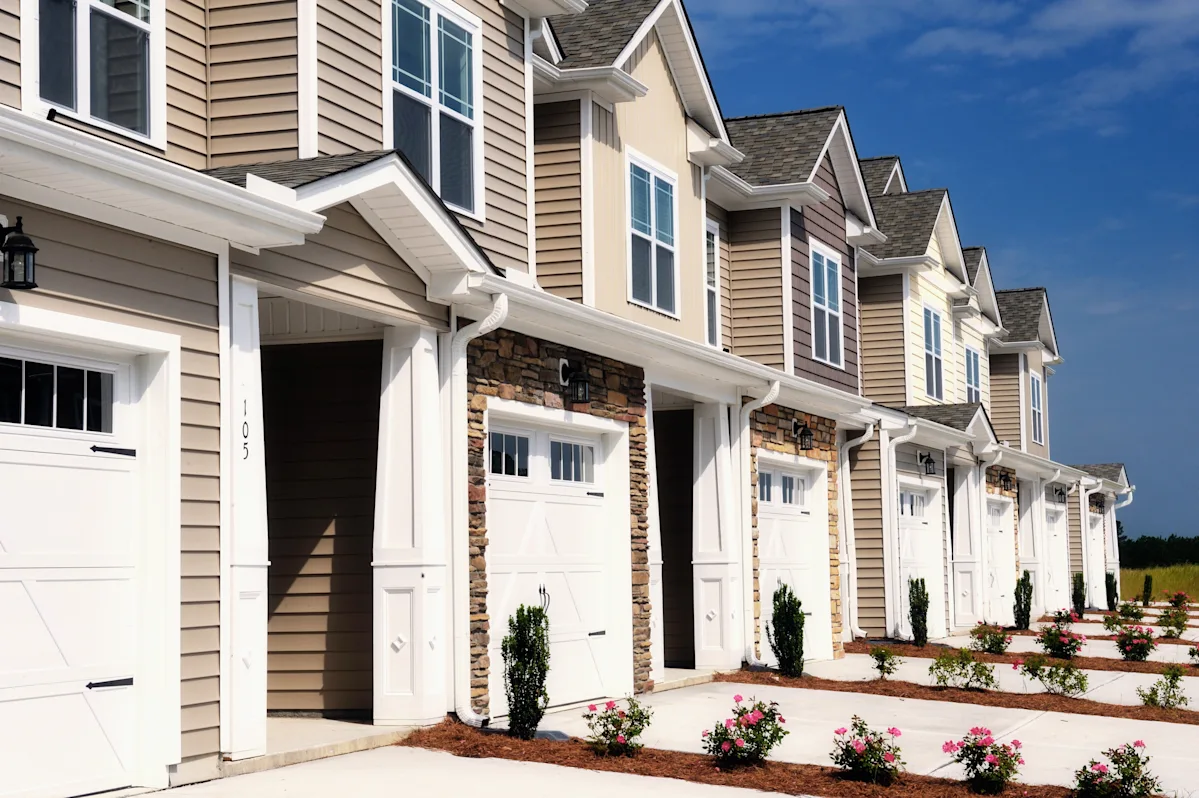
Few aspects of modern living bring out such passionate detractors — and defenders — like homeowners’ associations.
The private organizations govern neighborhoods, collecting dues that fund services such as trash removal and maintenance of shared amenities like pools and private parks. Many also enforce a slew of rules on everything from lawn care standards to acceptable paint colors to trash can storage.
Surveys have found that most homeowners feel neutral to good about HOAs, though horror stories about their downsides — fines for minor violations, board meetings that devolve into screaming matches, surprise monthly fee hikes — regularly go viral on social media. Inevitably, the top comments are fierce pledges to never live in a neighborhood with an HOA.
For many homebuyers, though, that’s getting harder. HOAs, once primarily a feature of new-construction communities, are now growing more common in the resale market. Last year, 44% of existing homes for sale were under an HOA, up from 34% in 2019, according to Realtor.com.
Read more: Are HOA fees tax deductible? Here’s when.
The rapid increase stems from modern development trends. In the past decade, builders have focused on constructing amenity-filled neighborhoods. Around two-thirds of all new single-family homes built in recent years have had HOAs, and among condos and townhomes, the share is even higher. As original owners of those homes move on and list their homes, today’s buyers find themselves in a more HOA-concentrated market.
“It’s been the trend in new construction to build more of these shared things and communities, and that has led to HOAs making their way now into the existing market,” said Joel Berner, senior economist at Realtor.com.
HOAs first began to proliferate in the 1960s and 1970s, alongside the development of suburbs. As municipalities struggled to keep up with rapid growth, many required developers to include HOAs in their projects. Those deals shifted responsibility for some infrastructure upkeep, like road maintenance, from the government to the associations.
The prevalence of HOAs varies by region. They’re most common in Mountain West states that have seen an influx of new construction, like Arizona, Nevada, and Colorado, as well as places like Florida, Hawaii, and Washington, D.C., where condos are common. In more rural areas, they’re comparatively rare.
Kelly Wilson-Prior, a Realtor in Mesa, Ariz., where most homes are governed by some form of an association, said she assesses buyers’ lifestyles before recommending HOA or rarer non-HOA neighborhoods. Buyers with recreational vehicles, for example, are often stymied by associations’ parking restrictions. But others are specifically seeking out amenities like a neighborhood pool or community pickleball courts.
“It’s quite a bit of talking to them about their lifestyle first, and then figuring out if an HOA plays into it,” Wilson-Prior said. “More often than not, an HOA does play into it.”
HOAs, though, come at a growing cost. The median HOA dues last year reached $135 a month, up from $108 in 2019. At a time when affording a home feels out of reach for many would-be buyers, those fees can pose yet another barrier.
“We’re seeing rising costs in everything, including rising housing costs and rising costs in services that are provided through a community association,” said Dawn Bauman, senior vice president of government and public affairs of the Community Associations Institute and the executive director of the Foundation for Community Association Research.
Wilson-Prior counsels buyers to expect rising dues and suggests they reach out to longtime residents to get a sense of how increases have trended over time. She also suggests they scour local social media like Nextdoor and community Facebook groups to get a better sense of how an association conducts itself.
Laura Domrzalski has seen the HOA fees on her Colorado Springs, Colo., townhome rise to $380 this year, up from $280 when she bought in 2023. She’s also faced several special assessments, including a $5,000 payment to replace a hail-damaged roof on another building in her complex.
She knew she’d likely end up in an HOA community when she moved — 42% of households in Colorado pay such fees, one of the highest percentages in the country — but has been taken aback by the rising costs and is now questioning if her association is using its funds efficiently.
“I was naive,” Domrzalski, 36, said. “Here in Colorado, a townhome was a cheaper option than a single-family home, or so I thought.”
Her $5,000 for the special assessment is due next month, and she’s not sure how she’ll come up with the money. She has insurance for surprise repair bills, but expects it will only cover $1,000 of the payment.
In the meantime, she’s weighing other options, like selling her townhome and renting an apartment or shopping for a single-family home.
Learn more: Is now a good time to buy a house?
“If I do end up moving and buying again, it would certainly be a single-family home, and I would absolutely make sure that there is no HOA involvement on it at all,” she said.
Despite their proliferation, HOAs haven’t yet had much of an effect on sales in either direction. Studies on how they influence home values have produced mixed results.
While some high-fee condos are likely pricing out buyers and contributing to slowing sales, in the broad market, HOA versus non-HOA status had little effect on how long a home spent on the market last year, Realtor.com found.
“People seem pretty apathetic about it,” Berner said.
Claire Boston is a Senior Reporter for Yahoo Finance covering housing, mortgages, and home insurance.
Sign up for the Mind Your Money newsletter
Click here for the latest personal finance news to help you with investing, paying off debt, buying a home, retirement, and more
Read the latest financial and business news from Yahoo Finance


 dailynewsnblog