dailynewsnblog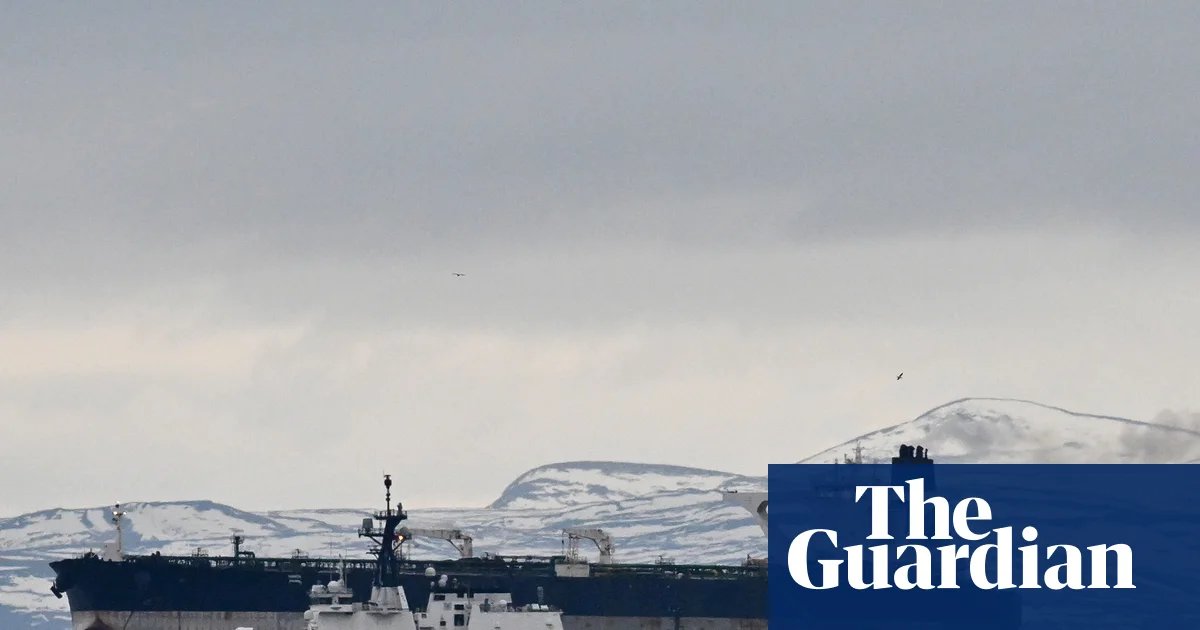
The UK is threatening to seize a Russia-linked shadow fleet tanker in an escalatory move that could lead to the opening up of a new front against Moscow at a time when the country’s oil revenues are tumbling.
British defence sources confirmed that military options to capture a rogue ship had been identified in discussions involving Nato allies – though a month has gone by since the US-led seizure of a Russian tanker in the Atlantic.
In January, 23 shadow fleet ships using false or fraudulent flags were spotted in the Channel or Baltic Sea, according to Lloyd’s List Intelligence. Many are linked to the export of Russian oil, largely by water to China, India and Turkey.
A joint statement signed by the UK, Germany, France and other Nato countries bordering the Baltic and North seas late last month said all vessels sailing through either region should “strictly comply with applicable international law”. But despite setting conditions for a seizure, nothing has followed.
“The Royal Navy could challenge any number of ships under maritime law because they are in fact stateless,” said Richard Meade, the editor-in-chief of Lloyd’s List, a specialist shipping title. “But they haven’t, because there are escalatory risks.”
Last month the Royal Marines held a briefing for British MPs and peers, covering the threat from Russia and the situation in the Arctic and the high north. One of those present said the Marines were “champing at the bit” to be given the order to seize a ship.
A month ago, the US chased the Marinera tanker from the Caribbean to the north Atlantic, seizing it between Scotland and Iceland with British help. Though it was falsely flagged when it was first approached, it had been re-registered as Russian while it was being pursued in a failed attempt to evade capture.
Russian complaints in the aftermath were muted, but a UK or European-led operation would be potentially more fraught “because Moscow would probably respond more robustly”, Meade said. The risks could be reduced if a seizure took place away from the Baltic or Arctic waters, he added.
On 22 January, before the signing of the joint statement, France detained the Grinch, an oil tanker off the coast of Spain. It had departed from Murmansk in Russia, under the flag of Comoros, a country in east Africa – but a week later the French president, Emmanuel Macron, told his Ukrainian counterpart it would have to be released because of French law.
In late January, John Healey, the UK defence secretary, said Britain would host a meeting of Baltic and Nordic countries to discuss “military options that we might use”. Any oil seized, he suggested, could be sold “and put into Ukraine in order to fight Putin’s invasion”.
Russia produces about 10m barrels of oil a day, according to Craig Kennedy, an associate at Harvard University’s Davis Center for Russian and Eurasian Studies. Though some of its 7m daily exports are exported by pipeline, approximately 5-6m a day travel by sea, of which 60% goes to China and India.
After Russia launched its full-scale invasion of Ukraine, the west gradually began implementing economic sanctions to target the Kremlin’s ability to wage war.
A price cap was set on Russian seaborne crude exports, which led Moscow to respond by spending an estimated $15bn on buying 400 ageing tankers, often more than 20 years old, to create its own “shadow fleet”.
“It’s a collection of old, poorly maintained ships that are opaquely owned, often underinsured and flying flags from jurisdictions either with weak controls or enforcement efforts, increasingly taking up false flags,” said Gonzalo Saiz Erausquin, from the Royal United Services Institute, a UK thinktank.
The idea was taken from Iran and Venezuela, already subject to sanctions, but the Russian shadow fleet is, Kennedy says, essentially separate.
The evasion of regulations that makes the shadow fleet idea attractive to Moscow has also made it vulnerable. A ship’s flag is, in effect, its own jurisdiction – but if a ship is using a false or even multiple flags, it is effectively stateless and can therefore in theory be seized, though in European countries the exact legal interpretation differs.
It is uncertain how far a capture of one or two shadow fleet vessels would hurt Moscow’s economy. Since the end of November, seven shadow fleet tankers have been struck by drones, with Ukraine claiming responsibility for four, including the Qendil, attacked in the Mediterranean.
Data on oil export volumes assembled by Kennedy does not suggest there has been a significant drop-off in response, with the Russian export figure holding at more than 5m barrels of oil a day, though volumes are down from a 6m-a-day autumn peak.
There are also signs that Moscow is reacting to western threats by re-registering shadow fleet tankers under the Russian flag to prevent seizure. The Marinera was one of 10 shadow fleet vessels in the Caribbean that had reflagged to Russia in December and January, part of a failed effort to break the US oil blockade of Venezuela.
There remain more than 200 Russia-linked shadow fleet vessels still in operation, though Russia’s mainstream, own-flagged fleet is expanding. It now accounts for 51% of volumes, with the price cap to which they are subject considered easy to flout.
British sabre-rattling comes at a time when Russia’s economy appears more vulnerable than before, with its war boom faded and economic growth faltering. Falling global oil prices, helped partly by greater supply from Venezuela, are hurting the Russian treasury.
Yuliia Pavytska, a sanctions specialist at Kyiv School of Economics Institute, said oil and gas revenues for the Kremlin “fell by 24% in 2025” to 8.5tn rubles. They accounted for 22% of state income in 2025 – down from 41% in 2022.
The economist said the EU was considering a total ban on providing maritime services such as insurance to Russian ships which, she argued, would be “very painful” for Moscow, particularly if it was accompanied by military action.