dailynewsnblog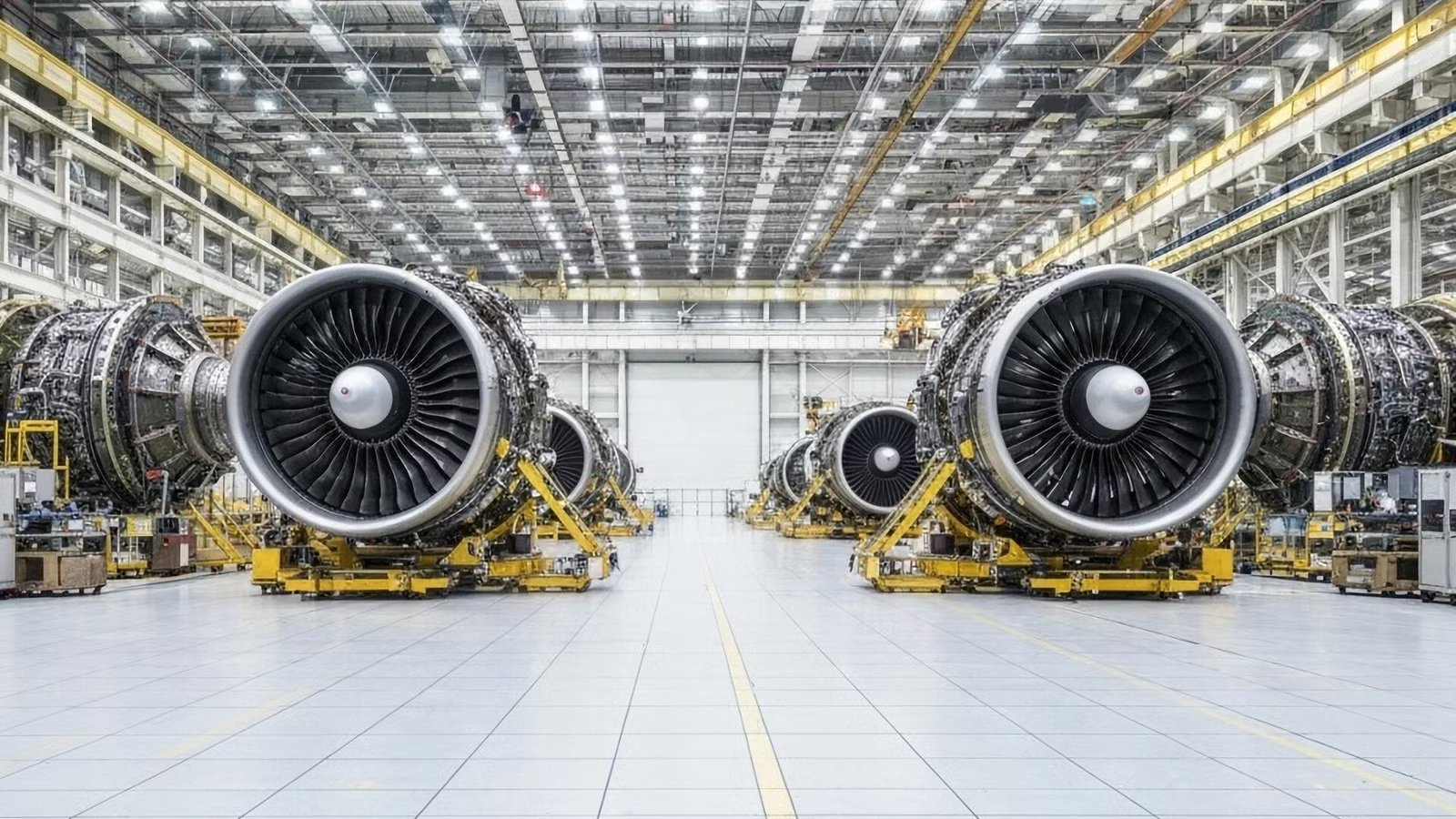
Supply chain issues continued to be a heated topic at the Singapore Airshow this week. Airlines and their suppliers both spent considerable time discussing how the aviation industry is still struggling to recover from supply chain disruptions that have been exacerbated by record passenger demand, parts scarcity, and geopolitical challenges.
Also highlighted were deeper dislocations in the aviation sector that have led to what some are now calling the “cannibalization economy”. While there’s a general shortage of aircraft, industry-shaking issues such as the Pratt & Whitney engine crisis have created a bifurcated market where whole planes languish, yet their parts command premiums. Young jets, some barely out of their warranty periods, are now being cannibalized to feed a starving parts market driven by manufacturing defects.
Supply Chain Chaos Is The “New Norm”

Reuters reports how attendees at the airshow say that prolonged supply delays and bottlenecks appear to have become the “new norm”. ST Engineering, the world’s largest airframe maintenance and repair services provider, said that the total lead times for its components and material orders now stretch beyond a year, compared to just months before post-pandemic disruptions. COO Jeffrey Lam says that even trying to place early orders cannot address the problem, as “the shortage is worldwide, so you actually can’t even buy anything early if you wanted to.”
Gael Meheust, the CEO of engine maker CFM International said during a panel discussion that these supply chain issues are compounded by unprecedented demand. He says that while his company has been able to ramp up production after the pandemic, it has been outpaced by “incredible” demand from airlines and lessors for its products:
“That’s the paradox in which we are in. It’s not just that the supply chain cannot deliver on the ramp-up, it’s that the demand is at a level that we had never imagined.”
Of course, CFM has got off relatively lightly compared to its rival Pratt & Whitney, where persistent engine reliability issues continue to plague the PW1000G Geared Turbofan (GTF) engines used on Airbus A320neos and Airbus A321neos. Manufacturing defects caused by contaminated powdered metal used in high-pressure turbine and compressor disks have been identified, which can lead to premature cracking and failure. This has escalated into widespread recalls, with hundreds of aircraft needing to be grounded to have their engines removed, inspected, and replaced.
As of late 2025, the number of grounded or stored jets with PW1000G-family engines exceeds 800 aircraft globally, or about a third of the fleet. It is within these groundings that the cannibalization economy has blossomed.
The Parts Market Beckons

Shockingly, some of these A320-family groundings have led to almost-new aircraft being retired and even scrapped. Recently there was the high-profile instance of two  IndiGo A321neos, both just six years old, being sold to be torn down for spare parts. This is because each aircraft had become worth more in parts than it was as a whole.
At face value, it would appear to make no sense. An A320neo airframe could theoretically fly for decades, so why are airlines or lessors increasingly choosing to part them out rather than seek new owners? The answer lies in the lucrative aftermarket for components, particularly upgraded engines, which is currently being driven by the very engine shortages afflicting the broader industry.
When demand for parts far exceeds supply, prices are driven sky-high, making an aircraft more valuable in pieces than as a whole. Here’s a closer look at the math:
- IndiGo’s A321neos would have been valued at over $100 million when new, but now the estimated market value of a six-year-old A321neo is approximately $42 million.
- But a single upgraded PW1100G engine is worth upwards of $22 million, so it is feasible that selling the engines alone will net a higher return than selling the aircraft.
- Then add in all the other high-value items like avionics, flight controls, and landing gear, and the total value of the aircraft when parted out and sold to different buyers can exceed $55 million, far in excess of its current market value.
And it’s not just about selling the parts. A lessor would charge a monthly rate of approximately $350K for the 6-year-old A321neo. But leasing upgraded GTF engines alone would bring in a return of $200K per month, per engine, more than the aircraft as a whole.

Why Are Some New Airbus A320neo Family Aircraft Being Scrapped So Early?
With less than a decade in service, a handful of A320neos have already been dismantled for parts.
Spirit Is A Prime Source For Cannibalized Parts

Industry reports indicate that at least 19 A320neo-family aircraft had already been parted out by the end of last year. One part-out source says that he expects up to 10 more aircraft to hit the market in the first quarter of 2026, with a steady supply ongoing as the year continues. One of the sources of supply is likely to be Spirit Airlines, which is currently in the midst of its second Chapter 11 filing in less than a year.
The ill-fated airline has already made drastic cuts to staff and routes, but Spirit’s leadership has also made the tough decision to dramatically reduce the size of the airline’s fleet. This began slowly in early October last year, when the airline reached an agreement with Irish leasing company AerCap to reject 27 new Airbus jets. But within days, Spirit filed motions in US Bankruptcy Court seeking to terminate leases on 87 aircraft, shrinking its fleet by more than 40%. At the time of writing, 85 A320neo-family aircraft have now been moved to storage at Pinal County Airport.
In many cases, new owners will be found for these aircraft, all of which are just a few years old. But it is also highly likely that a portion of them will be parted out in the near future. And it won’t just be ex-Spirit aircraft. As the industry grapples with supply chain fragility, expect more young aircraft from across the world to meet premature ends, challenging traditional notions of asset longevity and underscoring a harsh reality: in aviation, economics can retire an aircraft long before wear and tear does.