dailynewsnblog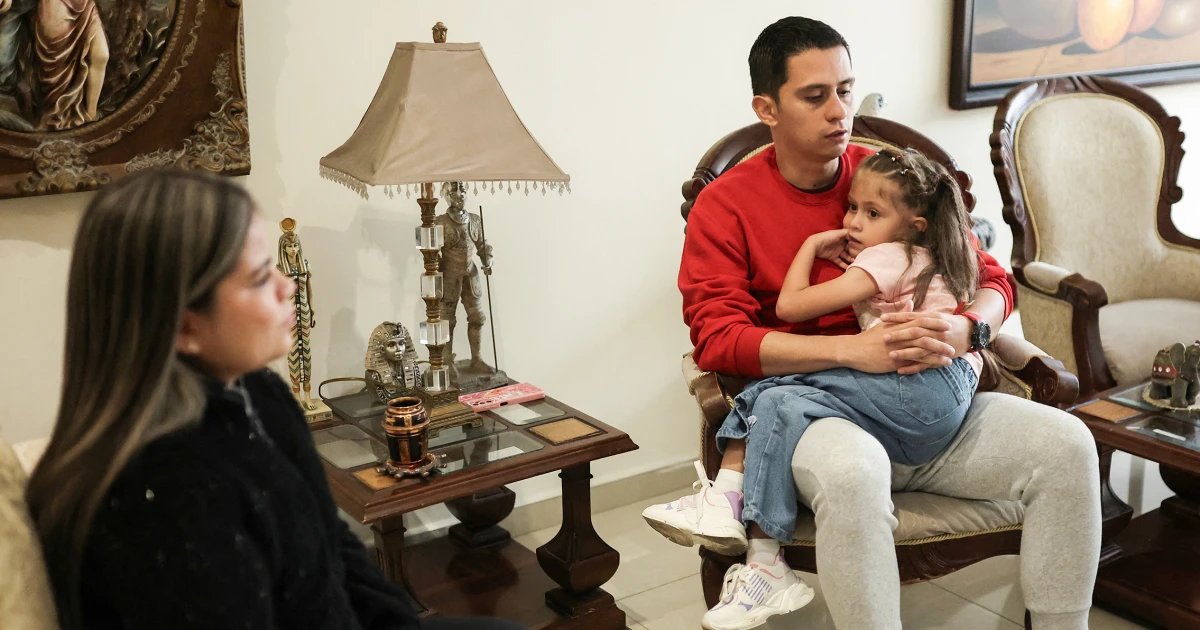
The psychological toll can be just as severe. During a recent visit, Lee said, a 5-year-old girl described a recurring nightmare: A large animal chases her, but she can’t outrun it because she’s trapped in a cage.
She and her siblings “wake up crying for their mom every night because they’re worried they’re going to get separated from her,” Lee said.
Lawyers representing detainees argue that prolonged confinement in harsh conditions — coupled with repeated warnings about family separation — is meant to coerce parents into abandoning pending asylum claims that could allow them to remain in the U.S.
DHS tells detained families, “Well, if you want this to stop, agree to give up your case,” said Javier Hidalgo, legal director for RAICES, which provides legal support for immigrant families in Texas, including at Dilley. “We’ve heard that time and time again.”
Kelly Vargas said she and her husband felt that pressure from the moment they arrived at Dilley with their daughter, Maria.

The family came to the U.S. in 2022 after having fled Colombia and settled in New York, where they checked in regularly with immigration officials. They had applied for special visas for human trafficking victims, saying they were subjected to forced labor and death threats while they were traveling through Mexico.
After they were arrested during a September check-in and sent to Dilley, Vargas said, officers repeatedly pressured her and her husband to drop their visa applications.
“He told us that if we didn’t deport ourselves, they were going to take our daughter from us,” she said. “Our daughter would be left in the custody of the state, where not even our lawyers would know where she was.”
At first, Vargas said, she and her husband resisted, determined to fight for the life they had built in New York, where he worked in construction during the day and she worked as a waitress and cleaner overnight. They initially told Maria they were on vacation in Texas, but the girl knew better. She would drop to her knees and beg to go home to see her cat, Milo. At times, Vargas said, she screamed so intensely that even staff members appeared shaken.

“Get me out of here,” she would cry. “I want to leave.”
Maria’s health quickly declined, Vargas said. She developed a persistent cough and struggled to eat, losing weight as the days passed. Then, Vargas said, a staff member who was cleaning accidentally struck her daughter in the eye with a mop, drawing blood.
Despite her daughter’s continued complaints of blurred vision, sensitivity to light and hearing problems, Vargas said, doctors dismissed her concerns and delayed further evaluation.
With her daughter ailing, Vargas said, she and her husband finally agreed to leave.
They were deported to Colombia in November.
Healing from the ordeal has taken longer, Vargas said. Maria still has vision problems and headaches. The sweet girl who loved her teacher and played with Barbies is now fearful and withdrawn, talking often about her weeks in Texas and the workers who watched over her.
Whenever she sees a police officer, she tenses.
“It’s the bad men,” she says.