dailynewsnblog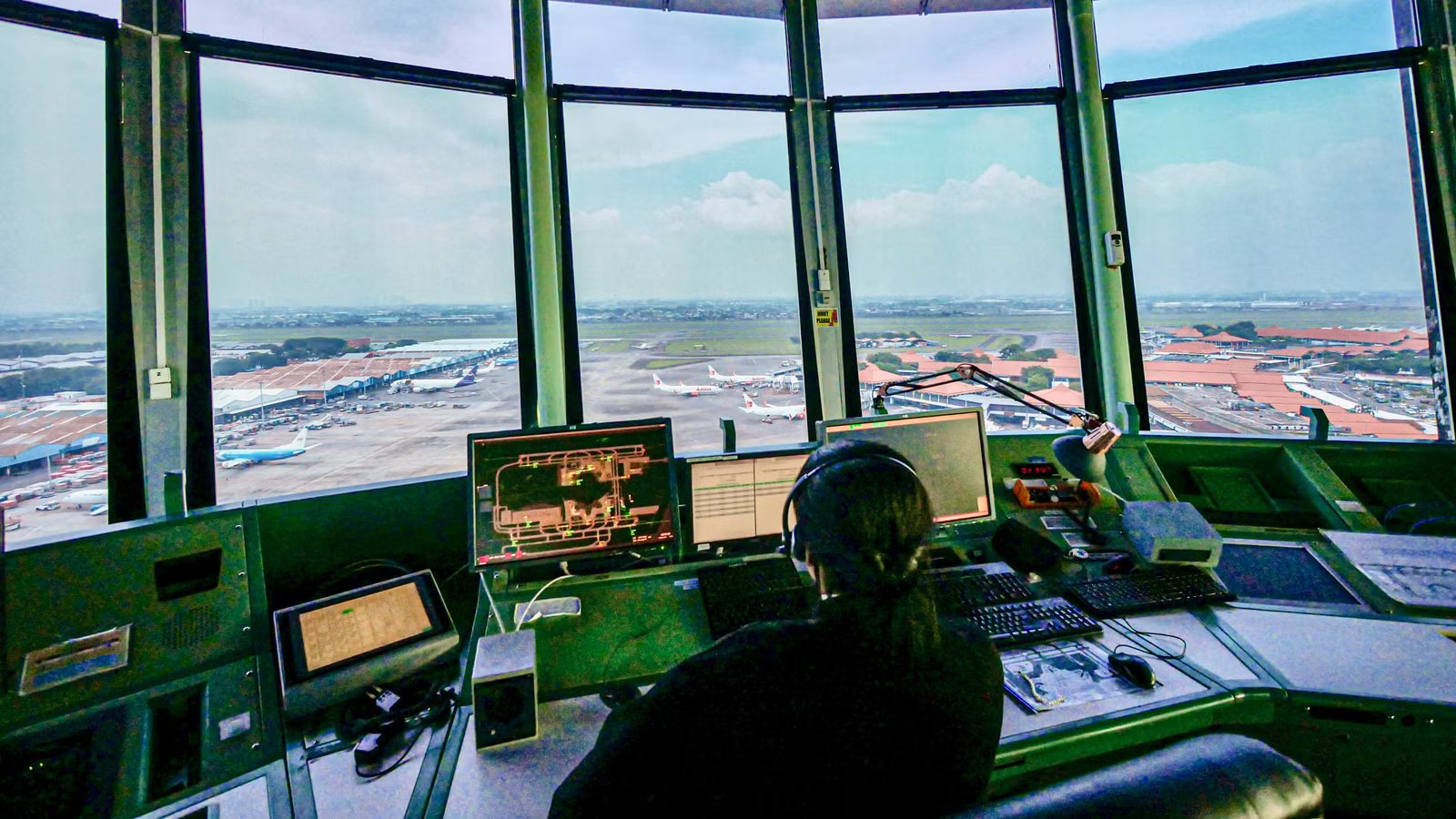
Overall, the aviation industry’s safety record worldwidehas made significant strides.It is exceedingly rare that Air Traffic Controllers have to personally witness such events described in this article. However, over the years, among the thousands of aircraft a controller will be in communication with, things do go wrong on very rare occasions. This article documents rare instances when the unthinkable happens and the impact on ATC from the perspective of a former Air Traffic Controller, James Gillman.
A Constant Reminder Of The Accident

It happened almost one year ago, at the time of this writing, January 29, 2025. American Airlines flight 5342 was arriving in Washington, DC. The regional jet, a Bombardier CRJ-700 had departed from Wichita, Kansas, with 60 passengers and four crew members. It was a clear night. The view of all the lights, the US Capitol, and the monuments, I’m sure, must have been spectacular. They were finally at that point of the flight where everyone, especially the nervous flyers, could breathe a little easier, as they were that close to touching down. But in the sea of lights was also a Sikorsky UH-60 Black Hawk Helicopter. They collided a half mile out from runway 33 touchdown, midair, over the Potomac River.
It isn’t very difficult to imagine the view from the tower cab for the Air Traffic Controllers. Videos of the night sky, complete with the devastating collision, are available from multiple angles. Last Wednesday morning, January 7, I flew out of DCA, rounding the corner on the Southeast side of the airport to line up on Runway 33. One can still see activity in the river a few hundred yards out beyond the runway approach lights. And for weeks after the accident, a crane removing the aircraft wreckage memorialized the site where it occurred, even for those not involved. But there will always be a constant reminder for ATC as long as their career lasts in the Ronald Reagan National Airport Tower (DCA). This is what they will see. Where it happened. Where a total of 67 people lost their lives. Every day and night, they work 24 hours a day.

Particularly brutal, as is the nature of social media, news, and technology in the modern day, the videos of this collision, as it occurred, played ad nauseam. For everyone in DCA, and not just those in the tower, viewing it could hardly have been avoided, even if one wanted to. Preliminary reports do seem to point to a few individuals’ performance in the ATC Tower that might not have been without flaw. And I certainly don’t wish to relate their decisions as commendable, because lives were lost. But it is too easy to look back and be an armchair controller. “Had they… ________,” or, “Had they done this_________, those people could still be alive.”
An Air Traffic Controller, with the immense responsibility of preventing just this kind of accident across the entire US National Airspace System, regardless of their actions, will never recover. And as in the case of American Flight 5342, any single additional action may have averted the disaster, and everyone could have gone on living the next day. Deep in the recesses of the mind it is embedded and, if I may, enters even their moments of sleep. Lastly, studies have found that one mistake increases the chance of an accident, but on the night of January 29, 2025, a number of errors and omissions from a number of entities seem to have contributed. Multiple errors and mistakes, despite every imaginable safeguard, are harder to overcome and correct.
Embedded In Their Scan, Is The Site And Memory

The Local Controller position (LC) in the control tower, in a general sense, has the responsibility of the runway and the space around it. They are landing the aircraft and sending them off. Their scan may look a little like this: First, the runway, of course, in this case, Runway 15/33, this is the most important part; then from the landing/takeoff point, off the departure end of the runway, back down to the rolling point, the threshold; then from the final approach outward to the aircraft on the way in, and everything around. They ensure nothing is amiss, and then the process is repeated.
At night, especially in Washington DC, their scan is completely different, as there is a sea of lights in the background. Add to this, every day and night, where that crane sat, where it happened, indelibly imprinted, it became also a part of every Local Controller at DCA’s scan. This diligence in scanning for anything that could go wrong, plus relating to every aircraft and vehicle’s location, doesn’t just happen when there is an airplane, which is mostly always at DCA anyway. Runway 15/33 is likely the most actively used in the country. This scan of things is continuous, perhaps repeated as many as fifteen hundred times in a two-hour session.
The Untold Impact Of Aircraft Accidents

Sadly, the real trauma of such an event doesn’t affect only those immediately familiar. Spouses, families, and loved ones, too, find themselves having to deal with it, the trauma of something that cuts too close on occasion. And for these people, the controllers, their families, workers on the tarmacs, airline staff, immediate responders, rescue… the list I’m sure can go on for some time… is sadly the nature of this business.
I’m reminded of Patrick Harten, the New York TRACON (N90) Controller who last spoke to Captain Sullivan (Sully), who steered the powerless Airbus A320 airplane into the Hudson River, and all survived. The video of Mr. Harten testifying before Congress is available on YouTube. But there’s always an inside story to these things that goes unspoken in the media. Mr. Harten attended my class at the Command Center. He explained, thinking there was no way anyone had survived, he had stepped away to collect himself in a break room. The TV was off. It was some time later that a co-worker stuck their head in the door and informed him that everyone on US Airways flight 1549 had survived.
Mr. Harten is a humble man. No one in the class, including myself, knew of his significant efforts that day. The only reason it was brought to our attention at all is that there was another incident we were discussing, calling for a Congressional hearing, and then he mentioned he had testified before Congress. Still, his identity was unknown. Afterward, while everyone sat in stunned silence after viewing the video, I did ask for his permission to share his story, as heroism in the Air Traffic Control profession is not often spoken of.
Archie League Award Recipients

In that same class was a Controller from the Potomac TRACON (PCT) who was a recipient of an Archie League award. This is awarded when a controller’s efforts result in what is known simply as a “SAVE.” His diligence, his determination, and, dare I say, sheer will, saved a flight — saved people’s lives. I felt doubly blessed, of course, to have these two in one class. However, in the class were also ten other Air Traffic Controllers and Traffic Management Specialists, who all would have had Air Traffic Controller experience in their backgrounds. Among them, their ATC experience would no doubt have had its ups and downs, as well as those memorable situations where, despite everything, all the training in the world could not prepare them for the times when it simply was not in their hands.
Mr. Harten, and those people at DCA and so many others who encountered tense situations in ATC worldwide, some of which ended well, must be considered heroes. People naturally tend to forget the sacrifice of those in a place where they wish could affect the outcome, but cannot always.
Within Sight of The Air Traffic Controllers

Similar to the American Flight 191 from Chicago’s O’Hare International Airport (ORD) in 1979, at Louisville Muhammed Ali International Airport (SDF), on November 4 of this last year, UPS flight 2976, having the left engine separate during takeoff, resulted in yet another tragic outcome within plain sight of those in the SDF Air Traffic Control Tower. They had to watch it unfold. This situation was certainly well beyond their control. “There are some things you just can’t un-see,” it is said. Then, of course, the accident, or the mishap, is broadcast, replayed, and re-quoted in the media and news in the weeks following. But from personal experience, when these things happen right before your eyes, “it hits different.” You are reminded that this is not a video game. Accidents such as these bring home the stark reality: those were people.
Air Traffic Control – It’s Not Just Numbers

In the US, we generally handle 50,000 flights on an ordinary, well-traveled day. There are times when 5,000 or more aircraft are in the air over the contiguous US receiving ATC services. However, it cannot be stressed enough. By far, the prevailing flights in the US go smoothly due to the constant training of maintenance, crews on the aircraft, and Air Traffic Controllers. The likelihood of a passenger finding themselves on a fateful flight is absolutely minuscule. In fact, it is said you are far more likely to get into an accident on the way to and from the airport on ground transportation.
While actively controlling between 1983 and 2016, I don’t recall much about those good days, as there were many. Naturally, a very few come to mind where people were kept out of trouble, or advice was taken, and it went well, or there was some enormous volume of traffic, and we could pat ourselves on the back afterward (note I wrote, “we”), or even an occasional emergency actually ended well, as the majority do. However, rest assured, I can pull up memories of when circumstances were more dire, and things didn’t go so well. I guess those can never really be forgotten. Anyone in the entire world who has spent any time in this profession has such memories. It is simply unavoidable.
September 11, 2001, Another Day That Will Live In Infamy

On Sept 11, 2001, which will have been 25 years ago this year, some Air Traffic Controllers who were in communication with those aircraft, it is but a few, but they still remain. They don their headsets and work their six-day workweeks, ten-hour days. After a multitude of emotions and the shock, what have you, I thought of our world having been wrested from our control. The Air Traffic Controllers across the nation and those directly involved notwithstanding, the number of people, if not the entire US, felt completely helpless on 9/11. If I try to pinpoint it, after this realization — and I did go in to work that afternoon — the plight of the Air Traffic Controller pales in comparison. It can only serve as an example. In some situations, we have to shoulder it alone. Otherwise, we have to join and try to rationalize them in our minds together.
Getting Help After An Incident Or Accident

And in the world of the Air Traffic Controller, getting “help” may mean medication, and those kinds of medications and ATC don’t mix. Depending upon what a medical professional may prescribe, it can mean the end of your medical clearance for quite some time, if not forever. This is taken very seriously. There is an Annual Class II Flight Physical to pass, as well as random drug and alcohol tests. Nonreporting, keeping these things to yourself, too, will be the end of your career. There is CISM (Critical Incident Stress Management), but this is only a start. An Air Traffic Controller may never ask for the help they need.
That localized event may mean nothing to anyone but the one individual who witnessed it and lived through it. And we cannot know exactly what that effect was. I recall in the 1980s, after a particularly painful accident of an air taxi, where we lost a pilot we routinely worked for, as well as his passengers. In fact, I flew on this aircraft with this pilot. The aircraft fell vertically and crashed within sight of the Air Traffic Control Tower. Everyone was in the RADAR room, the Approach Control, looking over the Controller’s shoulder, when the aircraft’s altitude was seen plummeting. The Local Controller keyed up on the line and said, “They just went down.” One of our crew members, in the days following, had dreams that it was we, her fellow controllers, aboard that aircraft.
In Conclusion, Air traffic Control Is Still A Very Rewarding Occupation

To get into and through the FAA Academy, one must be unique.”Is it hard? Not if you have the right attitude. It’s having the right attitudes that’s hard.” R. Pirsig, Zen and the Art of Motorcycle Maintenance
To remain dedicated to this profession, to the required sacrifices, and to endure the minute-by-minute, hour-by-hour, everyday challenges, one must go beyond the unique and simply be the very best of all that makes us human. Such is the life of an Air Traffic Controller anywhere in the world. We just go to work every day, hoping it will be one of those many, many good days, and not a bad one.