dailynewsnblog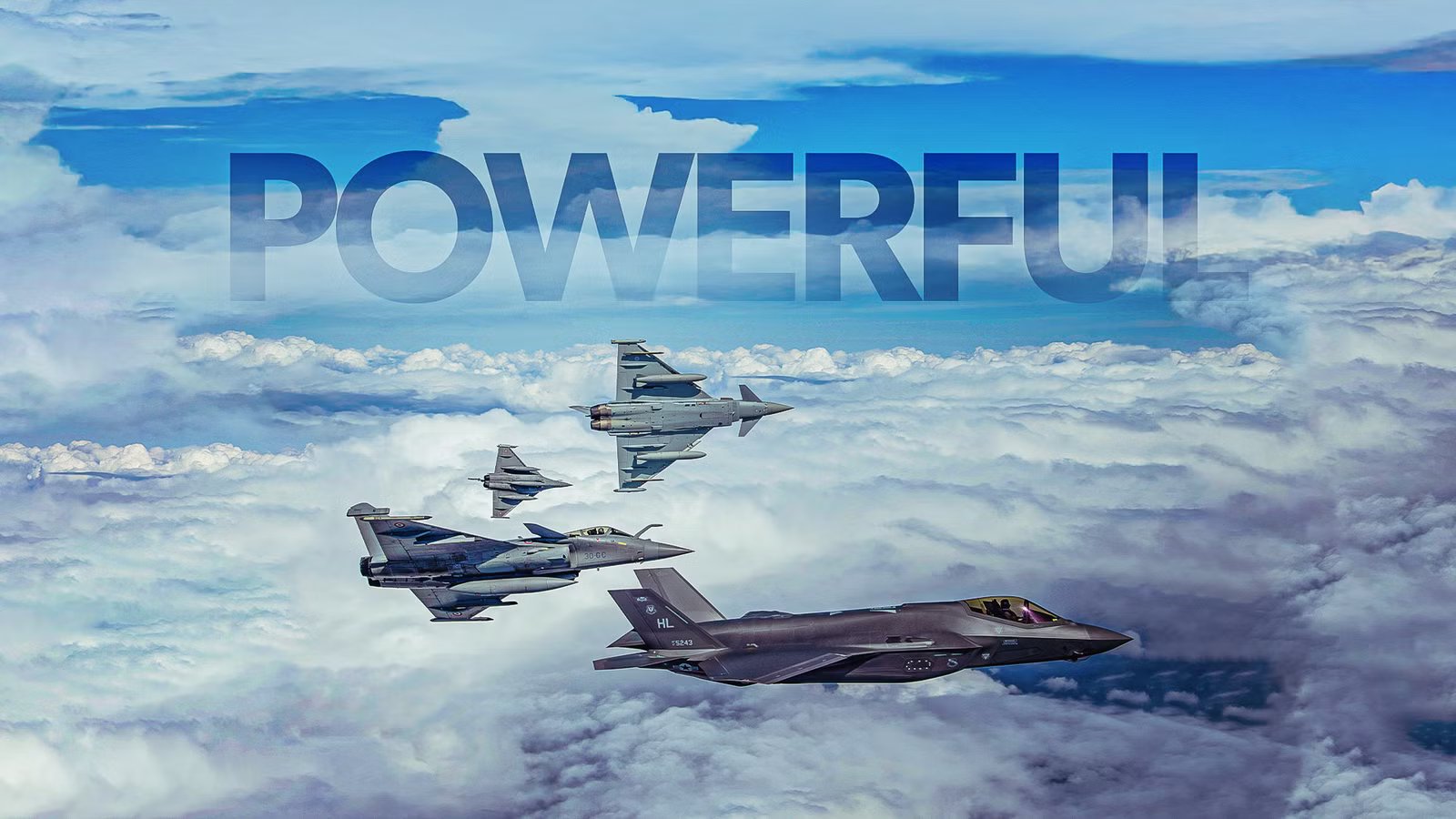
 Boeing and Airbus are the two largest commercial aircraft manufacturers in the world, both are also very important defense contractors for their home countries and many export customers. The United States, home to Boeing and other big names like Lockheed Martin, is the undisputed leader of the global aerospace industry. The US claims roughly 41% of all Global exports which generates over $130 billion in product value, per Tendata.
Breaking it down by nation does offer a slightly misleading perspective, as the European Union is home to the industrial giant Airbus and other important aerospace makers spread across multiple nations within the EU. Notably, the world’s third most important aircraft manufacturer, Embraer, is located in Brazil, but as the regional jet champion is essentially the sole aerospace presence in the nation, the country ranks only 12th overall.

Analyzing the aerospace sector of the global industry is an effort on two fronts, with major differences between the civil and defense sides as well as significant overlap. The US is the leader in both categories by a wide margin. However, the EU is number two, with France specifically accounting for a majority of sales thanks to a concentrated presence of Airbus facilities.
China is still a small competitor by comparison to its counterparts in the US or Europe, but its defense modernization efforts are accelerating the aerospace industry’s progress. Its state giant, AVIC, is now the world’s 2nd largest defense firm by revenue ($44.9 billion). The COMAC efforts to produce domestic airliners are slowly taking shape as true competition in the regional jet and single-aisle market.
Another distinctive player that does not hold significant market share but wields outside influence on the overall aerospace industry is Japan, where 35% of the 787 Dreamliner aerostructures are fabricated. The self-defense forces of Japan are also the only operator of the Bell Boeing V-22 Osprey tilt rotor outside of America and the second-largest operator of the Lockheed Martin F-35 Lightning II stealth fighter.
By The Numbers

The epic rivalry between Boeing and Airbus is a historic contest between two giants that remain without equal. The past decade has seen a shift in the balance between the two legendary plane makers, largely owing to Boeing’s struggles with the 737 MAX and 777X programs. The market remains sharply segmented, with Airbus dominating the high-volume single-aisle sector and Boeing maintaining a lead in wide-body aircraft.
For the first time in nearly four decades, Airbus has overtaken Boeing in total lifetime aircraft deliveries. Groundings and subsequent production caps on the 737 MAX allowed Airbus to pull ahead. Boeing’s deliveries fell from 806 in 2018 to a low of 157 in 2020, while Airbus remained much more stable. The A320 family officially overtook the 737 series for the best-selling airliner in history in the fall of 2025, in a stinging highlight of the sharp drop in Boeing deliveries over the past few years.
The aerospace industries of the United States, France, Germany, the United Kingdom, and Canada represent the global core of the sector. The competition between these five nations is effectively a proxy war for the Boeing-Airbus duopoly. France, Germany, and the UK are the founding stakeholders of Airbus. Below are the global aerospace leaders ranked by export valuation, according to Tendata:
|
Rank |
Aerospace Export Market Share |
|---|---|
|
1. United States |
$134.2 billion (41%) |
|
2. France |
$40.3 billion (12.3%) |
|
3. Germany |
$36.1 billion (11.1%) |
|
4. United Kingdom |
$16 billion (4.9%) |
|
5. Canada |
$13.2 billion (4%) |
While the civil side is a duopoly, the defense side is more fragmented and reflects national strategic priorities. The US defense market is roughly four times larger than its nearest European rival. Across America, 54% of the aerospace workforce is dedicated to defense. France and Germany often collaborate on defense, while the UK often partners with the US.
American Air Dominance

In the US, the defense aerospace industry is divided between five major prime contractors who not only independently manage some of the largest projects in the world but often collaborate as well. Lockheed Martin is currently the leading manufacturer of the F-35 Lightning II as well as a number of other systems and missiles. The second largest, Raytheon (RTX), does not produce aircraft independently. However, it does produce a massive number of power plants through Pratt & Whitney engines. RTX also makes Patriot missiles in a wide range of advanced sensors, equipment, and other aerospace systems.
Northrop Grumman is the third biggest in the US, recently overtaking Boeing in defense ranking. Its growth is fueled by programs like the B-21 Raider stealth bomber and the Sentinel Intercontinental Ballistic Missile (ICBM). Boeing Defense, the fourth largest, makes the F-15EX, KC-46 Tanker, and the newly awarded F-47 NGAD fighter. There are also rumors that production of the C-17 Globemaster II jet airlifter could restart based on global interest.
Shifting gears to market capitalization, as the metric for comparison, GE Aerospace is a colossus at $326 billion, according to Yahoo Finance. Thanks to its enormous defense contracts, RTX is a more valuable aerospace company than Boeing at $273 billion dollars compared to $183 billion.
While they do not produce any civilian aircraft, the scale of the defense projects under their scope puts them close behind Boeing, valued at $145 billion. The F-35 is the single largest defense project in American military history, overshadowing the investments and other historic programs like the Manhattan Project, Boeing B-29 Superfortress, and Northrop Grumman B-2 Spirit stealth bomber.

How Airbus & Boeing Aircraft Production Has Changed Over The Past Decade
Over the last ten years, Airbus has outgrown Boeing to become the world’s second-largest airplane maker.
European Warbird Production

The European aerospace defense market is uniquely structured as a mix of national champions and transnational conglomerates. France relies heavily on defense exports, such as the Dassault Rafale, which saw a 77% surge in orders recently. In contrast, Germany has a larger focus on civil production, with defense making up a smaller (though growing) share of its €52 billion revenue.
While no single European firm rivals the scale of US giants like Lockheed Martin, several key players dominate specific domains. BAE Systems in the UK is the largest overall European Defense Contractor and a world leader in combat aircraft production and development. Leonardo in Italy is also one of the top three, a major player in the Eurofighter as well as the upcoming Global Combat Air Program (GCAP), alongside BAE.
In Sweden, SAAB produces the JAS Gripen light fighter as well as the GlobalEye AEW&C system built on the Bombardier Global 6000/6500 long-range business jet. The Thales Group of France is a uniquely specialized company that produces high-tech electronic warfare equipment, sensors, and cybersecurity products. Its defense segment accounts for over 50% of its annual sales.
While commercial jets provide 75% of Airbus’ total revenue, its defense and space contributions are vital to European strategic sovereignty. The company produces a very large number of military helicopters, as well as transports and tankers, and contributes nearly half of the production capacity under the Eurofighter program.

Why Boeing Isn’t Phased By The US’ Trade War With Canada, China, & Mexico
Given Boeing’s status as one of the world’s largest aerospace manufacturers, despite ongoing trade conflicts, has remained largely resilient.
China’s Growing Strength

China has become the world’s second-largest civil aerospace market and the second-largest defense aerospace producer by revenue. Its global footprint is rapidly expanding from a domestic manufacturing base into an emerging exporter of commercial jets and a leader in satellite constellations.
China is projected to become the world’s largest aviation market by 2043, with its commercial fleet expected to more than double to nearly 9,740 airplanes. The COMAC C919 is the core of China’s strategy to break the Boeing-Airbus duopoly. So far, the company has successfully delivered over 200 of the C919 and C909 variants to carriers across China. Meanwhile, the Sea 929 is under development as its first widebody with Air China confirmed as the launch customer.
The government sector accounts for roughly 65% of total domestic market revenue, reflecting a prioritization of national security and space infrastructure. The China Aerospace Science and Industry Corporation (CASIC) is ranked as the world’s second-largest aerospace and defense company by market cap at $264 billion, behind only GE, surpassing US giants like RTX and Lockheed Martin in sheer scale.
China is aggressively reducing its reliance on Western components. A major 2026 trend is the opening of civil airspace for drone logistics and eVTOL (electric vertical take-off and landing) trials in cities like Shenzhen and Shanghai. Over 600 companies now operate in China’s commercial space sector, which grew at an annual rate of 20% entering 2026. The ‘Space Economy’ is a primary engine for China’s future growth, projected to be worth over $900 billion by 2029.

The World’s Top 10 Plane Makers By Market Cap
The world’s most valuable aircraft manufacturing companies make commercial, private, and military aircraft including helicopters and eVTOL aircraft.
The Brazilian Connection

Brazil possesses the third-largest commercial aircraft manufacturing industry in the world. It is a unique success story because its power is concentrated almost entirely within one powerhouse: Embraer. While the U.S. and EU have several primes, Brazil’s aerospace sector is Embraer. It is the global leader in the 70-to-150-seat aircraft segment. Following the failed merger with Boeing in 2020, Embraer has thrived as an independent third option between the Boeing-Airbus duopoly.
Aerospace accounts for roughly $6.5 billion in annual revenue for Brazil, with exports making up over 90% of that total. The Brazilian defense sector has pivoted toward high-end exports to diversify its revenue. Brazil is currently co-producing the F-39 Gripen fighter jet in partnership with Saab, with a dedicated production line at Embraer’s Gavião Peixoto facility.
The A-29 Super Tucano is the global standard for light attack and counter-insurgency, used by over 15 air forces, including the United States. The C-390 Millennium multi-mission tactical transport aircraft is Brazil’s most successful defense export. It is actively replacing the Lockheed C-130 Hercules in several NATO fleets, including Portugal, Hungary, the Netherlands, Austria, and the Czech Republic.
The sector employs approximately 19,000 workers directly, centered in the São José dos Campos aerospace cluster. Brazil also operates the Alcântara Launch Center, which is geographically the best launch site in the world, as it is closest to the equator. It is currently being marketed to private US launch companies for orbital missions.