dailynewsnblog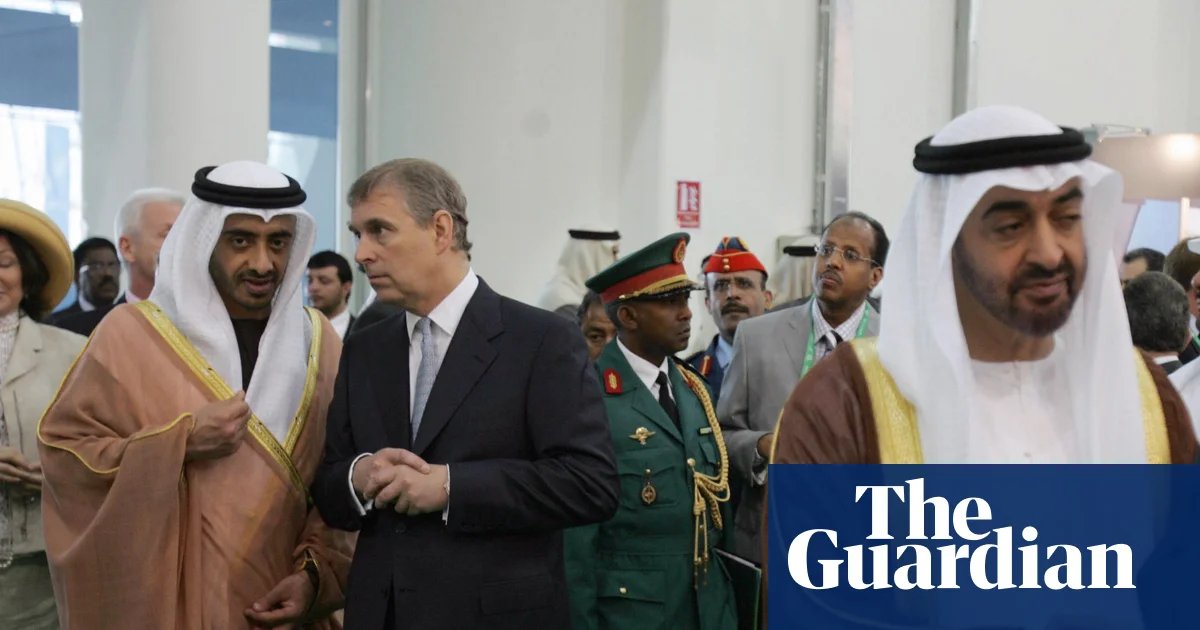
Andrew Mountbatten-Windsor vouched for Jeffrey Epstein during a UK state visit to the United Arab Emirates with Queen Elizabeth II in 2010, according to newly released emails.
The email was sent from “The Duke” to Epstein on 24 November of that year, with the subject listed as “Abdullah” – an apparent reference to the UAE foreign affairs minister, Sheikh Abdullah bin Zayed Al Nahyan.
“You are in big time,” the Duke wrote to Epstein. “He thinks you are great and would like to introduce you to Sheikh Mohammed, the Crown Prince.
“Doesn’t think it can be done before the end of the year though. I will discuss further and report back.”
The date of the email coincides with Mountbatten-Windsor’s trip to the UAE alongside his mother, the queen; his father, Prince Philip; and the then UK foreign secretary, William Hague.
Sheikh Mohamed bin Zayed Al Nahyan was the crown prince of Abu Dhabi at the time.
In 2022, he assumed the role of Abu Dhabi’s ruler and president of the UAE.
Epstein appeared to respond to Mountbatten-Windsor’s email about his meeting with the UAE foreign minister by suggesting that they arrange a holiday together.
“Ask Abdullah for a date when we can all go on vacation,” Epstein wrote.
A separate email appeared to show that Epstein himself met Sheikh Abdullah and Sheikh Mohammed bin Rashid Al Maktoum, the ruler of Dubai, just weeks earlier.
“I met with both abdulla -aby dhabi, and mahammed -dubai [sic] today,” read the email, which was sent from Epstein to The Duke on 7 November 2010.
A third email appeared to show Epstein guiding Mountbatten-Windsor on how to vouch for him during his meeting with Sheikh Abdullah.
Epstein told the Duke to tell the UAE foreign minister about qualities including “trust”, “financial expertise”, “funder of extreme science”, and “fun” with the UAE foreign minister.
The emails, released by the US Department of Justice, do not imply any wrongdoing by the UAE officials.
All emails appear to have been sent when Mountbatten-Windsor served as special representative for UK trade and investment – a role he held from 2001 until 2011.
In a separate exchange, Mountbatten-Windsor appeared to discuss how to circumvent restrictions on making investments with Epstein while serving as a UK trade envoy.
The emails suggest that the former prince considered himself barred from making personal business investments or taking seats on company boards while serving in the role. But the documents also show he discussed ways around the restrictions with Epstein.
In one email exchange dated May 2010 – when Epstein was under house arrest after pleading guilty to soliciting a minor for prostitution – Mountbatten-Windsor appeared to refer to an earlier phone call about potential investments and restrictions on making them.
He wrote to Epstein: “So long as I delegate any responsibility to invest then there are no problems.
“So Trusts are delegated responsibility as to [too] are any Banks or Investment Vehicles or for that matter Trusted individuals.”
Mountbatten-Windsor has repeatedly denied any wrongdoing in relation to Epstein’s crimes.