dailynewsnblog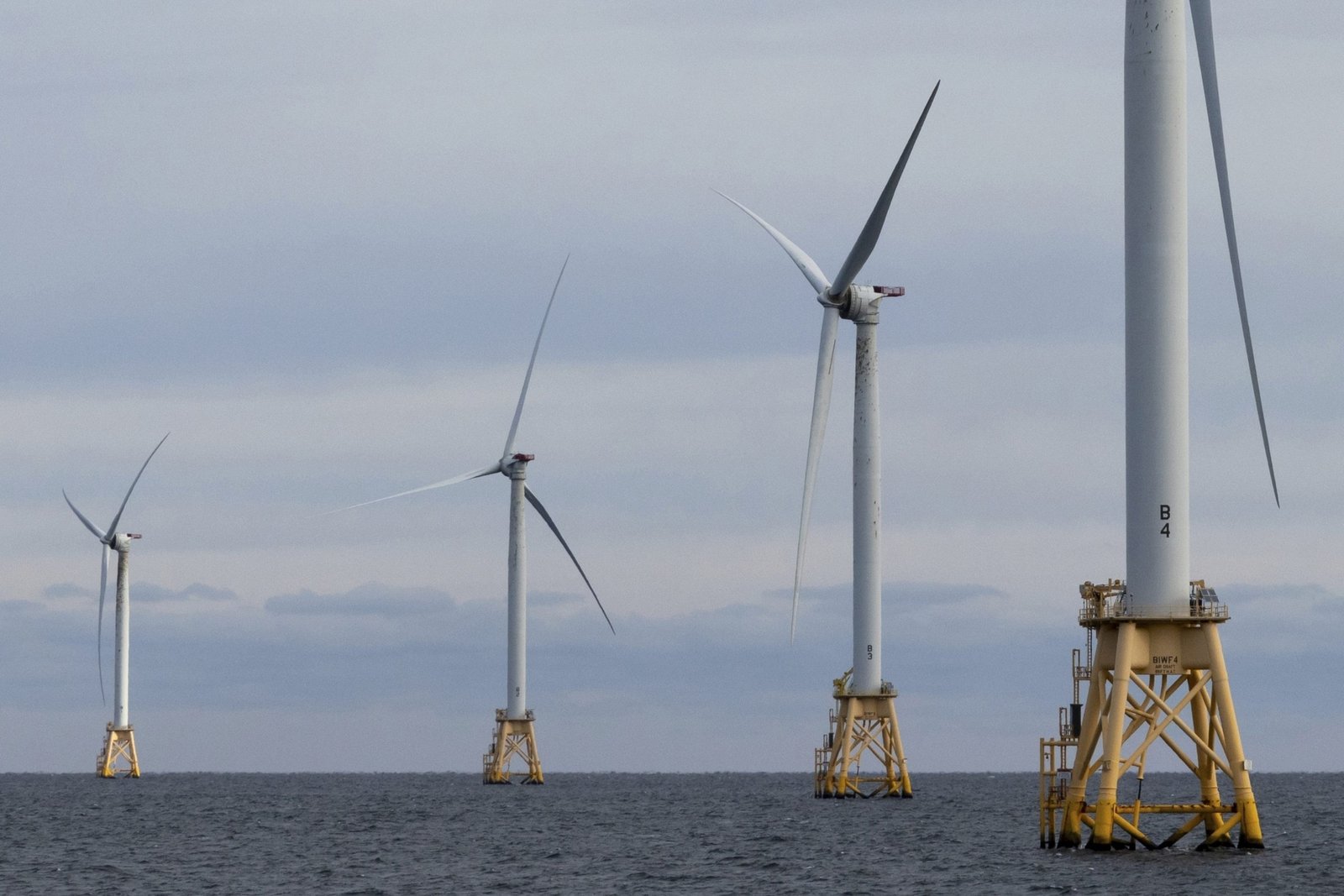
Welcome to Economic Insights, a twice-weekly newsletter focusing on major projects and the Canadian economy at large.
Stories we are following:
- NOVA SCOTIA and MASSACHUSETTS have reached an agreement on offshore wind cooperation, signalling U.S. appetite for the WIND WEST ATLANTIC ENERGY pitch despite President Trump’s consistent and aggressive anti-wind turbine stance.
- The BLOC QUÉBÉCOIS is voicing concerns about federal measures to fast-track Alto’s HIGH-SPEED RAIL project, warning that the rush to connect Quebec City and Toronto should not come at the expense of landowner rights.
- Transport Minister STEVEN MACKINNON defends the new expropriation powers, arguing that shortening timeframes is necessary to start building the mega rail project in 2029.

Nova Scotia Premier TIM HOUSTON and Massachusetts Governor MAURA HEALEY signed a Memorandum of Understanding (MOU) in Boston on Wednesday, a deal that could eventually see Canadian offshore wind power lighting up the New England grid.
Finding clients: The agreement focuses on the WIND WEST ATLANTIC ENERGY project, a massive $60-billion proposal referred to the MAJOR PROJECTS OFFICE as a ‘transformative strategy’ last fall. With a potential output of up to 60 gigawatts, HOUSTON noted the project could enable the Maritime region to produce far more energy than it consumes, making MASSACHUSSETS an ideal partner.
The deal: Both parties will collaborate by sharing knowledge and expertise, while exploring opportunities in transmission planning and grid integration. Having a potential client signal interest will help NOVA SCOTIA‘s business case as it works to attract private investors.
Trump-proofing: This comes as President DONALD TRUMP‘s administration is delays hundreds of wind power projects, after trying and failing to ban them outright. Gov. HEALEY says her state is moving forward “in any which way” to increase energy supply, regardless of WASHINGTON‘s stance.
Price Tags: Without federal support, the power is estimated at $240 per megawatt hour. NOVA SCOTIA is eyeing support from the CANADA INFRASTRUCTURE BANK and federal tax credits to bring that down to a more competitive $170.

RAIL RUSH
The federal government’s plan to accelerate Alto’s HIGH-SPEED RAIL corridor between Toronto-Québec City is hitting a some opposition in a House committee, with Bloc Québécois critics calling the new legislative powers a “bulldoze” of democracy.
Mirabel Memories: Bloc Québécois MP JEAN-DENIS GARON says his community of Mirabel learned they could be on the proposed route through his social media post. He says people have painful memories of the 1969 Mirabel Airport expropriations that displaced 1,700 families, and calls for a more thorough and transparent consultation process.
Permit Power: Budget 2025 includes changes to the Expropriation Act that would remove the right to hearings for certain lands and prohibit owners from building on property the government may want to buy.
The Proponent: High-speed rail lead ALTO is currently in a three-month consultation window, hoping to shave four years off the original timeline to begin building the Ottawa-Montreal segment in three years time.
Minister’s Defence: Transport Minister STEVEN MACKINNON told the House finance committee that these measures are necessary to avoid the cost overruns that plague large infrastructure.
“It’s interesting to me that many of the debates that we have in the House of Commons are about how we accelerate projects,” he said.
“And many of the debates we’re having [in this House committee] are about how we can remove the means to accelerate.”
BY THE NUMBERS
$60 Billion: The estimated cost of the Wind West Atlantic Energy project.
2029: The revised year the federal government hopes to break ground on the first leg of the high-speed rail corridor (Ottawa to Montreal).
5 Gigawatts: Nova Scotia’s offshore wind licensing goal by 2030.
MAJOR PROJECTS WATCH
— Major supplier: In a new review, the INTERNATIONAL ENERGY AGENCY says that at a time of increasing concentration risks, including from export controls by the dominant supplier, CANADA has the potential to contribute to the development of secure, diversified and competitive global supply chains for critical minerals.
— Transmission line: The Yukon-B.C. grid connect project could bring up to $7.6 billion a year in economic growth and help electrify six diesel communities, but CBC reports concerns about what increased development would mean for untouched boreal forests and wetlands.
— Tension: GLENCORE is immediately suspending its $300-million investment tied to reducing emissions at the HORNE SMELTER in Rouyn-Noranda, Que., after the province failed to reach an agreement with the Swiss multinational company to upgrade the facility and reduce arsenic levels.
— No longer on board: METLAKATLA FIRST NATION is withdrawing support for a Prince Rupert petroleum gas export terminal by ALTAGAS and VOPAK, saying a previous agreement left out crucial information about what the deal means for the viability of a competing venture in which the community has an equity stake.
HEADLINES
THE KICKER
Economic Insights is evolving! We are now in your inbox on Tuesdays and Thursdays.
The major projects space is moving fast, and we’re doubling our coverage to make sure you don’t miss a beat. Encourage your network to subscribe today.