dailynewsnblog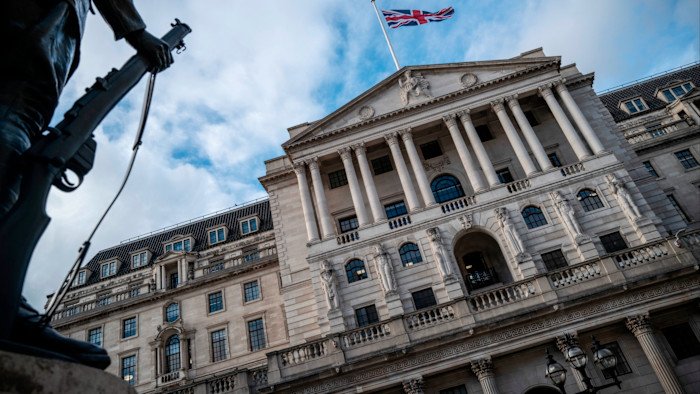
The Bank of England kept borrowing costs steady at 3.75 per cent in a knife-edge decision as it signalled that a further interest rate reduction could come as soon as March.
The Monetary Policy Committee voted five to four to keep the key rate unchanged after lowering it by a quarter point in December, as the tighter-than-expected vote and the BoE’s dovish language prompted traders to increase their bets on a rate cut at the central bank’s next meeting.
The probability of a quarter-point reduction in March rose to close to 50 per cent, according to levels implied by swaps markets, from roughly 20 per cent before the decision was announced on Thursday.
The BoE also cut its growth forecasts for the next two years and raised its unemployment outlook, while predicting that a weakening labour market would help keep price pressures in check.
The BoE said it expected inflation to fall back to roughly its 2 per cent target from April, citing “developments in energy prices” including measures to curb bill increases in last year’s Budget.
BoE governor Andrew Bailey told a press conference after the decision that his “main message . . . is one of good news”, with inflation set to return close to the 2 per cent target by April and stay there, “nearly a year earlier than we expected in November”.
This meant there “should be scope for some further easing”, said Bailey, who voted with the majority for a reduction, although “for every cut in Bank rate, how much further to go becomes a closer call”.
The market interest rate “curve”, which implies two more cuts this year, was “reasonable”, Bailey added, while stressing he was not giving indications as to the timing of any future reductions.
The pound weakened as investors reacted to more votes than expected for a rate cut. Sterling extended a decline begun earlier in the day amid speculation about the future of Sir Keir Starmer’s government, trading 0.6 per cent lower against the dollar at $1.357.
Short-dated gilts rallied, pushing the two-year yield down 0.08 percentage points to 3.65 per cent, the biggest move lower so far this year.
The central bank cut its forecast for GDP growth to 0.9 per cent in 2026, sharply below the 1.2 per cent previously predicted. GDP will expand by 1.5 per cent in 2027, down from 1.6 per cent in the BoE’s November outlook.
Unemployment was set to hit 5.3 per cent in the first half of the year, the BoE said, above the 5.1 per cent peak it previously expected.
The BoE now sees inflation falling below target to 1.7 per cent in the first quarter of next year, and staying at just 1.8 per cent in early 2028. That is based on a market interest-rate path implying two more rate reductions this year.
A survey from the central bank’s network of agents suggests pay settlements will slow to 3.4 per cent this year, which the nine-member MPC thinks is “close to target-consistent levels”.
Deputy governor Sarah Breeden, who voted for a cut, argued in the meeting on Wednesday that the BoE should already be taking out “some insurance against these downside risks to inflation” by immediately easing policy.

Breeden and Dave Ramsden, also a deputy governor, were joined by external MPC members Swati Dhingra and Alan Taylor in calling for a reduction.
The vote split was a “strong dovish tilt that markets were not positioned for”, and made the March meeting “much more of a live event”, said Pooja Kumra, rates strategist at TD Securities.
Asked at the press conference about the gyrations in the price of gold, Ramsden said it was “the one asset that has been behaving just as you’d expect” given the level of geopolitical uncertainty and its safe-haven status.
It had been a “very busy month” for movements of gold in and out of the BoE’s vaults, he added.
Despite financial markets’ expectations of more rate cuts this year, there are different views on the possible timing and extent of further reductions, according to the minutes of Wednesday’s MPC meeting.
Bailey cautioned in December that rate decisions were becoming a “closer call” as he weighs conflicting evidence on the economy. The UK jobs market is weakening even as activity indicators point to improving growth late last year.
UK inflation rose more than expected to 3.4 per cent in December, driven by higher tobacco prices and airfares.
Last month Bailey joined central bankers from around the world in rallying to support Jay Powell, chair of the US Federal Reserve, against pressure from the Trump administration.
Asked whether he was “reassured” by Kevin Warsh’s nomination to be the next head of the US central bank, Bailey on Thursday said he “welcomed” the appointment and that it should not be seen as “a Jay versus Kevin thing”.
Additional reporting by Delphine Strauss in London