dailynewsnblog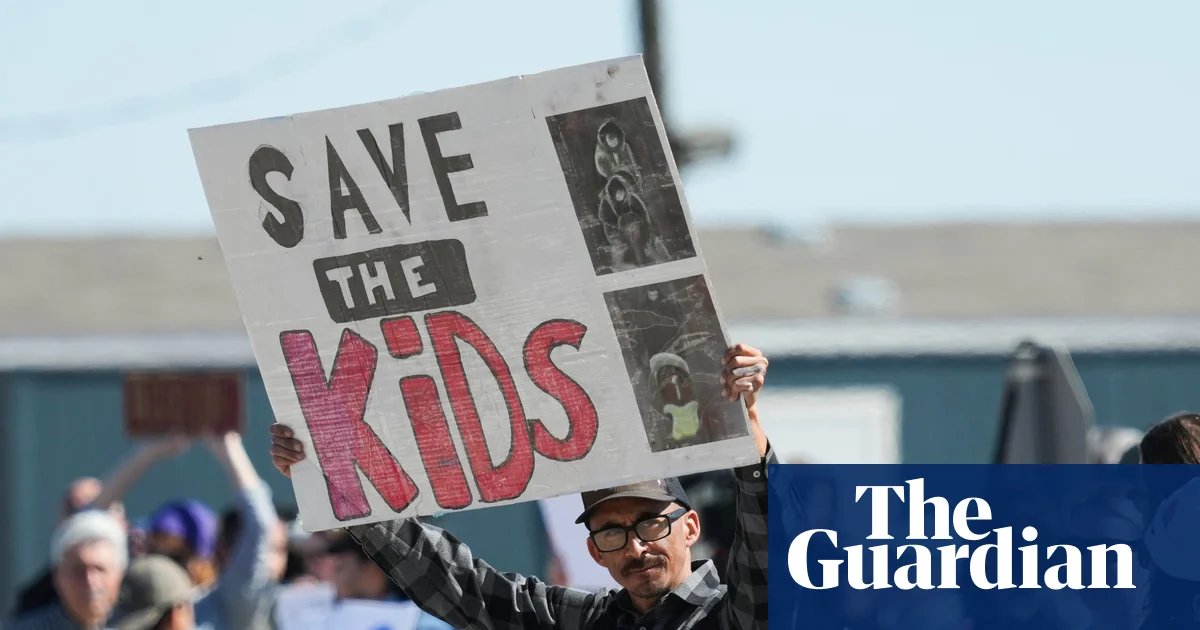
At least two cases of measles have been confirmed at a major immigration detention center for children and their parents in Texas as cases of the dangerous virus in South Carolina, Arizona, Utah and other US states continue growing and alarming experts.
In January alone, the US saw 25% of the total confirmed in all of last year, and the outbreak shows no sign of slowing as federal officials stay silent on vaccination.
The vast majority of patients are not vaccinated, but there have been no national campaigns announced or recent statements from leaders such as Robert F Kennedy Jr, secretary of the US Department of Health and Human Services (HHS). Last year, Kennedy positioned measles vaccines as a personal choice and recommended unproven treatments for the highly contagious illness.
The measles outbreak is “frightening” and “very worrisome”, said Jason Bowling, professor of infectious diseases at UT Health San Antonio and director of hospital epidemiology at University Health.
“I unfortunately do not see this slowing down across the United States,” said Anna-Kathryn Burch, division director of pediatric infectious diseases at Prisma Health Children’s hospital in the Midlands in South Carolina. What’s happening in South Carolina could happen anywhere the vaccination rate dips too low, Burch said. “It’s not a matter of if, but more likely when.”
The Dilley family detention center in south Texas, one of two immigration facilities for children in the US, reported two measles cases on Friday. “We are aware of the cases and are assisting by providing doses of measles vaccine as requested by ICE,” said Chris Van Deusen, director of media relations at the Texas department of state health services, referring to US Immigration and Customs Enforcement (ICE).
This is the same facility where five-year-old asylum seeker Liam Conejo Ramos and his father were kept for a week after being detained in Minneapolis. It’s also the facility where protests sprang up on 24 January, with children yelling: “Let us go!” Children and parents are now locked down in the facility. Elizabeth Zuna Caisaguano, who is reporting flu-like symptoms, and her mother, who has hives – but neither have been tested for measles, they say – were released from the facility on Tuesday night.
Joaquin Castro, a Democratic congressman from San Antonio, is calling for the detention center to be “shut down immediately”. Dilley is not equipped to deal with the spread of measles, Castro said in a post on X. “Children and families, who have committed no crime, should not be suffering and do not belong in prison.”
Detention centers can be “epidemic engines” that become “basically factories for manufacturing virus at incredible scale and incredible pace, and inevitably they overthrow the walls of these prisons”, said Eric Reinhart, a political anthropologist and psychiatrist who researched the spread of Covid in jails and prisons.
The news highlights the rapidly spiraling outbreak throughout the United States.
South Carolina reported a total of 876 measles cases and at least 18 hospitalizations on Tuesday, already surpassing the official tally of the entire west Texas outbreak last year and still growing. Hospitals in South Carolina are not required to report hospitalizations for measles, but at least 18 children and adults have been hospitalized because of the virus, according to the health department.
Other states are also seeing continued spread, including Arizona with 239 cases and 14 hospitalizations and Utah with 251 cases and 23 hospitalizations. As of Friday, there have been 588 confirmed cases of measles in the US this year – and all but three were from local spread, according to data from the US Centers for Disease Control and Prevention (CDC).
When measles is spreading readily in communities, the virus can enter detention centers and increase exponentially because of the conditions – with children and parents moved from all over the country and made to stay in close quarters with poor water, food and medical care. People who have not had stable access to healthcare because of poor infrastructure or political instability in their countries of origin may also have lower vaccination rates. One in five measles patients usually need hospitalization.
“This is a major public health issue” because detention centers are “an ideal environment for the spread of measles”, Reinhart said. Officials have said they are “ceasing all movement within the facility”, but there is no way to end movement in and out of a detention center like this unless the staff are also locked down, Reinhart said. “You can take measures to try to mitigate it, but you really have to get people out of those kinds of conditions.”
Prisons and jails frequently accelerate outbreaks of infectious diseases, spreading beyond the institutions’ walls and into communities. “You’re putting people at risk of an epidemic outbreak – not just the people inside the facility but the people around it and, ultimately, people everywhere,” Reinhart said. Releasing inmates proved effective in stopping greater spread of Covid, Reinhart found, and he called for decarceration and an end to immigration raids. “Abolish ICE and the Department of Homeland Security, which is basically a state terror organization,” Reinhart said.
ICE did not respond by press time to the Guardian’s questions, including whether detention staff were moving within the community and whether a vaccination campaign had begun.
When asked to confirm that Kennedy had not made any public statements and HHS had not launched any national vaccination campaigns on measles in recent months, an HHS spokesperson, Andrew Nixon, said that was “completely false”, adding: “Have you not even been following us the past year?” He did not respond by press time to a request for evidence of either point.
In the absence of federal campaigns, the bulk of vaccination efforts are falling on state and local officials and providers.
“It breaks my heart that we are seeing this in my state, when we have a vaccine that is very effective and safe – we have a way to prevent this,” Burch said. “It’s a very difficult time right now for pediatricians, because we are seeing hesitancy increase with vaccination.” The MMR vaccine was safe, and it was the most effective way to end this outbreak, she said.
“That’s the major preventative step that we have,” Bowling agreed. “Vaccine rates are so important.” Not everyone responds to the vaccine or can get it; those who are pregnant or undergoing immune-compromising treatments, like chemotherapy, can’t get vaccinated, and babies under six months of age also cannot get the shot. That means infants and pregnant people, especially in confined conditions at Dilley, are at high risk.
Health systems in places like South Carolina are now setting up incident command systems, requiring face masks, screening patients for potential contact, and switching to telehealth and testing outside of emergency rooms for patients with suspected measles.
“We learned to be adaptive during the Covid pandemic,” Burch said. “We are adapting to this outbreak, and we’re here to help people.”