dailynewsnblog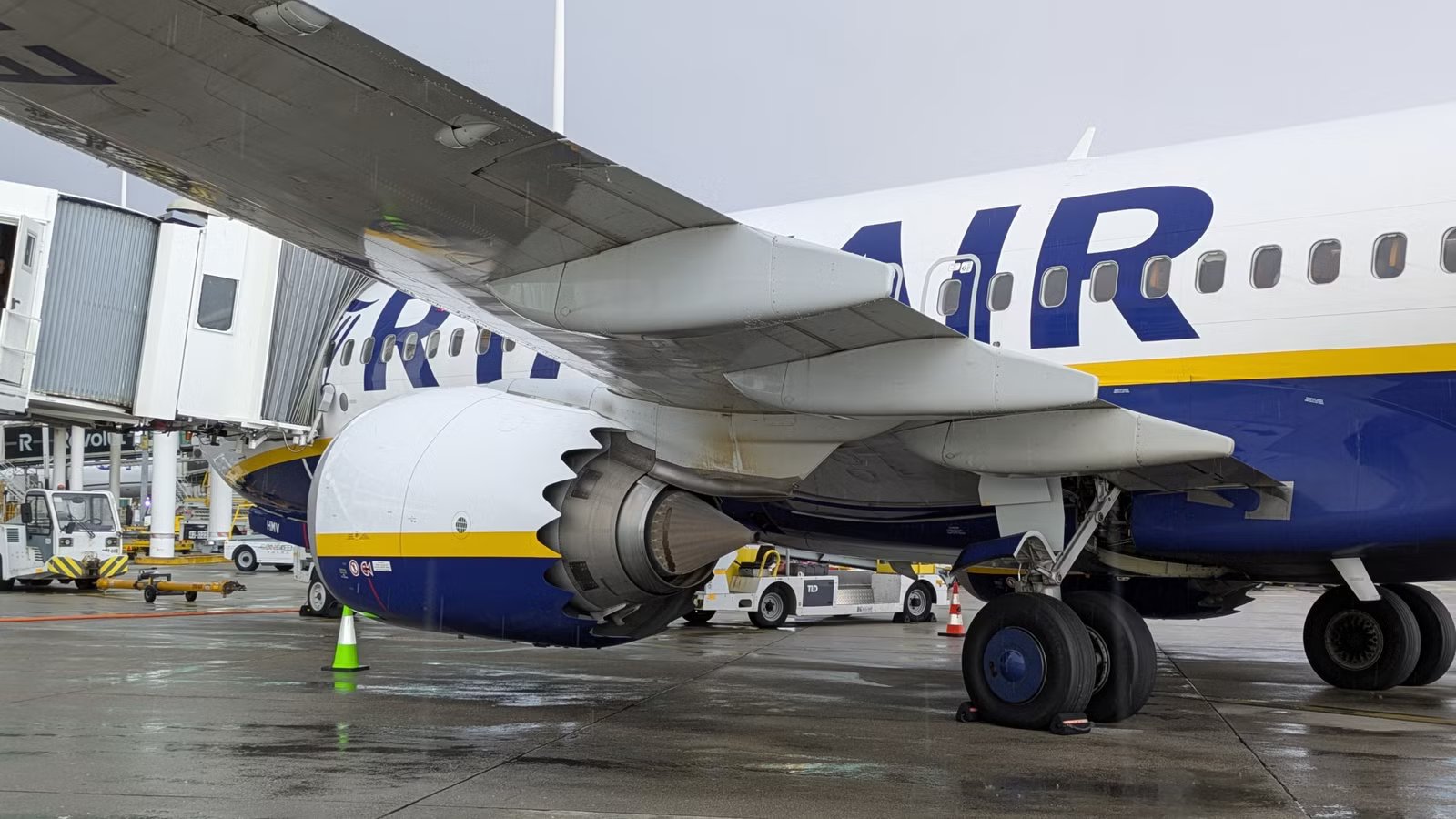
Commercial aviation has changed significantly over the years. If we look back at the first generation of jets, their design and propulsion systems were very different from what we see today. They did deliver range and performance but were extremely loud, and reflected a period when designers focused mainly on delivering thrust, range, and speed rather than considering noise or environmental impact.
Modern jetliners tell a different story. They are more advanced in every respect, and one of the areas where manufacturers have placed particular focus is on reducing aircraft noise. As airports became busier and expanded into surrounding areas, communities nearby grew less tolerant of the roar of departing jets.
Regulators responded by introducing strict limits that manufacturers had no choice but to meet. This pressure reshaped aircraft and engine design, leading to a series of innovations aimed at cutting noise at the source. Among the most innovative changes are chevrons, those jagged edges you see at the back of some aircraft engines.
The Simple Answer: Noise, Rules, And Efficiency

If you have looked at a Boeing 737 MAX closely, you may have noticed these chevrons. They are not there as decoration; they serve a functional purpose with multiple benefits. To understand why they exist, it helps to go back to the early days of the jet age. The first jet engines delivered the power needed for commercial flight but were also extremely loud. Hot exhaust gases shot out at high speed and clashed with cooler bypass air and the surrounding atmosphere.
The difference in temperature and speed created turbulence and swirling vortices, which produced much of the noise. Designers at the time focused on thrust and performance, not on reducing that roar. Over time, however, communities near airports grew less tolerant of constant jet noise, which pushed regulators to introduce strict limits.
Back in the days of the Boeing 727 and the original McDonnell Douglas DC-9, aircraft only had to comply with Stage 2 standards. By the late 1970s, this changed with the introduction of Stage 3 rules that set maximum noise levels for takeoff, approach, and at the runway sideline. Today, the requirements are even tougher; the Federal Aviation Administration (FAA) mandates that all new jets and large turboprops meet Stage 5 standards.
Chevrons As The Next Step In Noise Reduction
So manufacturers had no choice but to look for new ways to reduce noise without adding extra weight to the aircraft. The single biggest improvement came with high-bypass ratio engines. These engines use some of the jet exhaust’s energy to power a large fan at the front, which pushes a much bigger volume of air at a lower speed than the hot core exhaust.
When that slower bypass air mixes with the faster jet stream, the turbulence is less violent and the vortices weaker, which cuts noise by as much as 30 to 50%. But even with high-bypass designs, noise limits kept getting stricter. To meet the next stage of regulations, manufacturers needed further refinements. Chevrons emerged as one of those solutions.
These jagged edges at the rear of the engine help control turbulence more effectively, reduce noise at the source, and also allow manufacturers to cut down on heavy insulation inside the fuselage.  Boeing added them to the 737 MAX for the same reasons: to keep noise within limits, improve efficiency, and stay compliant with modern environmental standards.
How Chevrons Work To Cut Engine Noise

Back in the early 2000s, Boeing partnered with General Electric and NASA to develop serrated chevron ducts. At the time, new FAA Stage 4 rules were about to take effect, and manufacturers had to find more effective ways to reduce noise during takeoff and landing. NASA’s research showed that a V-shaped trailing edge could reshape the airflow at the back of the engine, and testing confirmed that it could reduce noise levels without incurring major aerodynamic penalties.
The chevrons themselves are the sawtooth patterns at the trailing edge of the nacelle or nozzle. They make the mixing of hot exhaust and cooler bypass air less aggressive. Without them, the two streams collide at vastly different speeds and temperatures, producing strong vortices and high noise levels. With chevrons, that mixing is broken into smaller, more controlled swirls, which reduces turbulence and lowers the overall noise footprint.
This, as explained by Petter Hörnfeldt, a 737 MAX pilot who also has a popular aviation YouTube channel called Mentour Pilot, lowers the noise during takeoff by up to six decibels, which is enough to satisfy strict airport limits. There are practical benefits as well. Because chevrons cut noise at the source, they remove the need for as much heavy insulation inside the fuselage.
Lower weight means lower fuel consumption, improved efficiency, and a smaller environmental footprint. For Boeing, these advantages made chevrons the right choice for the 737 MAX: the design kept the aircraft compliant with tightening noise rules while also supporting efficiency targets that matter to airlines.
Experts Admit Chevrons Came With Compromises

Indeed, these chevrons gave the US planemaker clear advantages in reducing noise and meeting tougher standards, but they also came with challenges. Developing the design took years of trial and error, and the process revealed several trade-offs that experts have openly acknowledged. During the development phase, engineers sometimes found that certain tweaks actually made the problem worse.
NASA researcher James Bridges later admitted that the team “didn’t have the advanced diagnostics, instrumentation, and insight to know what we had done to make it worse instead of better. Sometimes the kernel of the idea might have worked out, but the way you did it wound up causing more noise.” In addition, durability was another issue. The chevrons are exposed to high temperatures and constant vibration, and early versions suffered from cracking and fatigue.
To better understand these effects, Boeing and Rolls-Royce launched the Quiet Technology Demonstrator program, which equipped a 777-300ER with more than 100 microphones and placed another 200 on the ground to capture data on various noise-reduction packages. But overall, the biggest challenge for the manufacturer is how chevrons affect performance. They are effective at cutting noise, but the same vortices that smooth the exhaust flow also add drag and reduce thrust.
Hörnfeldt, in his YouTube video, noted that the chevrons reduced engine thrust by approximately 0.5%. On paper, that sounds small, yet in an industry where margins are so thin, even half a percent can make a difference. The effect is felt most on aircraft flying multiple short-haul sectors each day, such as the 737 MAX, because the engines spend more time at high thrust during takeoff and climb.
Which Aircraft Feature Chevrons?

Even with their trade-offs, chevrons have offered Boeing clear benefits, and the company has adopted them widely. Every 737 MAX variant carries chevrons on its CFM LEAP-1B engines, and all Boeing 787 Dreamliners feature them regardless of whether they are powered by Rolls-Royce Trent 1000s or GE GEnx engines. Additionally, the 747-8 also features them, and unlike the other models, it uses chevrons on both the nacelles and the nozzles.
In fact, on the 787, these chevrons have even allowed the US planemaker to strip out about 600 lbs (272 kg) of sidewall insulation, saving weight and improving efficiency. Combined with the aircraft’s advanced aerodynamics, this gave the Dreamliner a major edge as one of the most fuel-efficient widebodies of its generation. Data from ch-aviation showed that in 2025, more than 3,000 Boeing aircraft flying today are fitted with chevrons.
|
Current Boeing 787, 737 MAX & 747-8 Fleet |
|
|---|---|
|
Boeing 787-8 |
389 |
|
Boeing 787-9 |
677 |
|
Boeing 787-10 |
128 |
|
Boeing 787-8 (BBJ) |
9 |
|
Boeing 787-9(BBJ) |
3 |
|
Boeing 737 MAX 8 |
1,454 |
|
Boeing 737 MAX 9 |
272 |
|
Boeing 747-8 |
34 |
|
Boeing 747-8F |
107 |
|
Boeing 747-8 (BBJ) |
9 |
Notably, Boeing didn’t carry chevrons over to its newest long-haul program, the 777X. Instead, the company worked with GE to develop the GE9X with a low-drag nozzle system. This design delivers equivalent noise reduction without the thrust penalties associated with chevrons, and it is also about 20% lighter than older nozzles.
In 2014, Terry Beezhold, the 777X program’s Chief Project Engineer, told Aviation Week, “We are replacing the chevrons with a new nozzle design technology. It provides equivalent levels of noise for the cabin and community but is lighter in weight and has lower drag.”
Airbus, meanwhile, never used chevrons on its aircraft. Boeing’s design was patented, which prevented competitors from adopting it until the patent expired in 2021. Even after that, the European planemaker showed no interest. Its engineers concluded the trade-offs were not worthwhile. An Airbus A350 Chief Engineer, Dougie Hunter, told FlightGlobal, “We didn’t get a noise advantage from chevrons, and there is a specific fuel consumption penalty, so we’ve not adopted them.”
Are There Any Other Ways To Reduce Aircraft Engine Noise?

NASA conducted a series of computer simulations in the 1990s that explored different methods of engine noise reduction, and later concluded that serrated edges on the nacelle were theoretically the most effective design addition. But manufacturers and researchers have explored several other methods.
One proven method is nozzle design. For instance, the General Electric GE9X engine on the Boeing 777X achieves noise reduction without the thrust penalties linked to chevrons. High-bypass ratio engines are another option. By moving a larger volume of air at a lower speed, they cut down the turbulence that creates much of the noise. Furthermore, acoustic linings are also widely used, which are sound-absorbing materials placed inside the nacelle to soak up some of the noise.
The upcoming 777X also has this; the aircraft has incorporated a honeycomb-like lining consisting of thousands of little holes that absorb noise. Besides this, researchers are working on lighter and more efficient materials. At the University of Bath, a team has developed a graphene oxide–polyvinyl alcohol aerogel that could significantly reduce noise without adding weight.
It weighs only 4.6 lbs (2.1 kg) per cubic meter, the lightest sound insulation ever produced. Lead researcher Michele Meo explains, “We managed to produce such an extremely low density by using a liquid combination of graphene oxide and a polymer, which are formed with whipped air bubbles and freeze-casted…It’s solid but contains a lot of air, so there is no weight or efficiency penalty to achieve big improvements in comfort and noise.” Tests suggest it could cut engine noise by up to 80%, or 16 decibels.
Chevrons Delivered Benefits, But Not Without Trade-Offs

We might see even more innovation in the years ahead as technology continues to advance. The progress made since the first generation of jetliners shows how much aircraft design, propulsion systems, and operating priorities have evolved. Manufacturers today are working to enhance efficiency, performance, and environmental compliance in ways that earlier designers never considered.
Noise reduction has become a key part of that shift. Communities near airports demanded quieter aircraft, and regulators responded with strict standards that reshaped how engines are built. Among the solutions to emerge were chevrons, which offered a practical way to cut noise at the source while also allowing weight savings that improved efficiency.
That balance of benefits is why Boeing chose to add them to the 737 MAX, following their earlier use on the 787 and 747-8. At the same time, the trade-offs, including aerodynamic penalties, explain why they are absent on the 777X, which instead relies on newer nozzle and lining technologies.