dailynewsnblog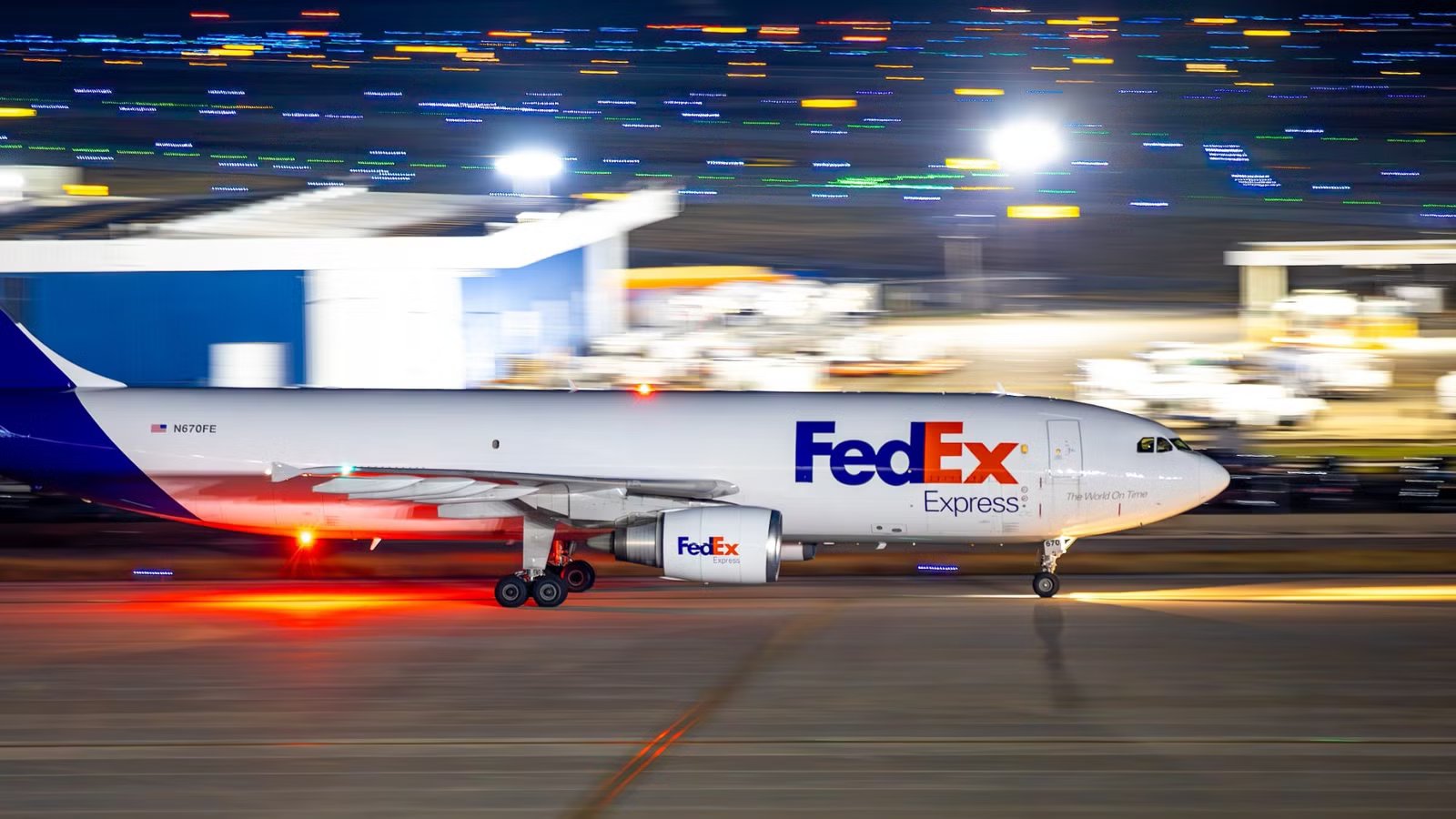
The FedEx fleet of freighters took a blow yesterday when one of the parked cargo jets was grounded by a sudden nose gear collapse as it sat parked at Baltimore/Washington International Thurgood Marshall Airport (BWI). The large Airbus A300-600 was not in operation at the time, and preliminary investigation has not revealed details regarding the cause of its unprovoked mechanical failure.
Of the 473 aircraft in the FedEx fleet, the A300s are crucial workhorses on the short to medium-haul routes vital for regional transport and e-commerce. The jet in question is registered as N682FE, dubbed ‘Gabrial,’ by the carrier and is just under 27 years old with no other mishaps in its history, as data on Planespotters.net shows.
A Rough Day At BWI

The aircraft was reportedly undergoing maintenance outside a hangar at the time the front strut gave way. Emergency medical and fire response teams were dispatched to the jet as a precaution. Federal Aviation Administration (FAA) inspectors are expected to begin an assessment to determine the cause of the collapse.
The incident comes just two months after the tragic crash of a UPS McDonnell Douglas MD-11 freighter, which claimed the lives of 14 people and led to the grounding of the entire MD-11 fleet operated by both UPS and FedEx. However, in recent history, the last mishap involving a FedEx A300-600F was a tail strike at Louisville International Airport (SDF) in late 2024, as AeroInside covered.
Below is a photo of the mishap at BWI showing emergency responders, via the Ramp Life Facebook page:

RAMP LIFE !! Facebook page
Overall, these jets have proven to be reliable and rugged workhorses for the cargo service. They are, however, now entering an advanced age requiring more intensive maintenance. Fortunately, this incident occurred on the ground with no injuries, and should the investigation reveal more than just an isolated issue, FedEx has the opportunity to take preemptive measures to prevent another case.
WBAL-TV 11 News relayed a statement from FedEx immediately after the incident occurred, saying:
“No one was injured as a result of this incident, and we are thankful for the swift response of our team members and first responders.”
Refreshing The FedEx Fleet

FedEx operates a mix of converted and new-build A300s. Some specific A300 airframes in the fleet are significantly aged. As part of a modernization drive, FedEx retired seven A300-600s at the end of 2024. Despite the fact that many of these aircraft are approaching 30 years old, a large portion of them were purpose-built for FedEx and not converted from former passenger planes. Such is the case with Gabrial.
Three decades ago, the A300-600 first took to the skies and earned a reputation for high efficiency and reliability compared to trijet and quadjet competitors. Nevertheless, the forward march of technology has seen most of these Jets retire from Passenger service, but some have continued as cargo haulers thanks to a favorable cargo capacity relative to fuel consumption. The jet does not match the sheer payload of the 777F, but its cargo volume relative to Fuel efficiency beats out narrowbodies like the Boeing 757.
Below is a different angle at BWI showing Gabrial’s full-length, via the Ramp Life Facebook page:

RAMP LIFE !! Facebook page
FedEx is primarily replacing the aging Airbus A300-600 fleet with the Boeing 767-300F, which has become the airline’s standard for medium-to-high volume regional and domestic routes. It offers approximately 20% better fuel efficiency and lower maintenance costs. FedEx is currently the world’s largest operator of the 767F, with over 150 aircraft in service and more scheduled for delivery through 2026.

FedEx Vs. UPS: Which Carrier Has The Oldest Fleet?
Overall, UPS operates the older fleet.
The Next Generation

FedEx has not placed an order for either the Boeing 777-8F (777X) or the Airbus A350F. These aircraft are destined to be the successors to the quad jet 747 freighter and provide maximum air freight capacity as the future of commercial aviation is dominated by efficient twinjets.
FedEx remains a loyal Boeing customer, but it has opted to continue receiving the current generation Boeing 777F rather than committing to the 777X. Despite operating a large fleet of A300s, FedEx has shown little public interest in the Airbus A350F. Airbus has pitched the A350F as a replacement for its MD-11s, but FedEx has stuck by its 777s and 767s even with production slowly winding down.