dailynewsnblog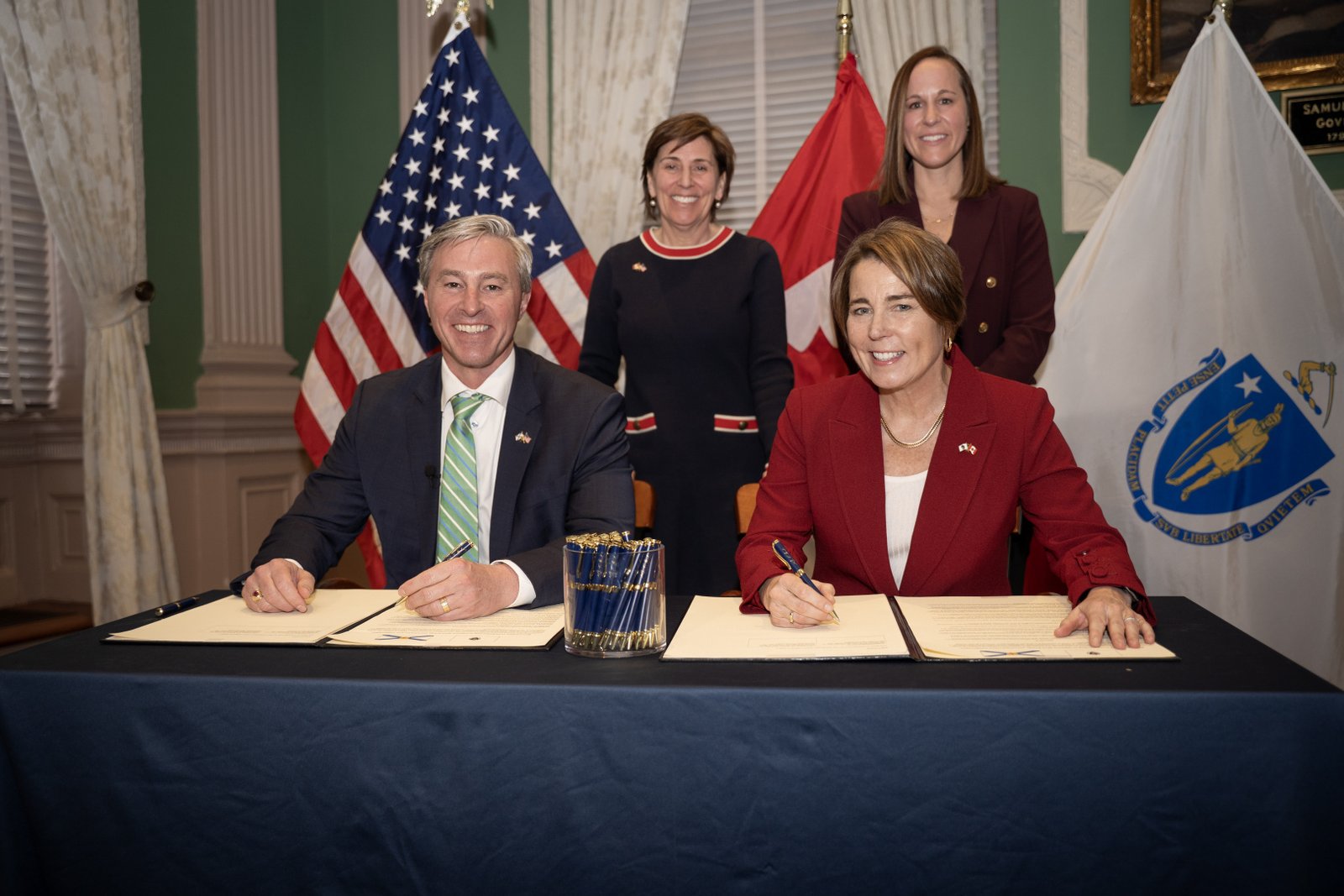
Premier Tim Houston and Governor Maura Healey signed a Memorandum of Understanding Wednesday to explore how Nova Scotia’s offshore wind could eventually supply New England’s grid.
An agreement between Nova Scotia and Massachusetts could see Canadian offshore wind power supply the New England electricity grid.
Premier Tim Houston and Gov. Maura Healey reached a memorandum of understanding committing the two governments to work together on developing their respective offshore wind sectors.
The agreement spells out how both parties will collaborate by sharing knowledge and expertise.
It also states they will explore opportunities for coordination on transmission planning and grid integration.
The idea is that offshore wind energy from Nova Scotia could eventually help power New England’s grid.
Nova Scotia’s Wind West Atlantic Energy pitch was referred to the federal Major Projects Office earlier in September as a ‘transformative strategy’ that has potential but needs more work.
The project would leverage over 60 GWs of wind power potential in Nova Scotia, and more across Atlantic Canada.
It would be Canada’s first offshore wind development.
Nova Scotia’s goal is to license up to 5 GW of offshore wind energy by 2030.
Last summer, the federal government and the province designated four areas where the development could happen.
The Canada-Nova Scotia Offshore Energy Regulator is currently in a Call for Bids process, and will eventually make recommendations on licenses.
During the signing of the agreement, Gov. Healey said Nova Scotia and Massachusetts look to the ocean for opportunity, regardless of the Trump administration’s stance on wind power.
“Rest assured that here in Massachusetts, we’re moving forward in any which way to bring more energy into this region, and we’re continuing with an international collaboration that helps us increase supply,” she said.
As for Houston, he said Nova Scotia would have excess electricity should Wind West Atlantic Energy come online.
Hydro-Quebec currently supplies about 20 per cent of the electricity needed in Massachusetts, according to Healey.
With a file from the Canadian Press