dailynewsnblog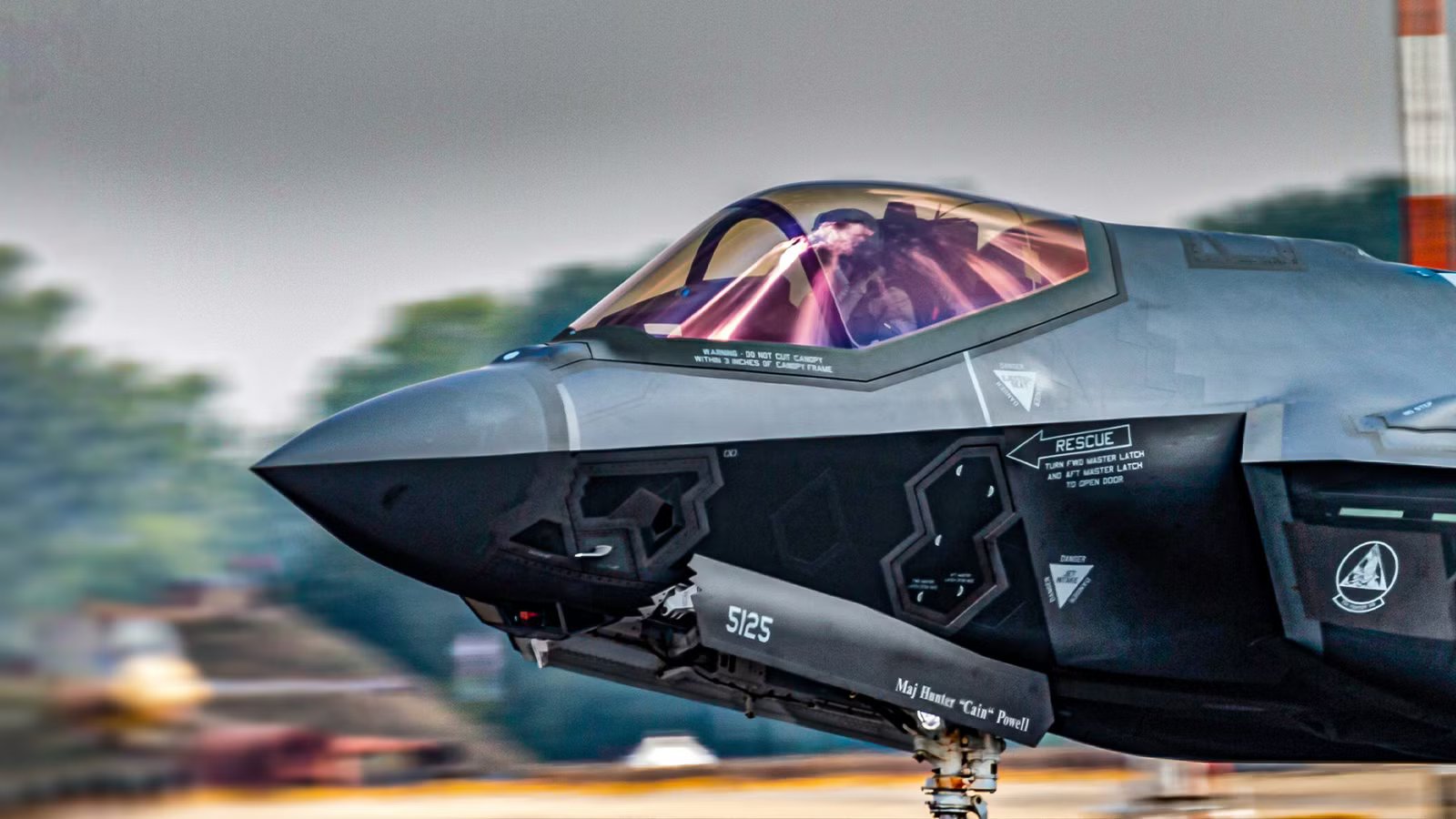
The Lockheed Martin F-35 Lightning II is a fifth-generation, multirole fighter jet developed through a multinational program led by the United States, with several allied countries participating as partners or buyers. It is designed to replace a wide range of older aircraft with a single platform that combines stealth, advanced sensors, and networked combat capabilities. Because of its scale, technological ambition, and long production timeline, the F-35 program has become one of the most complex defense projects ever undertaken.
Alongside its capabilities, however, the program has been defined by rising costs. Initial estimates provided to partner nations have been repeatedly revised upward due to inflation, production delays, infrastructure requirements, ongoing upgrades, and higher sustainment expenses. These increases have forced governments to re-evaluate budgets, extend the service life of older aircraft, and build larger contingencies into defense planning. With costs continuing to evolve as production and upgrades progress, the key question now is: what is the latest position on F-35 cost increases, and how stable are current projections going forward?
The Lockheed Martin F-35 Lightning II

The F-35 Lightning II is a fifth-generation, multirole stealth fighter jet developed by Lockheed Martin. It was designed to replace a wide range of older aircraft, including the F-16, F/A-18, and A-10, by combining their roles into a single advanced platform. The aircraft emphasizes stealth, advanced sensors, and networked warfare, enabling it to operate in highly contested airspace while remaining undetectable by enemy radar systems.
There are three primary variants of the F-35, each designed for distinct operational requirements. The F-35A is a conventional takeoff and landing version used primarily by the US Air Force. The F-35B features short takeoff and vertical landing (STOVL) capability, designed for operating from smaller ships. The F-35C is optimized for aircraft carrier operations, with larger wings and reinforced landing gear for catapult launches and arrested landings. Despite these differences, all variants share a common core design and avionics system.
What sets the F-35 apart is its sensor fusion and data-sharing capability. The jet integrates information from radar, infrared sensors, electronic warfare systems, and allied platforms into a single, real-time picture for the pilot. This allows F-35s not only to strike targets but also to act as airborne intelligence and command nodes, sharing data with other aircraft, ships, and ground forces. As a result, the F-35 is intended to be less of a traditional dog-fighter and more of a central hub in modern, network-centric warfare.
Who Purchases The F-35 Lightning II?

The United States is the largest operator of the F-35 Lightning II, using all three variants across its military branches. The US Air Force flies the F-35A, the US Marine Corps operates both the F-35B (short takeoff/vertical landing) and F-35C (carrier-capable), and the US Navy flies the F-35C from aircraft carriers. Together, the US plans to operate well over 2,400 aircraft, making the F-35 the backbone of American tactical air power for decades.
Beyond the US, the F-35 is flown by a growing group of allied nations, many of which are formal partners in the Joint Strike Fighter program. These include the United Kingdom, Italy, the Netherlands, Australia, Norway, Denmark, and Canada, all of which have purchased or committed to purchasing the aircraft. The UK and Italy operate both land-based and carrier-capable variants, while countries like Norway and the Netherlands primarily fly the F-35A. These partners also contribute to manufacturing, maintenance, and upgrades through a shared international supply chain.
In addition to core partners, several foreign military sales customers have purchased the F-35 to modernize their air forces. These include Japan, South Korea, Israel, Finland, Poland, Belgium, Switzerland, Germany, and Singapore. Israel operates a customized version known as the F-35I “Adir,” tailored with indigenous systems. As of now, more than 15 countries operate or have ordered the F-35, making it one of the most widely adopted advanced fighter jets in the world and a central pillar of NATO and allied air power.

The World’s Largest Air Forces By F-35 Numbers
Stealth, advanced sensors, and networked warfare converge in this game-changing fighter. See which countries are leading the charge.
The Numbers Involved In The Increased Cost

Canada’s plan to modernize its air force centers on the purchase of 88 F-35 fighter jets to replace the aging CF-18 fleet and meet its defense obligations with allies such as the United States through NORAD. When the agreement was concluded in 2022, the overall price of the aircraft and related systems was estimated at around $19 billion (€16 billion), a figure the government presented as a stable long-term investment in national security.
That estimate has since been revised sharply upward. A more recent review by Canada’s Auditor General put the projected cost at about $27.7 billion (€23.3 billion) as of January 2026, reflecting an increase of roughly $8.7 billion (€7.3 billion), or close to 50% on top of the original projection. The review also noted that several major expenses, including infrastructure upgrades and weapons procurement, were not fully captured in the headline figure and could add billions more to the final total.
These escalating numbers have intensified debate over the fighter jet program and Canada’s defense spending priorities. The issue has taken on added strategic weight after US officials indicated that any reduction or cancellation of the F-35 purchase could affect joint defense arrangements, potentially requiring the United States to deploy more of its own aircraft to patrol Canadian airspace. This has placed the rising cost of the jets at the center of both domestic political discussion and international defense planning.
Contributing Factors To The Price Hike

One major reason for the rising cost of Canada’s F-35 program is inflation and global supply-chain disruption. Since the original estimates were made, the defense industry has been affected by higher labor costs, increased prices for raw materials, and delays in manufacturing and delivery. These pressures have driven up the price of aircraft components, spare parts, and long-term maintenance arrangements, making earlier cost projections unrealistic in today’s economic environment.
Another significant contributing factor is the underestimation of infrastructure and support requirements. Operating the F-35 requires specialized hangars, advanced simulators, upgraded runways, and secure digital systems that were not fully accounted for in the initial budget. As planning became more detailed, the need for extensive base upgrades and new support facilities became clearer, substantially increasing projected spending beyond the aircraft purchase itself.
A third factor is the expansion of contingency planning and risk allowances built into the program. Defense officials and auditors increased contingency funds to account for potential delays, currency fluctuations, technical issues, and future capability upgrades. While this makes the program more resilient to unforeseen problems, it also significantly raises the headline cost. Together, these factors explain why the F-35 project’s price has grown well beyond its original estimate, even without any increase in the number of jets being purchased.

New F-35 Engine Production Delayed Into Spring 2026
The Lightning II’s new powerplant is behind schedule.
Production And Delivery Challenges

Delivery delays have affected the F-35 program by pushing back the timelines for when aircraft can be handed over and made operational. Even when jets are physically built, they cannot be accepted until they meet all contractual and performance requirements. This has resulted in completed aircraft being held back, creating gaps between production milestones and actual delivery to partner nations.
Manufacturing and supply-chain disruptions have played a significant role in slowing deliveries. The F-35 relies on a wide international network of suppliers, and delays in receiving key components can halt final assembly. Labor shortages, production sequencing issues, and quality checks have also reduced the number of aircraft that can be delivered on schedule, causing delivery targets to be repeatedly revised.
Technical and certification challenges have further complicated delivery timelines. Software integration, system testing, and security certification must be completed before aircraft are cleared for service. When these processes take longer than expected, deliveries are postponed even if the airframes are finished. As a result, partner countries have faced uncertainty in planning training, basing, and operational readiness due to shifting delivery schedules.
The Ongoing Impact On The F-35 Program

The ongoing challenges within the F-35 program have continued to affect both operational planning and financial expectations for partner nations. Repeated delays in delivery have forced air forces to revise their timelines for bringing the aircraft into service, often requiring them to keep older fighter jets operational for longer than planned. Maintaining these legacy fleets has led to additional, unplanned spending on maintenance, upgrades, and personnel, increasing overall defense costs alongside the delayed introduction of the F-35.
At the same time, the program’s approach of developing and upgrading the aircraft while production continues has had cost implications. Aircraft delivered at different stages of development may require later modifications to align them with updated software, hardware, or capability standards. These retrofits and updates add to long-term program expenses and complicate budgeting, as costs are spread over many years rather than being fully known at the point of purchase.
More broadly, the persistence of delays and associated costs has influenced how governments assess risk within the F-35 program. Larger contingency funds and more cautious financial planning have become necessary to account for uncertainties in delivery schedules and future upgrades. While these measures are intended to reduce the likelihood of further disruptions, they also raise the overall projected cost of participation, reinforcing concerns about affordability and long-term value within the program.