dailynewsnblog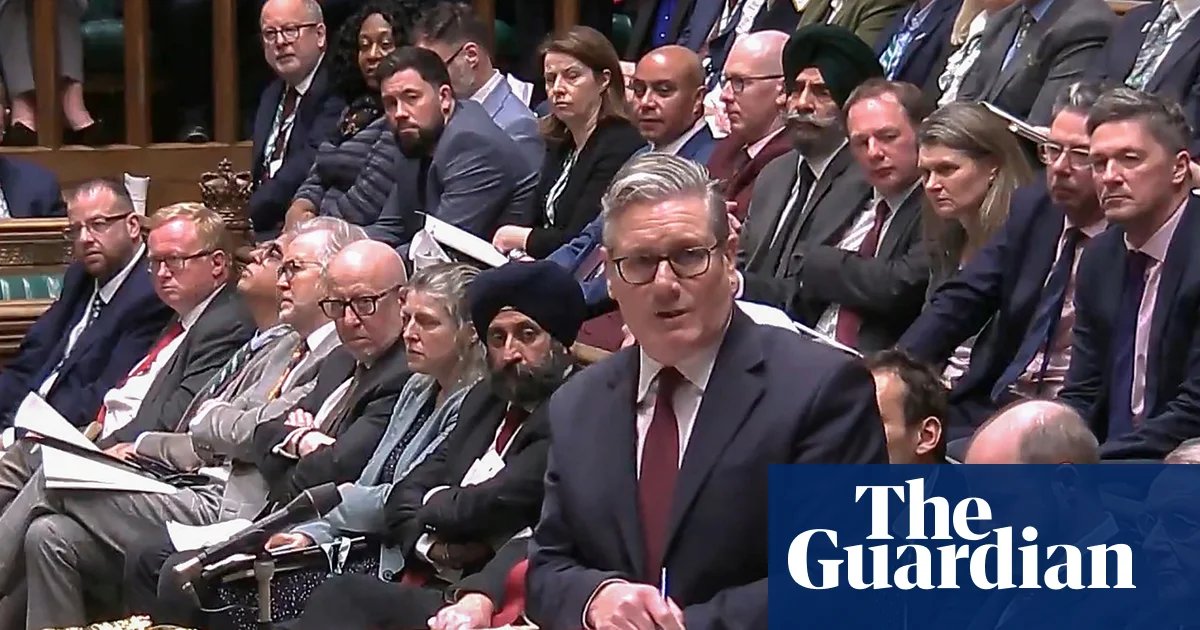
Ministers have been forced into a last-minute concession after Labour MPs had threatened to vote down a government amendment to limit the disclosures about Peter Mandelson’s links with Jeffrey Epstein.
In the final hours before the vote, whips agreed to hand power over the disclosures to the intelligence and security select committee (ISC), a compromise brokered by the chair of the Treasury select committee, Meg Hillier, and the former deputy prime minister Angela Rayner.
The Conservatives – who triggered the vote to force the release of documents related to Mandelson’s appointment as ambassador to the US – will back the new amendment.
“Yet again the prime minister has to thank Angela Rayner’s swift political judgment to save this government from itself,” said one MP, referring back to the concessions brokered by Rayner ahead of the welfare reform vote. “The sooner the day comes that she’s making the original decisions, the better.”
MPs said they believed that anger was so vast among the parliamentary party that it posed a significant threat to Keir Starmer’s premiership. “This is Boris and Chris Pincher on steroids,” one senior Labour figure said, referring to the scandal that brought down Boris Johnson.
No 10 had been intending to release documents later on Wednesday, but Starmer’s spokesperson said that had been complicated after contact from the Metropolitan police.
Police have launched a criminal investigation into whether there had been misconduct in a public office over sensitive government documents that appeared to have been forwarded from Mandelson to Epstein.
The Conservatives have forced a vote on the release of the documents, and the government said it would release the vetting process for Mandelson’s appointment, which they claim will show he lied about his relationship with the convicted child sex offender.
But the government’s original amendment would mean the cabinet secretary could refuse to disclose documents that prejudiced national security or international relations – an exemption that many MPs have told the Guardian they believed was too broad.
Instead, Rayner and Hillier have said the government should allow the select committee to have oversight over what is disclosed. Whips have used a so-called manuscript amendment to make the change after MPs warned they would vote against the government unless this was done.
The backbench MP Matt Bishop was among those who rejected the decision being made by the cabinet secretary. “As a party, we have promised to halve violence against women and girls, and promised to put victims at the heart of everything we do, and yet today we’re being asked to accept an internal review into how the close friend of a known paedophile was vetted, an internal review carried out by the very structures that failed to prevent this in the first place,” he told the Commons.
Questioned repeatedly at prime minister’s questions, Starmer said Mandelson had “betrayed our country” in his dealings with the disgraced financier.
“He lied repeatedly to my team, when asked about his relationship with Epstein before and during his tenure as ambassador,” the prime minister said. “I regret appointing him. If I knew then what I know now, he would never have been anywhere near government.
“I want to make sure this house sees the full documentation, so it will see for itself the extent to which, time and time again, Mandelson completely misrepresented the extent of his relationship with Epstein, and lied throughout the process, including in response to the due diligence.”
In the Conservative-led debate, Rayner said the government needed to go further. “Given the public disgust and the sickening behaviour of Peter Mandelson and the importance of transparency … should the ISC not have the same role now [as in relation to a previous humble address] in keeping public confidence in the process?” she said.
The Cabinet Office minister, Nick Thomas-Symonds, said he would consider the changes. “I am hearing what the house is saying and I will take that point away,” he said.
MPs from across the house used the debate to call for the ISC to take charge of those decisions rather than the cabinet secretary. The chair of the ISC is Kevan Jones, a Labour peer and former defence minister. The committee is made up of a mix of MPs and peers from different parties, with Labour the most well represented.
Downing Street officials said that Mandelson had misrepresented his relationship with Epstein “time and time again” – both directly to the prime minister and his team.
Mandelson underwent a two-step vetting process. The first was “due diligence” by the Cabinet Office’s propriety and ethics team, which sent a document to No 10 with outstanding questions before his appointment was made in late 2024. This consisted of only information already in the public domain, including that Mandelson had stayed overnight at Epstein’s house and had an ongoing friendship with him post-conviction and release.
The Guardian understands that Starmer or Morgan McSweeney, his chief of staff, questioned Mandelson on the allegations before his appointment themselves. However, they do not appear to have pushed for any further information and were satisfied with his answers at the time.
After the appointment, but before Mandelson went to Washington, he underwent a second, more secretive part of the process. This was developed vetting (DV) in which officials asked questions about sensitive issues including finances, business records, sexual history, foreign travel and personal relationships.
Its aim was to establish whether he was being honest about his past, and if not, could be susceptible to coercion. At no point in the DV process, which is never made public, was the information shared with any politicians. Instead, it provided a binary decision, with mitigations in place for any areas of concern.
As Mandelson ended up in Washington, it is assumed the DV process gave him the green light. It is unclear whether any mitigations were put in place. Despite that, No 10 said on Wednesday it had faith in the vetting process.
Downing Street suggested the UK had not asked the US Department of Justice to see the Epstein documents before the appointment, repeatedly dodging questions on whether a request was made to view documents related to Mandelson before they were published.