dailynewsnblog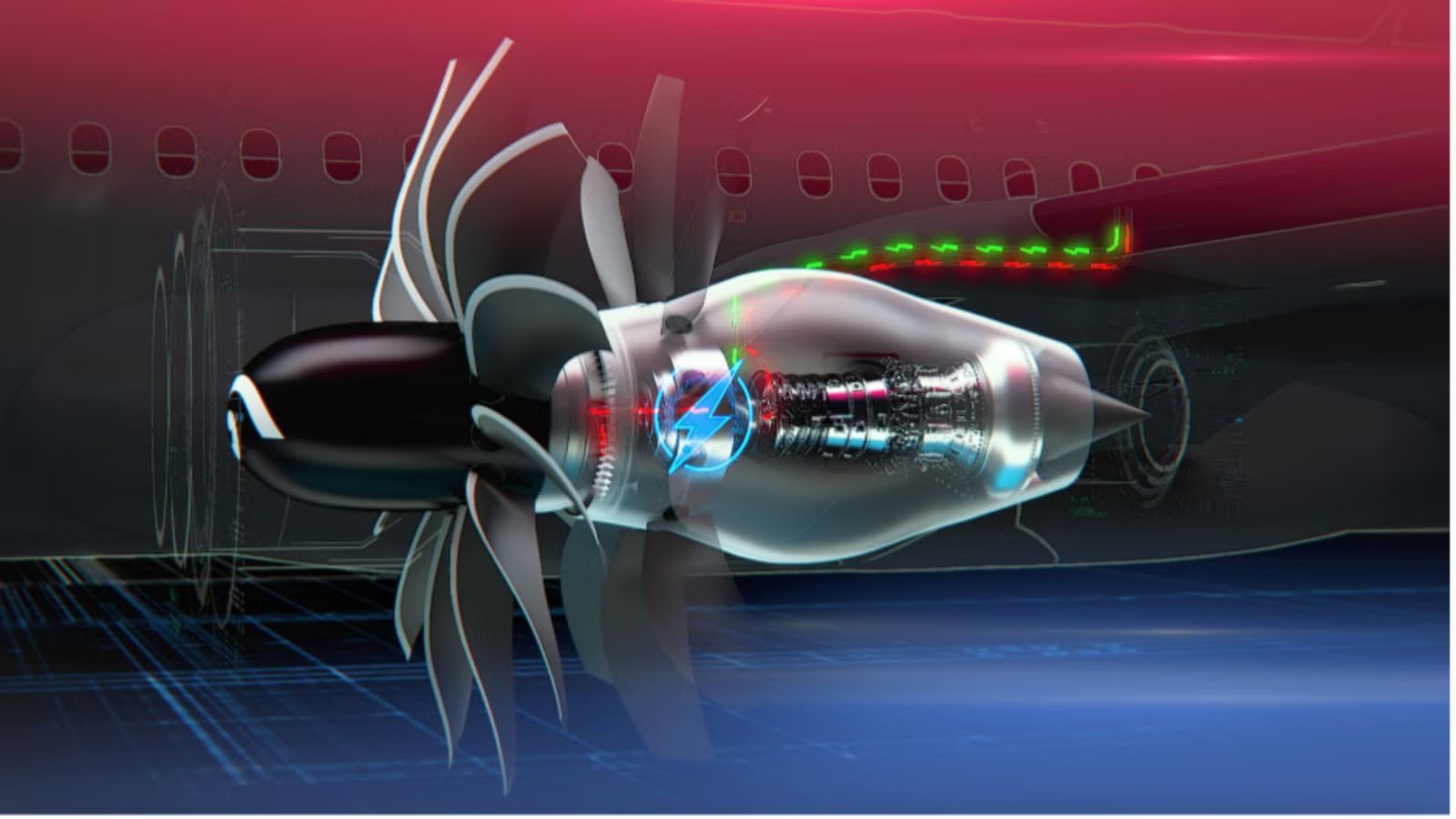
This article was updated on Wednesday, February 4, to include additional information on past unducted fan concepts. It was originally published on Monday, February 2.
Singapore is positioning itself at the centre of the next major shift in commercial aviation with a landmark agreement involving Airbus, CFM International, and the Civil Aviation Authority of Singapore (CAAS). Announced at the Changi Aviation Summit, the partnership will establish the world’s first airport-based testbed dedicated to next-generation aircraft propulsion technologies, with a particular focus on CFM’s RISE (Revolutionary Innovation for Sustainable Engines) programme. At the heart of the initiative is the development of a radically different engine architecture: an open-fan design that eliminates the traditional nacelle, exposing the fan blades to maximize aerodynamic efficiency.
The move underscores a broader challenge to more than 50 years of conventional jet engine evolution, which relied on ever-larger bypass ratios housed within enclosed nacelles. Airbus and CFM are betting that advances in materials, digital modeling, and certification standards can overcome long-standing concerns around noise, safety, bird strikes, and public acceptance. The RISE programme targets more than a 20% improvement in fuel efficiency over today’s most advanced engines. It is designed to power future single-aisle aircraft entering service in the mid-2030s, with full compatibility for sustainable aviation fuels and potential hybrid-electric integration. By using Singapore as a live testing environment, the partners aim to create a global blueprint for how airports and regulators can safely adopt propulsion technologies that could reshape the economics and environmental footprint of commercial aviation.
Why Airbus Is Betting On Open-Fan Propulsion

The RISE open-fan engine is built around moving a far greater mass of air at lower speeds than today’s enclosed turbofans, a key driver of efficiency. CFM estimates the design could deliver at least a 20% reduction in fuel burn and CO₂ emissions compared with the most advanced engines currently in service. This gain comes from an extremely high bypass ratio, potentially well above 50:1, versus roughly 11:1 on the LEAP family. Eliminating the nacelle also reduces structural weight and aerodynamic losses associated with ducted airflow.
Development of the architecture is already well advanced. The RISE programme involves thousands of engineers and has logged hundreds of component tests and several thousand endurance cycles focused on open-fan technologies. The engine is being designed to be compatible with 100% sustainable aviation fuel, supporting airline decarbonization goals. While the absence of a cowling changes traditional protection methods, safety is addressed through reinforced composite blades, controlled failure behavior, and aircraft-level integration to meet stringent future certification requirements. Mr Han Kok Juan, Director-General of CAAS, said:
“CFM International’s and Airbus’s partnership with CAAS to establish in Singapore the world’s first airport testbed for next generation propulsion technologies is testament to Singapore’s offering as an integrated air hub with strong regulatory expertise where companies can testbed technologies and develop real-world protocols for deployment at scale globally.”
Safety, Bird Strikes, And Certification Challenges

Unducted fan concepts were tested decades ago but never reached commercial service, largely due to noise concerns and limited design capability at the time. One design that showed promise but never took flight was the McDonnell Douglas MD-94X, which was intended to compete with Boeing’s proposed 7J7, which was also never built. McDonnell Douglas touted that the MD-94X’s propfan engines could yield up to 60% reduction in fuel use, but airlines still had little interest in the novel concept. Advances in computational fluid dynamics, blade shaping, and composite materials have since transformed what is possible. Today’s open-fan blades are designed to rotate more slowly at the tips, helping to control noise while still delivering high thrust. Combined with stricter emissions targets, these improvements have brought the idea back into serious consideration.
Bird strike resilience is one of the most scrutinized aspects of the design. Exposed blades must meet rigorous impact requirements, with testing focused on structural integrity and predictable behavior under extreme conditions. Rather than relying on a casing to absorb damage, the safety philosophy emphasizes prevention, durability, and controlled outcomes. Engineers are also assessing how engine placement on the airframe influences debris paths and overall risk.
Aircraft integration plays a decisive role in whether the concept succeeds. Airbus has studied multiple configurations, including rear-mounted installations, to balance efficiency, noise, and safety. Wind-tunnel testing and systems simulations are being used to refine these layouts well before full-scale flight trials begin. The goal is to ensure that open-fan propulsion works as part of a complete aircraft system, not in isolation.

Here’s How Much Bigger Aircraft Engines Are Today Compared To The Advent Of The Jet Age
Looking at how commercial aircraft engines have evolved over time.
What Open-Fan Engines Mean For The Future Of Single-Aisle Aircraft

The decision to establish a dedicated propulsion test environment in Singapore highlights how airports and regulators are preparing for unconventional engine designs. Such testbeds allow real-world evaluation of operational procedures, ground safety, and acoustic performance. The data collected will help shape certification frameworks for open-fan aircraft before they enter airline service. This reduces uncertainty for manufacturers and operators alike.
Airbus plans to validate the open-fan concept through large-scale flight testing later this decade, including using a modified A380 as a flying test platform. These trials are expected to generate critical data on performance, noise, and integration. If the results align with projections, open-fan engines could power the next generation of short- and medium-haul aircraft in the late 2030s.
Ultimately, removing the engine cowling reflects a broader shift in aviation priorities. With incremental efficiency gains becoming harder to achieve, manufacturers are exploring more radical solutions. The open-fan engine may look unconventional, but its success will be judged on measurable outcomes—fuel savings, emissions reductions, and safety performance—rather than appearance alone.