dailynewsnblog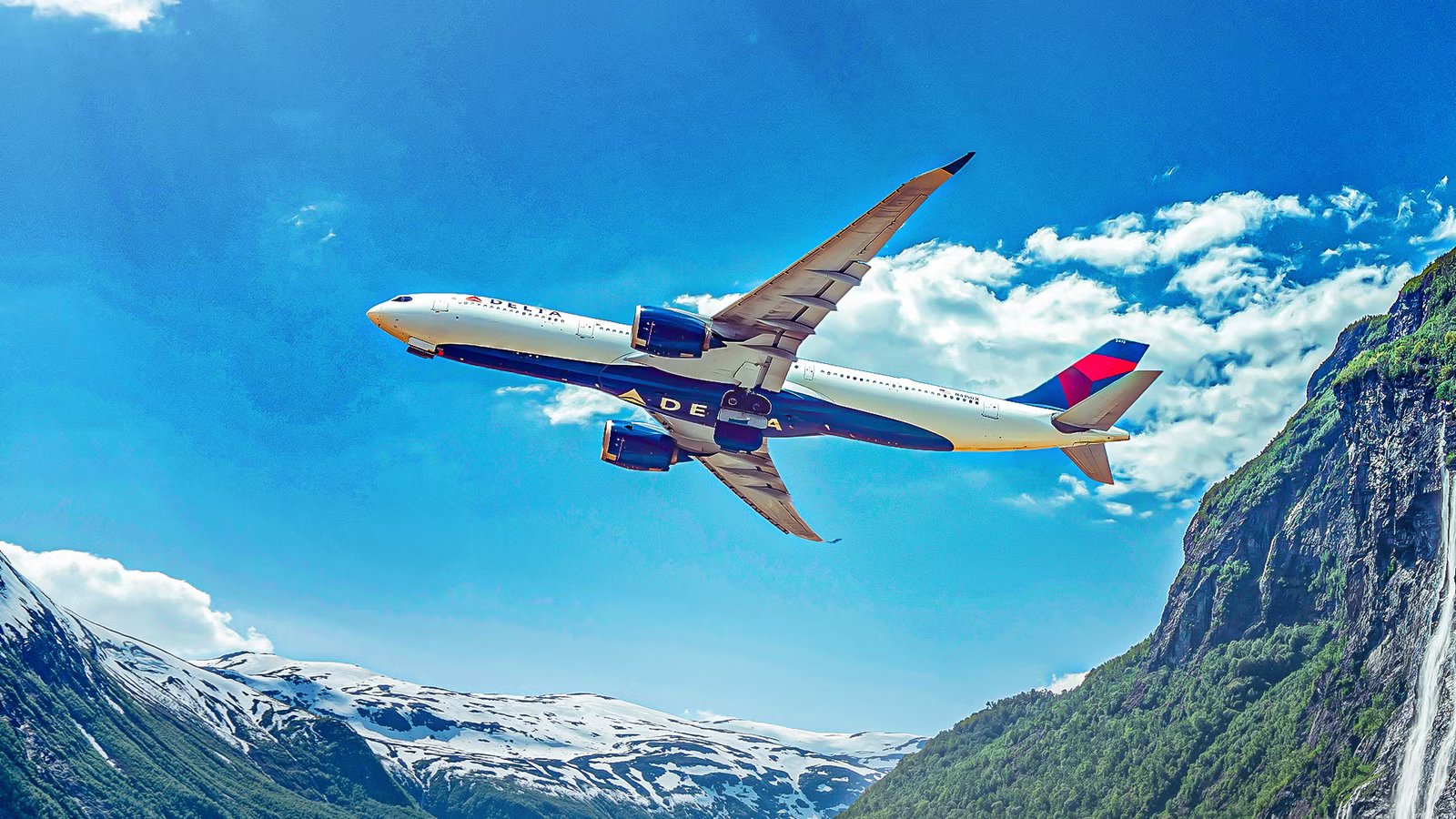
A  Delta Air Lines flight from New York to Tel Aviv was forced to make an overweight emergency landing in Dublin following a serious onboard medical emergency. Approximately four hours into its transatlantic journey on Monday, Delta Flight 234 transmitted a squawk 7700—the international code for a general emergency—while cruising at 36,000 feet over the Atlantic.
The flight crew settled on  Dublin Airport (DUB) as an appropriate diversion airport. However, as the Airbus A330-900 still had several hours of fuel left, it had to make an overweight landing at the Irish airport. Fortunately, the widebody aircraft landed safely in Dublin, and no passengers or crew were injured.
Delta A330 Lands Heavy After Onboard Emergency

As first reported by AirLive, a medical crisis onboard a Delta A330neo forced the flight crew into making a risky overweight landing in Dublin. Delta Flight 234 departed  New York JFK Airport (JFK) just before 4:00 PM local time on Monday en route to Ben Gurion Airport (TLV) in Israel. Just a few hours into its scheduled ten-hour journey, the aircraft began squawking 7700 after a reported medical emergency onboard.
Data from Flightradar24 shows the aircraft altered its course and headed for Dublin Airport instead. By the time the A330neo was on final approach to Dublin, it had been in the air for around six hours, meaning it was still loaded with a significant amount of fuel. Consequently, it performed an overweight landing, touching down safely in Dublin at 01:17 AM. The passenger experiencing the medical emergency was reportedly met by medical teams and transported to a hospital. Their condition at this stage is unknown; Simple Flying has reached out to Delta Air Lines for further information.
Flight Arrives Only Three Hours Late

The aircraft — a two-year-old Airbus A330-900 registered as N430DX — remained on the ground in Dublin for over two hours before continuing its journey to Tel Aviv. This flight took off just after 03:20 AM and landed safely in Tel Aviv at around midday local time, representing a delay of only three hours.
A Delta spokesperson confirmed that the flight had a total of 158 passengers onboard. The aircraft involved has also remained in service, completing an 11-hour flight back to New York and is currently in the air operating a service from JFK to São Paulo at the time of publication.
When making overweight landings, pilots will typically use more runway length than normal to ensure the aircraft comes to a stop safely without overburdening its brakes. Before the aircraft is allowed to return to service, it also needs to undergo an inspection to rule out any damage incurred during the landing.

Aer Lingus A321XLR Severely Damaged After 3.3G Hard Landing In Dublin
The aircraft will reportedly need a complete landing gear replacement.
Aren’t Planes Supposed To Dump Fuel?

When a large commercial airliner needs to make a premature landing, pilots will typically enter a holding pattern and dump fuel before attempting the landing. The reason for this is that commercial aircraft have a maximum landing weight (MLW) to ensure they can safely withstand the force of touching down. As fuel makes up a significant amount of an aircraft’s load, pilots have the option to jettison fuel to lower the weight if their aircraft has this function available.
Unlike most smaller narrowbody aircraft, an A330neo is capable of dumping fuel if needed. This function is more readily available on larger widebodies, as these aircraft are accustomed to making long-haul flights with a huge amount of fuel onboard. This leads to a wider gap between the plane’s Maximum Takeoff Weight (MTOW) and its MLW, necessitating fuel dumps or lengthy fuel-burning holding patterns.
So why didn’t the pilots jettison fuel in this instance? It is likely that the urgent medical emergency onboard was deemed a higher priority, while the pilots were confident about making a safe landing despite the added weight. While the exact landing weight isn’t known at this stage, it is a lot safer to land an overweight plane after several hours of flight, as opposed to shortly after takeoff.