dailynewsnblog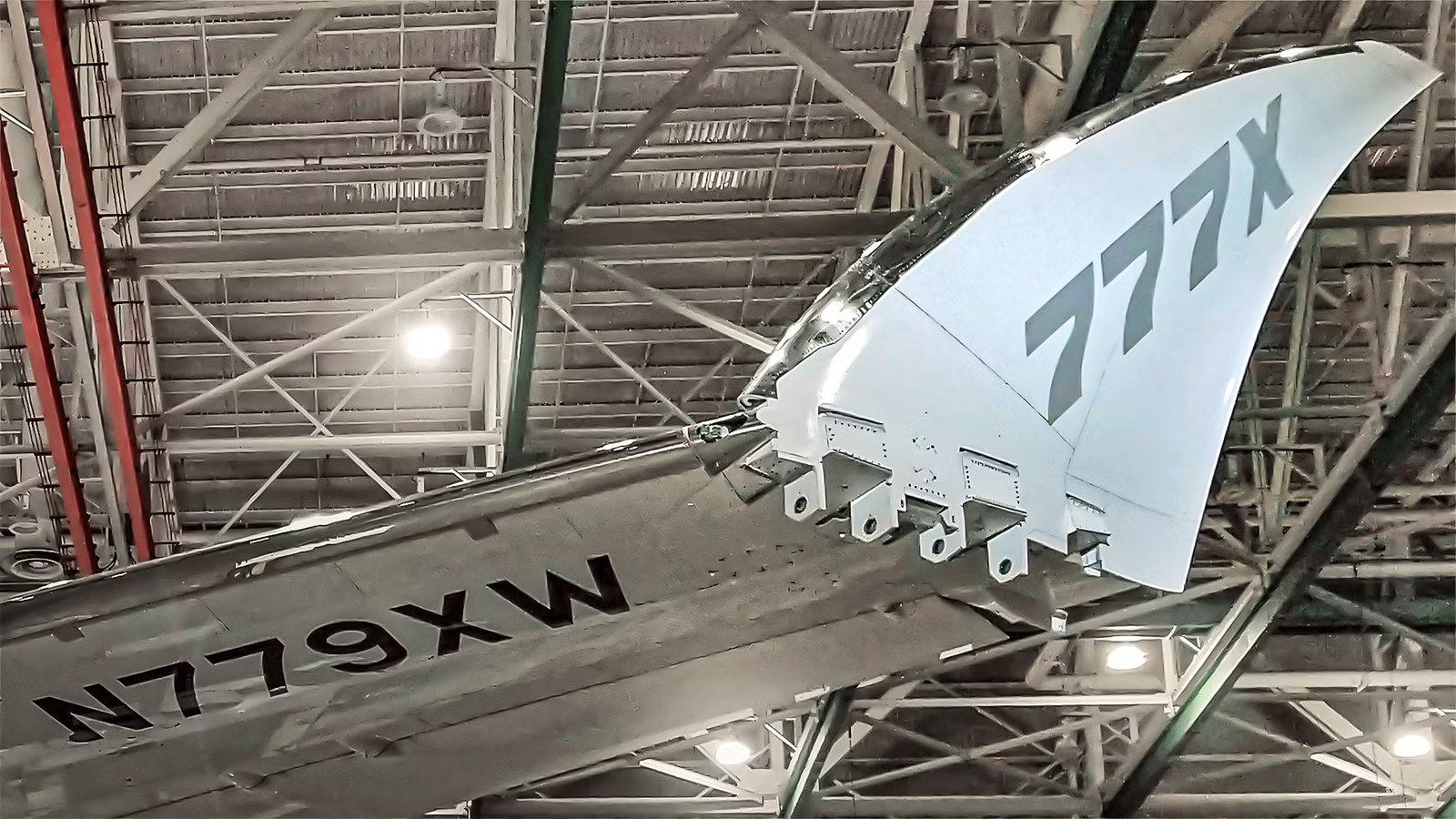
At first glance, the Boeing 777X may look like a stretched and modernized version of the original 777. After all, it shares the same basic fuselage shape that has made the 777 one of the most successful long-haul aircraft in history. However, one feature immediately stands out — the wings.
Unlike any previous  Boeing commercial aircraft, the 777X’s wings are dramatically different from those of earlier 777 variants. They are longer, more flexible, built from new materials, and even fold at the tips. These changes are not cosmetic; they are central to what the 777X is designed to achieve. Let’s take a closer look…
The Largest Wings Ever Seen On A Commercial Aircraft

Although the Boeing 777X is often described as an evolution of the original 777, its wing is essentially a clean-sheet design. The classic 777 wing, introduced in 1995 when the Boeing 777-200 entered commercial service with  United Airlines, was optimized for the technology, materials, and performance targets of that era. While it was highly efficient for its time, it had reached the limits of how much it could be stretched and refined.
For the 777X, Boeing wanted a step change in performance, as the aircraft needed to fly farther, burn significantly less fuel per seat, and remain competitive with the latest long-range widebodies from its competitor, Airbus. Achieving those goals with the old wing design was simply not possible, so a longer, higher-aspect-ratio wing was required to reduce induced drag and improve aerodynamic efficiency during cruise.
This led Boeing to design the largest wings ever fitted to a commercial airliner. With a span of around 72 m (235 ft) when extended, the 777X wing is far wider than that of its predecessor, the Boeing 777-300ER. This increase allows the aircraft to generate more lift with less drag, particularly on long-haul missions where cruise efficiency matters most.
Made Of Advanced Composite Materials

One of the most significant differences between the original Boeing 777 wing and the 777X wing is the use of composite materials. Earlier 777 variants used primarily aluminum alloy wings, which were state-of-the-art when the aircraft entered service, and while strong and reliable, aluminum limits how thin, long, and flexible a wing can be made.
By contrast, the Boeing 777X wing is built almost entirely from carbon-fiber reinforced polymer, which makes it lighter and stronger than an equivalent metal wing, allowing Boeing to increase span without an unacceptable weight penalty. The use of composites also enables a higher aspect ratio, which improves aerodynamic efficiency and reduces fuel burn.
Composite construction also allows the wing to flex more in flight, and the Boeing 777X’s wings are designed to bend upward dramatically under load, reducing stress on the aircraft’s structure and improving overall efficiency. This flexibility is particularly noticeable during turbulence or at high weights, where the wing can absorb loads more gracefully than a traditional metal design.
However, composite materials come with their own challenges, as manufacturing large composite structures requires new production techniques, specialized facilities, and extremely tight quality control. Therefore, Boeing built a dedicated composite wing center at its production facility in Everett, Washington, specifically to produce the 777X wing, highlighting just how different this component is from anything that came before.

How Much Longer Are The 777X’s Wings Than The 777’s?
The new 777X will have a broader wingspan than the 777, but folding wingtips when on the ground.
Greater Compatibility With Airports Around The World

Perhaps the most eye-catching feature of the Boeing 777X’s wing is its folding wingtips. When fully extended in flight, the aircraft’s wing is too wide for many existing airport gates designed for aircraft like the 777-300ER. This posed a serious operational problem as airlines did not want an aircraft that required expensive airport infrastructure upgrades.
The solution was folding wingtips, a first for a commercial aircraft. Each wingtip folds upward on the ground, reducing the wingspan enough for the aircraft to fit within existing airport compatibility categories. Once the aircraft is lined up for departure, the wingtips are lowered and locked into place before takeoff.
From an aerodynamic perspective, folding wingtips also allow the Boeing 777X to enjoy the benefits of a very long wing in the air without the drawbacks on the ground. In flight, the extended wings improve the aircraft’s lift-to-drag ratio, while on the ground, the aircraft remains compatible with current airport layouts. This is in stark contrast to the Airbus A380, which, when it entered commercial service in 2007 with  Singapore Airlines, required airports around the world to upgrade their infrastructure to accommodate the giant aircraft.
This system is designed with multiple layers of redundancy and safety interlocks, and the Boeing 777X cannot take off with the wingtips folded, with the flight crew receiving clear indications of the wingtip status. While the idea initially raised eyebrows in the industry, it has become one of the defining features of the 777X.
Optimized For GE9X Engines

The Boeing 777X wing was also designed specifically to work with the aircraft’s new engines, the General Electric GE9X. These are the largest and most powerful turbofan engines ever fitted to a commercial aircraft, with a fan diameter significantly larger than that of the GE90 used on earlier 777 models.
Larger engines bring both benefits and challenges – they are more efficient and quieter, but they are also heavier and produce different aerodynamic effects around the wing. The Boeing 777X’s wing was therefore shaped and reinforced to handle these loads while maintaining optimal airflow into the engines.
The increased wingspan helps distribute the Boeing 777X’s weight more effectively, which is particularly important given the size and mass of the General Electric GE9X engines. The aircraft’s wing structure, pylon design, and aerodynamic profile all work together to ensure efficient performance across a wide range of operating conditions.
By contrast, the original Boeing 777 wing was designed around engines that, while revolutionary at the time, are smaller and less efficient by modern standards. Simply upgrading the engines without redesigning the wing would not have delivered the performance improvements airlines now expect.

The Boeing 777X’s Folding Wings: How It Works
The Boeing 777X’s innovative design feature has captured global attention. But how do these folding wings actually work?
Improved Aerodynamic Efficiency

Ultimately, the Boeing 777X’s different wing reflects the changing priorities of the commercial aviation industry. When the original 777 was designed, fuel efficiency was important, but it was not under the same scrutiny it is today, and environmental concerns, emissions targets, and rising fuel costs have reshaped aircraft design in recent years.
Its new wing plays a major role in helping the Boeing 777X achieve significantly lower fuel burn per seat compared to earlier 777 models. Its aerodynamic efficiency reduces drag, while its lighter composite structure lowers overall aircraft weight, and together with the new engines, these improvements translate into reduced emissions and operating costs. Airlines are increasingly focused on sustainability, and aircraft manufacturers must deliver tangible efficiency gains to remain competitive.
The 777X wing is Boeing’s answer to this challenge in the large widebody market, ensuring the aircraft can serve long-haul routes well into the future. While the Boeing 777X may share a name with the original 777, its wing tells a different story. It represents a leap forward in materials, aerodynamics, and systems design, reflecting how far commercial aviation has come since the 777 first took to the skies in the mid-1990s.
All About The Boeing 777X

The Boeing 777X is designed to be the next flagship of Boeing’s widebody lineup, building on the strong foundation of the original 777 while incorporating lessons learned from newer aircraft like the Boeing 787. From the outside, it retains the familiar 777 profile, but almost every major system has been updated. In addition to its new wings, the aircraft features a wider cabin, larger windows, improved pressurization, and a redesigned interior aimed at making long-haul flights more comfortable for passengers. New avionics, updated flight controls, and more extensive use of advanced materials are also intended to improve efficiency, reliability, and maintainability.
The journey of the Boeing 777X program, however, has been far from smooth. Officially launched in 2013, the aircraft was initially expected to enter commercial service in 2020, but since then, a combination of technical challenges, certification scrutiny, and broader issues at Boeing have pushed the timeline back repeatedly. Structural testing issues, problems uncovered during flight testing, and a much more demanding regulatory environment have all contributed to the delays, turning the 777X into one of the most infamous aircraft development programs in Boeing’s history.
Despite this, airline interest has remained relatively strong, and the Boeing 777X has secured hundreds of orders, with major customers including  Emirates,
  Qatar Airways, Singapore Airlines, and Lufthansa. Many airlines see it as a natural replacement for older 777s and, in some cases, the Boeing 747, offering similar range and capacity with significantly better efficiency.
|
Airline |
Boeing 777-8 |
Boeing 777-9 |
Total Orders |
|---|---|---|---|
|
Emirates |
35 |
235 |
270 |
|
Qatar Airways |
– |
90 |
90 |
|
Cathay Pacific |
– |
35 |
35 |
|
Singapore Airlines |
– |
31 |
31 |
|
British Airways |
– |
24 |
24 |
|
China Airlines |
– |
23 |
23 |
|
All Nippon Airways |
– |
20 |
20 |
|
Korean Air |
– |
20 |
20 |
|
Lufthansa |
– |
20 |
20 |
As things stand, Lufthansa is expected to be the first airline to introduce the Boeing 777X into commercial service. Boeing is currently targeting an entry into service in 2027, assuming certification progresses as planned, and when it finally arrives, the 777X will represent not just a new aircraft, but the culmination of a long and challenging road for Boeing. Emirates is set to be by far the world’s largest operator of the Boeing 777X, with a total of 35 777-8s and 235 of the larger 777-9s on order.