dailynewsnblog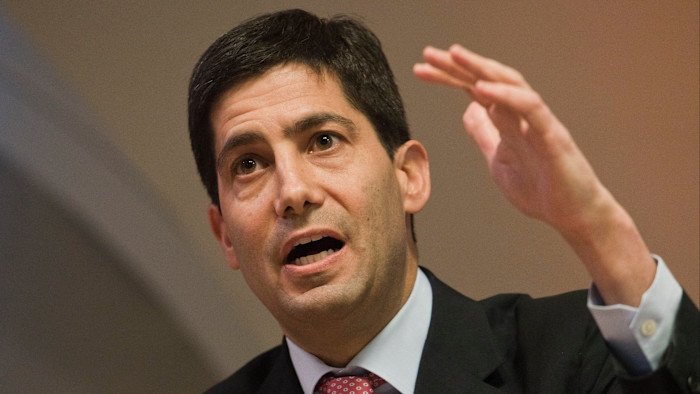
Unlock the White House Watch newsletter for free
Your guide to what Trump’s second term means for Washington, business and the world
The writer is president and chief investment strategist at Yardeni Research
Financial markets have often tested previous new Fed chairs. Kevin Warsh should prepare for his hazing.
On Friday, Donald Trump nominated Warsh to be the next chair of the Federal Reserve. The former Fed governor will very likely be approved by the Senate although that might need the Department of Justice to call off its attack on Jay Powell, whose term as the current Fed chair will expire in May.
Warsh has a great résumé for the job. Highly experienced in both financial markets and in economic policymaking, his background suggests he should be an outstanding Fed chair. But market forces and inflationary pressures might test him sooner than later.
While Warsh has historically been an inflation hawk, Trump has expressed confidence that his nominee “certainly wants to cut rates” and will be more aligned with his vision for what the Fed should be doing. The president has repeatedly said that he wants the central bank to lower the benchmark federal funds interest rate to 1.0 per cent to ensure the US has “the lowest rate in the world”.
Recently Warsh has fully embraced the administration’s party line on the likelihood of a “golden age” driven by an AI-led productivity boom, thanks to the president’s fiscal policies of tax cuts and deregulation. Indeed, he is calling for a Treasury-Fed Accord to make this happen, with the Fed continuing to lower the federal funds rate.
Warsh has often been critical of the Fed. During the Great Financial Crisis, he supported the first round of Fed purchases of securities known as quantitative easing to inject liquidity into the economy but opposed subsequent rounds. Now, he would like to revive the Fed’s recently terminated “quantitative tightening” programme to shrink the central bank’s balance sheet, which might also make room for lowering the federal funds rate. He would rather let the Treasury manage the government’s debt and focus on using the federal funds rate as the main tool of monetary policy.
In a March 2023 article in The Wall Street Journal calling for an “economic regime change”, Warsh also wrote the Fed “should get out of the business of forward guidance” and “stop providing forecasts for the path of interest rates”. So Fed watchers might have to do without the Fed’s quarterly Summary of Economic Projections, which includes the widely followed “dot plot” showing the interest-rate projections of each participant of the policy-setting Federal Open Market Committee. Though he hasn’t said so, I suspect Warsh might even end the tradition of press conferences by the Fed chair following every FOMC meeting.
Warsh agrees with other Trump administration officials that fiscal policies, combined with lower interest rates, are already stimulating better-than-expected productivity growth, which is boosting real GDP growth and moderating inflation as unit labour cost inflation falls close to zero. They believe that expecting this scenario justifies further cuts in the federal funds rate, and so do two dissenters on the FOMC who espoused that view at the latest meeting at the end of January.
But a further sign of inflationary pressures came on Friday with December’s hotter-than-expected producer price index report. The headline PPI inflation rate rose 0.5 per cent, making an annual increase of 3.0 per cent. Producers may be just starting to pass higher tariffs and weaker currency costs down the supply chain.
Warsh has suggested upward pressure on inflation from Trump’s tariffs is transitory and the Fed should continue lowering rates because inflation will soon moderate. That’s a bit ironic, since he has often criticised the Fed for having the same view of inflation in 2021 and therefore didn’t respond quickly enough to the problem, which led to today’s affordability crisis.
And financial markets might not co-operate with Warsh’s views. The problem with lowering the federal funds rate further from here, when the economy is already growing rapidly, is that it would increase the risk of financial instability, specifically a melt-up in the stock market that could be followed by a meltdown. Lowering the federal funds rate would further weaken the dollar, potentially reviving inflation and pushing bond yields higher.
Furthermore, at his likely first meeting as FOMC chair on June 16-17, the majority of Warsh’s colleagues on the committee might not co-operate in backing lower interest rates if inflation remains persistently above the Fed’s 2.0 per cent target. The US economy is likely to be booming then thanks to the fiscal stimulus provided by higher tax refunds in the coming months, resulting from legislation last year. Warsh could be one of the few dovish dissenters at his first FOMC meeting.